


















































Artificial Intelligence Learns in Ways We Never Expected
Explore how artificial intelligence is evolving beyond traditional programming, learning in surprising, adaptive, and unanticipated ways.

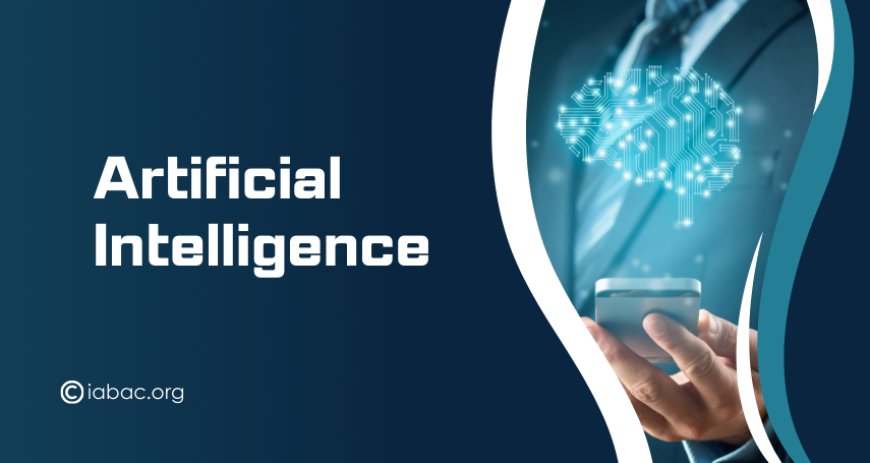
Artificial intelligence (AI) is changing how games are played, made, and enjoyed. From playing complex board games like Go to handling fast-paced video games, AI has moved beyond fixed rules. Now, it can learn and think strategically, just like a human player.
Understanding the Basics: What Does It Mean for AI to "Learn"?
At its core, learning in AI refers to improving performance through experience. In games, this means recognizing patterns, predicting outcomes, and adapting strategies based on the state of the game. Unlike hard-coded instructions, modern AI systems learn from data and interactions to develop flexible, adaptable behavior.
There are three major paradigms through which AI learns in gaming contexts:
-
Supervised Learning
-
Reinforcement Learning (RL)
-
Unsupervised Learning (less common in strategic game AI)
For game strategy development, reinforcement learning and supervised learning are the most widely used.
Supervised Learning: Learning from Historical Data
Supervised learning involves training an AI model on a dataset where both the input and the correct output are known. In the context of games, this typically involves feeding the AI numerous examples of past games, including every move and the game outcome.
For example, a chess engine might be trained on thousands of grandmaster-level games. By analyzing the relationship between game positions and eventual outcomes, the AI learns which moves tend to result in wins and which lead to losses.
However, supervised learning has limitations. It can only learn what it has seen. It doesn't innovate or explore new strategies beyond its training data. This is where reinforcement learning plays a transformative role.
Reinforcement Learning: Learning by Trial and Error
Reinforcement learning (RL) mimics how humans often learn—through interaction with the environment. An AI agent observes the current state of a game, chooses an action, and receives feedback in the form of a reward (positive or negative). Over time, it learns which actions maximize cumulative rewards.
A defining moment in AI's gaming journey came with DeepMind’s AlphaGo, which combined RL with neural networks. Initially trained on historical game data, AlphaGo progressed by playing millions of games against itself, constantly refining its strategy.
Reinforcement learning is powerful because it allows the AI to discover new strategies that even human players may not have considered. It's not confined to imitation; it builds on experience.
Self-Play: Learning from One's Own Mistakes
Self-play is a key mechanism in reinforcement learning, especially in adversarial games like chess, Go, or poker. The AI plays against copies of itself, continuously learning and adapting strategies. This allows it to generate vast amounts of training data independently.
The evolution from AlphaGo to AlphaZero showed how AI could start with zero knowledge beyond the game rules and, through self-play, reach superhuman performance. It developed novel, creative strategies, showcasing how AI could go beyond human-conceived tactics.
Search Algorithms: Exploring Future Possibilities
While learning helps an AI understand which strategies are strong, executing those strategies during gameplay requires rapid, intelligent decision-making. This is where search algorithms come into play.
Popular methods include:
-
Minimax Algorithm: Evaluates game trees by assuming that the opponent also plays optimally. Often used in perfect information games like chess.
-
Alpha-Beta Pruning: Optimizes minimax by ignoring branches that won’t influence the final decision.
-
Monte Carlo Tree Search (MCTS): Simulates many random playouts to evaluate which moves have the best chance of success. Frequently used in games with large decision spaces.
These algorithms help AI navigate complex decision trees quickly and efficiently, evaluating multiple scenarios before selecting a move.

Neural Networks: Evaluating Game States and Moves
Neural networks serve as the function approximators within modern AI systems. Instead of explicitly programming an evaluation function, neural networks learn to assess game states and suggest possible moves based on patterns in data.
In games like Go, neural networks help reduce the need for exhaustive search. The network evaluates positions and prioritizes actions, allowing the AI to focus its computational resources on the most promising branches of play.
Deep learning models are trained to:
-
Predict the value of a game state (chance of winning)
-
Suggest the next best move
-
Estimate long-term outcomes from current positions
Generalization and Transfer Learning
A strong AI doesn't just memorize; it generalizes. It can handle new, unseen situations by applying patterns and knowledge it has internalized. This is crucial in dynamic or open-ended games, where every match can present novel scenarios.
Transfer learning also plays a role in certain multi-domain gaming AIs. Knowledge from one game type can, in theory, be transferred to another with similar structure, though this is an emerging and challenging area.
Balancing Exploration and Exploitation
Strategic decision-making often involves a trade-off between exploration (trying new moves to discover better options) and exploitation (sticking to known good strategies). Reinforcement learning agents use techniques like epsilon-greedy policies to balance this.
This balance is crucial in the early training phases and becomes more refined as the AI matures. Too much exploration can lead to inefficient learning; too little might result in missing better strategies.
Case Studies: Real-World Examples
1. AlphaZero (Chess, Shogi, Go)
-
Learned from scratch using only the rules.
-
Trained through self-play and reinforcement learning.
-
Developed unique strategies that surpassed decades of human knowledge.
2. OpenAI Five (Dota 2)
-
Tackled the complexities of a real-time, multi-agent environment.
-
Employed reinforcement learning and massive parallelism.
-
Learned to cooperate, plan, and adapt on the fly.
3. DeepStack (Poker)
-
Used recursive reasoning and deep learning.
-
Tackled imperfect information and bluffing.
-
Demonstrated that AI can succeed in games requiring hidden knowledge.
Future Directions: What's Next for Game AI?
As compute power grows and algorithmic sophistication improves, AI will tackle even more complex game environments. Expect progress in:
-
Multi-agent coordination in team-based games
-
Emotion modeling and bluffing in social games
-
Open-world learning where goals and rules are less defined
Another frontier is general game playing AI that can handle multiple games without retraining from scratch. This would be a step toward more flexible and adaptive systems.
Beyond Games
Understanding how AI learns and creates game strategies gives insight into broader applications. The same principles used in game AI underpin developments in robotics, autonomous vehicles, financial modeling, and healthcare.
Games serve as a controlled environment where ideas can be tested, refined, and scaled. The ability of AI to learn, adapt, and innovate in this space is a window into what intelligent systems can achieve in more complex, real-world scenarios.
By tracing the journey from data to decision, we see AI not as a set of static instructions but as a dynamic, evolving problem solver. As the field progresses, strategy creation in games will continue to serve as a benchmark and springboard for broader AI capabilities.