


















































Common AI Questions Answered
Get answers to common AI questions in simple words. Learn how AI works, its uses, and how it impacts daily life. Easy and clear explanations.


Welcome to this guide on AI questions! I’m here to share my knowledge and make the topic of artificial intelligence easier to understand. AI can sometimes feel like a tough subject, but my goal is to explain things simply and clearly.
This blog is here to answer the big questions you might have about AI—how it works, where it’s used, and what it might do in the future. I’ll break down the ideas so they’re easy to follow, helping you see how AI fits into our everyday lives and what it can achieve. Whether you’re curious about the basics or want to know how AI is changing the world, you’re in the right place. Let’s work through these AI questions together and make sense of this exciting topic!
What Is Artificial Intelligence?
Artificial Intelligence, or AI, is when machines are programmed to act and think like humans. They can learn, solve problems, understand language, and make decisions. There are different parts of AI, such as:
- Machine Learning (ML): This helps machines learn from data and get better without needing new instructions.
- Natural Language Processing (NLP): This allows computers to understand and respond to human language.
- Computer Vision: AI that can understand and analyze images or videos.
- Robotics: Building machines that can do physical tasks, like assembling cars or delivering packages.
Common AI Questions
How Does AI Work?
AI, or Artificial Intelligence, is all about using data to help machines do tasks that usually need human brains. Here’s how it works:

- Data: AI learns from information like text, images, or sounds.
- Learning: It gets better over time by learning from data.
- Algorithms: AI follows rules (algorithms) to find patterns in data.
- Decision Making: Once it learns, AI can make predictions or decisions based on new data.
- Improvement: AI continues to improve as it gets more data and feedback.
AI is used in many fields, like healthcare, self-driving cars, movies, and customer support. If you're curious about AI, getting an Artificial Intelligence Certification could be a great start. Feel free to ask any AI Questions!
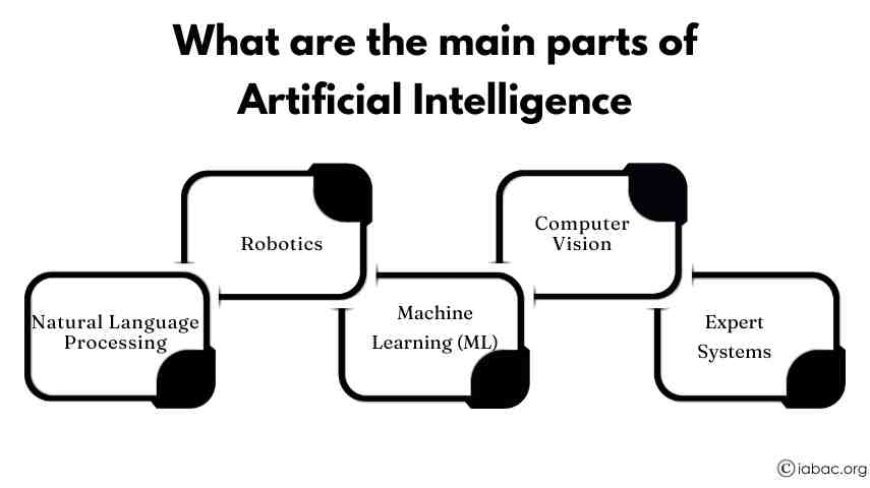
What are the main parts of Artificial Intelligence?
AI includes several key components:
-
Machine Learning (ML): Helps computers learn from data.
-
Natural Language Processing (NLP): Helps computers understand and use human language.
-
Computer Vision: Lets computers understand pictures and videos.
-
Robotics: AI helps robots perform tasks.
-
Expert Systems: AI that mimics decision-making in specific fields.
What is machine learning and its role in AI?
Machine learning is a part of AI where computers learn from data and improve their performance over time. Instead of being programmed with specific instructions, machine learning systems learn from experience and make predictions or decisions.
How is AI used in healthcare?
AI helps in healthcare by:
-
Predicting patient outcomes.
-
Improving medical imaging for accurate diagnosis.
-
Tailoring treatments to individual genetic profiles.
-
Assisting in surgeries with robotic technology.
-
Providing virtual health assistants to manage appointments and symptoms.
Can AI think like humans?
No, AI doesn’t think or reason like humans. It can do things like recognizing patterns or solving specific problems, but it lacks emotions, self-awareness, and a true understanding of the world.
What is deep learning and how is it different from regular machine learning?
Deep learning is a special kind of machine learning that uses complex neural networks to process large amounts of data. It's especially good for tasks like image recognition or understanding speech. Deep learning requires more data and power than regular machine learning.
Can AI be creative?
AI can create things like music, art, or writing by learning from data. But it doesn’t have the true creativity or emotional depth that humans do. AI can help with creative tasks but doesn’t create in the same way people do.
What are the ethical concerns with AI?
AI raises several important ethical concerns:
-
Bias and Fairness: AI can pick up biases from the data it learns from.
-
Privacy: AI systems can access personal data, which raises privacy issues.
-
Job Loss: Automation may replace jobs, especially in tasks that are repetitive.
-
Autonomous Weapons: Using AI in weapons creates safety and accountability risks.
How is AI changing education?
AI is improving education in many ways:
-
It personalizes learning to fit each student's needs.
-
It automates tasks like grading, saving teachers time.
-
AI gives instant feedback to students.
-
It makes learning more accessible through online tools and AI tutors.
Can AI replace human jobs?
AI may replace some jobs, especially those with repetitive tasks. But it will also create new jobs that require people to work alongside AI and use technology. This may mean that workers will need retraining to adapt to new roles.
How is AI used in entertainment?
AI is making a big impact in entertainment by:
-
Recommending shows or music based on your preferences (like Netflix or Spotify).
-
Creating content, like AI-generated music and art.
-
Improving video games with smarter characters and interactive stories.
-
Helping in film production with editing, special effects, and CGI.
What Ethical Problems Does AI Create?
AI creates ethical questions such as:
-
Privacy: How are companies using your personal data with AI?
-
Transparency: Can we understand how an AI system makes decisions?
-
Fairness: Is AI treating everyone equally, or is it biased?
To solve these issues, experts, governments, and communities need to work together
How Can You Learn AI?
You don’t need to be a computer expert to start learning AI. Here’s how you can begin:
-
Learn programming languages like Python.
-
Study math, statistics, and probability.
-
Explore tools like TensorFlow, PyTorch, or Scikit-learn.
-
Try out real projects and work with data.
There are plenty of free courses and resources to help you learn AI step by step.
What are the benefits of AI?
AI can:
-
Automate repetitive tasks.
-
Help people make better decisions with data.
-
Improve healthcare and diagnostics.
-
Save money for businesses.
-
Personalize entertainment and customer service.
How is AI used in everyday life?
AI is already in many things we use daily, like:
-
Virtual assistants (Siri, Alexa).
-
Recommendation systems (Netflix, YouTube).
-
Self-driving cars.
-
Healthcare tools.
-
Chatbots for customer service.
If you have more AI Questions or want to start learning AI, look into getting an Artificial Intelligence Certification!
What’s the Difference Between AI and Automation
AI and automation are not the same:

- Automation: Machines follow fixed rules to do repetitive tasks. For example, a machine that assembles parts in a factory.
- AI: Machines can learn, adapt, and make decisions based on data. For example, a robot that adjusts its movements to work faster.\
Understanding Artificial Intelligence
Artificial Intelligence (AI) is a fascinating field, and it can be grouped into two main types:
- Narrow AI: This kind of AI is made for specific tasks, like virtual assistants, movie suggestions, or self-driving cars. It is great at doing the jobs it is designed for but cannot think or act outside its programming.
- General AI: This type of AI aims to work like a human brain, able to handle any intellectual task we can do. Right now, it’s still an idea researchers are working hard to make real.
Why Is AI Important?
AI is valuable because it can save time, cut costs, and help solve tough problems. Here’s why it matters:
- Automation: AI takes care of repetitive tasks, so people can focus on creative or strategic work.
- Better Decisions: AI can analyze large amounts of data quickly and accurately, helping businesses and organizations make smarter choices.
- New Ideas and Solutions: AI is helping improve healthcare, education, transportation, and more, making life easier and better in many ways.
How Is AI Used Today?
AI isn’t just a science experiment—it’s part of everyday life. Here are some examples of how it’s being used:
- Healthcare: AI helps doctors diagnose illnesses, create personalized treatments, and keep track of patient records.
- Finance: Banks and companies use AI to catch fraud, predict the stock market, and decide if someone qualifies for a loan.
- Retail: AI improves online shopping by suggesting items, managing stock, and making supply chains more efficient.
- Transportation: AI powers self-driving cars, controls traffic flow, and keeps vehicles in good condition by predicting maintenance needs.
- Entertainment: AI helps streaming platforms recommend shows, designs video game characters, and even composes music.
AI is an amazing tool that’s changing the world. By answering common AI questions, we hope this guide has made the topic easier to understand. Whether you’re just curious or eager to learn more, AI is something everyone can explore and benefit from.