

















































Key Skills for an HR Analyst in USA
Learn the essential skills required to become a successful HR analyst in the USA. Enhance your expertise in data analysis, HR software, and decision-making.


Today, Human Resources is more than just handling paperwork and payroll. With more companies using data to understand their people better, the role of an HR Analyst in the USA has become very important. HR Analysts help companies make better decisions by studying data related to employees. This article shares the important skills you need to become a successful HR Analyst in USA, how getting certified as a Certified HR Analytics Professional can help, and how data analytics certifications support your career.
Who is an HR Analyst in USA?
An HR Analyst works with employee-related data to help the company improve how it hires, retains, and supports its workforce.
Main Work Includes:
-
Studying HR data like turnover rates or employee engagement
-
Creating reports and dashboards
-
Helping managers make better decisions with data
-
Finding patterns and solving problems in HR processes
In simple words, HR Analysts turn HR data into useful information.
Top Skills Needed for an HR Analyst in USA
You need technical and people skills to do well as an HR Analyst. Let’s break them down:
1. Thinking with Data
You must be able to find patterns and make sense of data. For example, if employees leave often in one department, you should be able to spot that quickly.
2. Basic Math and Statistics
You don’t need to be a math expert, but you should understand:
-
Averages (mean, median, mode)
-
Relationships between data points
-
Forecasting based on past data
Simple Matrix Table Example:
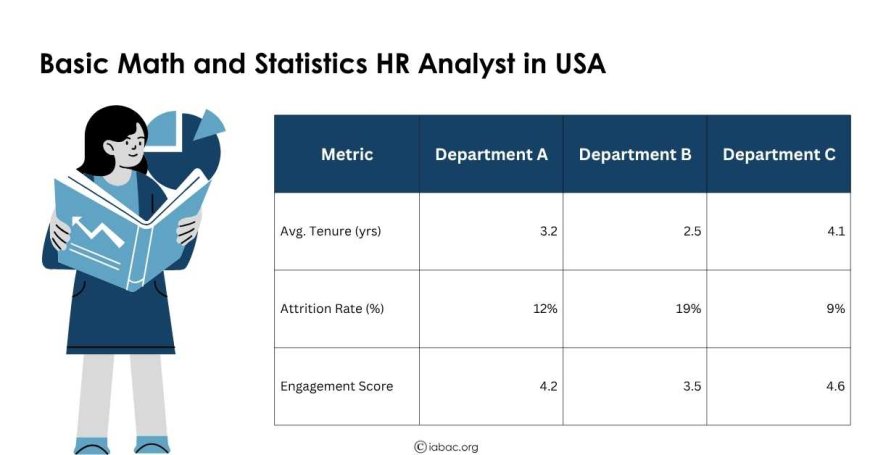
Note: Department B has the highest turnover and lowest engagement score. This means it may need help.
3. Working with HR Tools and Software
A good HR Analyst should be comfortable with tools like:
-
Excel (formulas and pivot tables)
-
Power BI or Tableau (to build dashboards)
-
SQL (to get data from databases)
-
Python or R (optional, for advanced analysis)
4. Showing Data in a Simple Way
It’s important to turn complex data into charts and visuals that others can easily understand.

5. Understanding Business Needs
An HR Analyst should know how people-related data connects with business performance. For example:
-
How does employee turnover affect costs?
-
Is a training program helping employees do better?
6. Explaining the Data Clearly
You should be able to explain what the data says in a way that makes sense to people who don’t work with data. It’s not just about numbers; it’s about telling the story behind the numbers.
Why Become a Certified HR Analytics Professional
Becoming a Certified HR Analytics Professional proves you have the skills to use data in HR. This type of certification is helpful if you want to grow in your career.
What You Learn:
-
How to manage and protect HR data
-
How to make HR decisions based on data
-
How to build models to forecast employee trends
-
How to present your findings clearly
Benefits:
-
Opens the door to better roles in HR
-
Builds trust with your team and managers
-
You can earn more — in the USA, HR Analysts usually make between $70,000 to $100,000+, depending on skills and experience
Why Companies in the USA Need HR Analysts
A lot has changed in the job world — remote work, employee stress, and hiring challenges. That’s why companies now want HR Analysts who can:
-
Guess who might leave the company
-
Improve hiring and training
-
Support diversity and inclusion efforts
-
Help make employees feel valued
HR Analysts help HR teams act early instead of waiting for problems to grow.
Best Data Analytics Certifications for HR Analysts
Apart from HR-specific training, you can also do general data analytics certifications. These help you build strong technical skills.
What You Should Learn:
-
Cleaning and organizing messy data
-
Spotting patterns and trends
-
Simple machine learning ideas
-
Understanding the rules about employee data privacy
Skill Growth Table for HR Analysts

Jobs and Career for HR Analyst in USA
More industries are hiring HR Analysts to make better people decisions.
Sectors Hiring HR Analysts:
-
Tech companies
-
Hospitals and healthcare
-
Banks and insurance companies
-
Retail and manufacturing
Job Titles You Might See:
-
HR Analyst
-
People Analytics Specialist
-
Talent Data Analyst
-
Workforce Planning Analyst
Examples of HR Analytics at Work
Here are real ways companies use HR analytics:
-
Predicting Who Might Leave
Use past data to find which employees may leave soon. Factors may include low engagement or short tenure.
-
Fixing Hiring Problems
Track how candidates move through the hiring process. If most drop out after round 2, maybe there’s a problem in that round.
-
Checking Training Success
After training, compare how those employees perform versus others who didn’t attend the training.
Thinking Like an HR Analyst
It’s not just about collecting reports. A skilled HR Analyst uses data to suggest what might happen next or what needs fixing.
Weighted Score Example:
|
Factor |
Weight |
Score |
Weighted Score |
|
Engagement |
0.3 |
4 |
1.2 |
|
Tenure |
0.2 |
5 |
1.0 |
|
Performance |
0.4 |
3 |
1.2 |
|
Burnout Risk |
0.1 |
2 |
0.2 |
|
Total |
3.6 / 5 |
This shows how you can combine different factors to decide which employees need support.
|
Skill Area |
What It Means |
|
Data Thinking |
Use data to solve HR issues |
|
Stats & Math |
Read and understand HR trends |
|
HR Tools |
Excel, SQL, Power BI, and more |
|
Certification |
Certified HR Analytics Professional (IABAC) |
|
Career Path |
HR Analyst jobs are growing in demand in the USA |
The role of an HR Analyst in the USA is more important than ever. Companies need people who can read data and give useful ideas based on what they find. If you’re in HR or planning to shift into a data-focused HR role, learning the right skills can make a big difference. Getting a Certified HR Analytics Professional certificate from IABAC or building your knowledge with data analytics certifications can really help your growth.