










































Type of Artificial Intelligence
Learn about the different types of artificial intelligence, including narrow AI, general AI, and superintelligent AI, and how they impact our world today.


There are several types of artificial intelligence, each serving a distinct purpose and application in technology and industry. These range from narrow AI, which powers everyday tools, to general AI, which aims to replicate human reasoning. Different types of AI are influencing industries, addressing complex problems, and raising important ethical considerations. Understanding the various types of artificial intelligence helps explain how AI technologies may shape the future. An Artificial Intelligence Certification provides structured learning for those seeking deeper knowledge of the field.
Why is it important to understand the different types of artificial intelligence?
Artificial Intelligence (AI) refers to systems and software capable of performing tasks such as problem-solving, decision-making, and pattern recognition, which traditionally require human intelligence. There are different types of AI, each with its own role and capabilities.
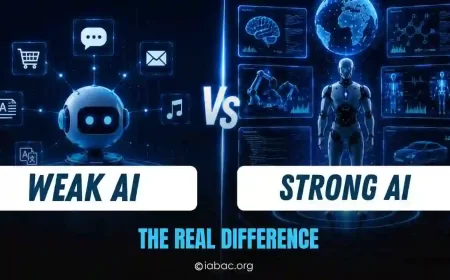
- Narrow AI (Weak AI) is the most common category of artificial intelligence today, powering voice assistants (Siri, Alexa), recommendation systems (Netflix), and facial recognition. These systems are limited to their programmed tasks and cannot operate outside those defined parameters.
- General AI is still just a theory right now. The goal of General AI is to create machines capable of reasoning, learning, and adapting across a broad range of activities, similar to human cognitive abilities. It could perform any intellectual task a human can do.
- Artificial Superintelligence (ASI) goes even further than General AI. ASI would not only match human intelligence but exceed it, potentially making machines much smarter than us.
- Machine Learning is a method used in many AI systems. It allows machines to learn from data and improve their performance over time. This is used in applications like fraud detection, spam filtering, and predicting trends.
Understanding the Different Types of Artificial Intelligence
Artificial Intelligence (AI) is changing the way we live and work. From healthcare and finance to transportation and entertainment, AI is becoming a part of almost every aspect of our daily lives. But what exactly is AI, and what are the different types? In this article, we will break down the various types of AI, explain how they work, and look at how they are being used in the world today.
What is Artificial Intelligence?
Artificial Intelligence refers to machines or software designed to carry out tasks that typically require human intelligence. This includes things like understanding speech, making decisions, recognizing images, and more. However, not all AI systems are the same. Depending on how advanced the technology is, AI can be divided into several categories. Let’s look at the main

1. Narrow AI (Weak AI)
What is Narrow AI
Narrow AI, also known as Weak AI, refers to artificial intelligence systems that are designed to do one specific task or a small group of related tasks. These systems are very good at what they are programmed to do, but they can’t do anything beyond that. Unlike General AI, which is meant to work like human intelligence, Narrow AI focuses only on certain jobs and doesn’t think or adapt like a human would.
Examples of Narrow AI:
- Voice Assistants: Siri, Alexa, and Google Assistant are examples of Narrow AI. They can help with tasks like setting alarms, sending messages, or answering questions, but that’s all they do.
- Recommendation Systems: Sites like Netflix, YouTube, and Amazon use AI to suggest movies, videos, or products based on your past choices and preferences.
- Self-Driving Cars: Companies like Tesla use Narrow AI to make cars drive themselves. The AI helps the car understand what’s around it and make decisions about things like stopping or turning.
Why is Narrow AI Important?
Narrow AI is helpful because it makes tasks faster and easier. It’s already used in many areas like healthcare, finance, shopping, and entertainment. It helps businesses save time, make better decisions, and offer better experiences to customers. Although it does not match human intelligence, Narrow AI is widely adopted across industries for efficiency and accuracy. If you’re interested in learning more about the different types of artificial intelligence and how it works, consider an Artificial Intelligence Certification to expand your knowledge.
2. General AI (AGI - Artificial General Intelligence)
What is General AI
Artificial General Intelligence (AGI) is a type of artificial intelligence that aims to mimic human-like thinking. Unlike other types of artificial intelligence, which are built for specific tasks, AGI is designed to handle any task that a human can do. It can learn, reason, solve problems, and adapt to new situations without needing special programming for each task.
Key Features of AGI:
- Self-learning: AGI can learn from its own experiences and improve over time without needing huge amounts of data.
- Flexibility: It can apply its knowledge to different tasks, adjusting quickly to new challenges.
- Human-like Thinking: AGI can understand complex ideas, think abstractly, and use language just like humans do.

Challenges of General AI:
AGI is still far from being fully developed. The technology today is nowhere near as smart or flexible as the human brain. Building AGI involves solving tough technical problems, such as creating systems that can truly learn and reason. There are also concerns about how AGI might impact society, like job loss, safety risks, and the need for new rules and guidelines to control its use. AGI remains largely theoretical, with no functional systems currently in operation. Many researchers are working on it, but it’s unclear when, or if, AGI will become a reality. If you’re interested in learning more about the future of AI, an Artificial Intelligence Certification can help you gain a deeper understanding of these topics.
3. Superintelligent AI
What is Superintelligent AI
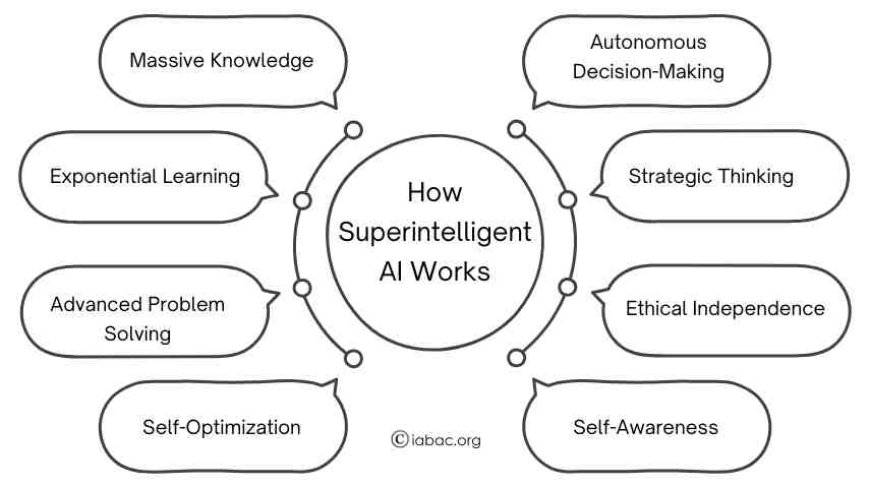
Superintelligent AI refers to a hypothetical system with intelligence surpassing the most advanced human capabilities in all fields, such as science, art, and problem-solving. Unlike other types of AI, which are designed to perform specific tasks, Superintelligent AI would be able to think and reason in ways humans cannot. It could even improve its own abilities by learning and growing on its own without human help.
Potential Impact of Superintelligent AI:
While we don’t have Superintelligent AI yet, if we ever do, it could change the world in powerful ways. For example:
- Scientific Breakthroughs: Superintelligent AI could solve huge problems like climate change, find cures for diseases, or make major advancements in science and technology much faster than human scientists can.
- Solving Global Problems: This potential type of artificial intelligence might also help address issues such as poverty, hunger, or inequality. Superintelligent AI could come up with solutions and put them into action in ways humans might not think of.
Examples (Hypothetical):
- Scientific Discoveries: A Superintelligent AI might solve the climate crisis by finding new ways to protect the planet, or it could discover life-saving medical treatments that would take humans decades to figure out.
- Global Problem Solving: It could develop strategies to address hunger, poverty, and environmental challenges on a scale beyond current human capability.
4. Reactive Machines
What Are Reactive Machines
Reactive machines are a basic type of artificial intelligence (AI). They are designed to perform specific tasks by reacting to certain inputs, but they don’t learn from experience or remember past events. They operate strictly within their programming and lack the ability to improve through experience.
Examples of Reactive Machines:
- Deep Blue: This AI played chess and defeated world champion Garry Kasparov in 1997. It could only calculate the best moves based on the current board, but it didn’t learn from past games.
- Factory Robots: Many robots in factories follow set instructions to do things like assembling parts or painting. They work in a fixed way and can’t adjust unless they’re reprogrammed.
Key Features of Reactive Machines:
- Task-Specific: Reactive machines are built for a single job, like playing chess or assembling parts. They can’t do anything outside that task.
- No Learning: These AIs don’t learn from previous actions. They only do what they were programmed to do and don’t improve over time.
5. Limited Memory AI
What is Limited Memory AI
Limited Memory AI is a type of artificial intelligence that learns from recent experiences but only remembers them for a short time. It uses this information to improve its performance on tasks but forgets older data as time goes on. Unlike more advanced AI systems with extensive data retention, Limited Memory AI only keeps the most relevant and recent data.
Examples of Limited Memory AI:
- Self-Driving Cars: These cars gather data like traffic conditions or obstacles to drive safely. They only keep recent information and forget older details.
- Customer Service Chatbots: Some chatbots remember details of a conversation while you're chatting, but once the conversation ends, they don't keep that information.
Key Features:
- Short-Term Memory: Limited Memory AI focuses on recent data to make decisions and improve. It forgets older information over time.
- Better Performance: It gets better at specific tasks as it learns from recent experiences.
6. Theory of Mind AI (Still in Development)
What is the Theory of Mind AI
Theory of Mind AI is a type of artificial intelligence still being developed. It aims to enable machines to understand human emotions, thoughts, and intentions. In addition to processing data, this AI could identify emotional cues and intent, enabling more context-aware responses.
Applications:
- Human-Robot Interaction: AI with this ability could be used in fields like therapy, elder care, and education, where understanding emotions is key. For instance, robots could assist in mental health or provide companionship by sensing feelings and reacting accordingly.
- Better Communication: With a deeper understanding of emotions, AI could improve conversations in customer service, education, and personal assistance, enabling more human-like interaction in communication.
This version simplifies the content, avoids the complex words you mentioned, and keeps the explanations clear for a general audience while also including terms like Type of artificial intelligence and Artificial Intelligence Certification. Let me know if you'd like to make any more adjustments! Understanding the types of artificial intelligence helps professionals and businesses prepare for both opportunities and challenges AI brings. While some forms are widely used today, others remain theoretical but carry significant implications for the future. Earning an Artificial Intelligence Certification can equip you with the skills to work with current AI tools and stay prepared for upcoming developments.