

















































What Is AI Medical Diagnosis
Understand AI medical diagnosis and how artificial intelligence uses machine learning medical imaging and patient data to support faster accurate clinical decisions.

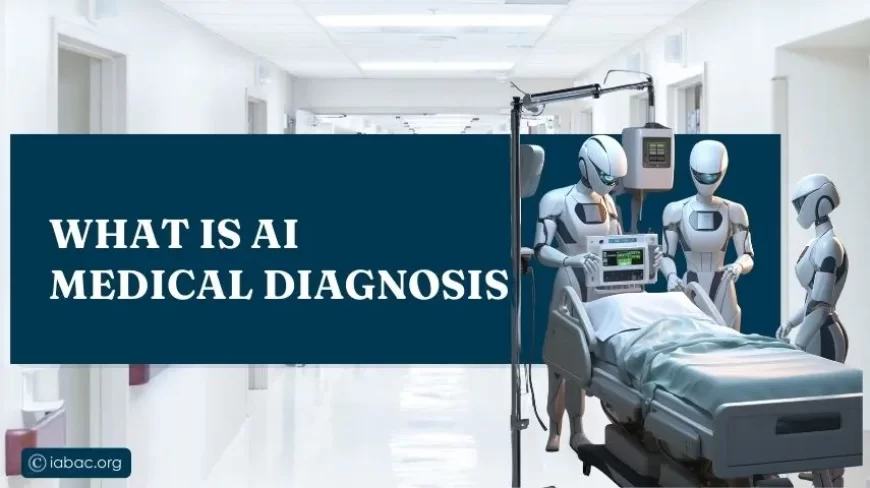
Imagine visiting a hospital where your doctor studies your symptoms while a powerful computer system quietly reviews millions of medical records in seconds. It compares patterns, analyzes images, evaluates lab results, and highlights potential risks instantly. This is not a futuristic idea. This is happening right now through AI Medical Diagnosis.
Artificial intelligence is reshaping healthcare systems across the world. Hospitals are using AI to detect cancer earlier, predict heart attacks, monitor ICU patients, and assist surgeons during procedures. The goal is simple: improve accuracy, reduce errors, and save lives.
In this comprehensive guide, we will explore:
- What AI Medical Diagnosis really means
- Can AI do medical diagnosis independently?
- Is there a free AI doctor?
- Is AI diagnosis FDA approved?
- What is AI diagnosis in cardiology?
- Global statistics and real hospital case studies
- Career opportunities and certification pathways
Let’s understand how medical AI diagnosis is transforming modern healthcare.
Understanding AI Medical Diagnosis
AI Medical Diagnosis refers to the use of artificial intelligence systems to assist healthcare professionals in identifying diseases by analyzing patient data. These systems use:
AI systems are trained using massive datasets such as:
- Electronic Health Records (EHRs)
- Medical imaging data
- Lab test results
- Genetic data
- Wearable health device readings
Unlike traditional software, AI improves over time by learning patterns from data. It identifies relationships between symptoms, test results, and outcomes faster than manual review.
However, AI functions as a support tool, not a replacement for physicians.
Global Statistics on AI in Healthcare
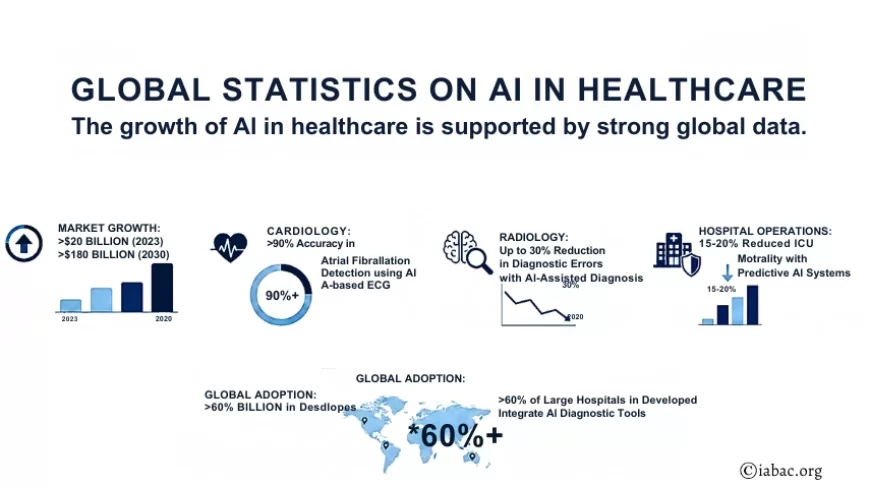
The growth of AI in healthcare is supported by strong global data.
- The global AI healthcare market was valued at over USD 20 billion in 2023 and is projected to exceed USD 180 billion by 2030.
- Studies show that AI-assisted radiology can reduce diagnostic errors by up to 30%.
- In cardiology, AI-based ECG interpretation systems have demonstrated accuracy rates exceeding 90% in detecting atrial fibrillation.
- Hospitals using predictive AI systems have reported reduced ICU mortality rates by approximately 15–20%.
- According to global healthcare analytics reports, over 60% of large hospitals in developed countries are integrating AI-powered diagnostic tools.
These numbers show that AI Medical Diagnosis is not experimental—it is already widely implemented.
Can AI Do Medical Diagnosis?
Yes, AI can assist in medical diagnosis across multiple domains. However, it works best alongside healthcare professionals.
1. AI in Radiology
AI radiology tools analyze:
- X-rays
- CT scans
- MRI scans
- Mammograms
Real Case Study – Breast Cancer Detection
In the United Kingdom, a large-scale study involving the NHS demonstrated that AI systems reduced the workload of radiologists by nearly 40% while maintaining or improving detection accuracy for breast cancer screening.
Real Case Study – Lung Disease Detection
During the COVID-19 pandemic, AI models were trained to detect lung infections from chest scans. Hospitals in China and Europe used AI to quickly identify suspected cases when testing resources were limited.
2. AI in Oncology
AI supports cancer diagnosis by:
- Analyzing biopsy slides
- Identifying tumor growth patterns
- Predicting chemotherapy responses
Watson for Oncology was developed to assist oncologists in recommending treatment plans based on clinical data and research publications.
3. AI in Neurology
AI helps detect:
- Stroke from CT scans
- Brain tumors
- Alzheimer’s disease patterns
AI stroke detection systems are particularly valuable because early detection can significantly reduce long-term damage.
Is There a Free AI Doctor?
There are AI-powered tools available online that provide symptom checking services. These include:
- Mobile health apps
- Online AI chat systems
- Digital triage tools
These systems can:
- Suggest possible causes of symptoms
- Provide health education
- Recommend consulting a doctor
However, they are not substitutes for licensed physicians. Free AI tools do not have access to full medical history or perform physical examinations.
They are helpful for awareness but not complete diagnosis.
Is AI Diagnosis FDA Approved?
Regulation plays a major role in healthcare AI.
The U.S. Food and Drug Administration (FDA) regulates clinical AI systems.
Many AI-powered diagnostic tools have received FDA approval, including:
- AI-based diabetic retinopathy screening systems
- Stroke detection software
- Cardiac rhythm monitoring devices
- AI imaging systems for cancer detection
FDA approval ensures:
- Clinical testing has been conducted
- Safety standards are met
- The system performs as intended
However, not all AI healthcare apps are FDA approved. Only tools used in clinical settings undergo regulatory review.
Other countries such as the UK, Canada, and India also have medical regulatory authorities overseeing AI healthcare technologies.
What Is AI Diagnosis in Cardiology?
Cardiology is one of the most advanced areas of AI application.
Heart disease remains the leading cause of death worldwide. AI helps improve early detection and monitoring.
AI Applications in Cardiology:
- ECG interpretation
- Arrhythmia detection
- Heart attack risk prediction
- Heart failure monitoring
- Cardiac imaging analysis
Real Case Study – AI ECG Monitoring
Researchers at Stanford University developed an AI model capable of detecting atrial fibrillation from ECG signals with high accuracy. This allowed earlier treatment and reduced complications.
Real Case Study – Remote Monitoring
Hospitals in the United States use AI-powered wearable devices to monitor heart patients at home. If abnormal heart rhythms are detected, alerts are sent to physicians immediately.
AI diagnosis in cardiology has improved preventive care significantly.
How AI Medical Diagnosis Works
Step 1: Data Collection: Patient data is gathered from imaging systems, lab tests, wearable devices, and EHRs.
Step 2: Data Processing: The data is cleaned and structured.
Step 3: Model Training: AI models learn from historical patient data.
Step 4: Pattern Recognition: The system identifies similarities between new patient data and past cases.
Step 5: Clinical Validation: Doctors review AI-generated insights.
Step 6: Continuous Learning: Models are updated with new data for better accuracy.
Benefits of AI Medical Diagnosis
- Faster analysis of complex datasets
- Reduced diagnostic errors
- Early disease detection
- Personalized treatment plans
- Improved hospital efficiency
- Support for rural and remote healthcare
Hospitals using AI clinical decision support systems report improved patient outcomes and operational efficiency.
Challenges in AI Medical Diagnosis
Despite progress, challenges remain:
- Data privacy concerns
- Algorithm bias
- Ethical considerations
- High implementation costs
- Integration with hospital systems
Strong governance and regulatory compliance are essential for safe AI deployment.
How to Enter AI Medical Diagnosis
AI in Medical Diagnosis
|
Category |
Details |
|
Field |
AI in Healthcare / Medical Diagnosis |
|
Career Scope |
Growing demand, strong impact, high innovation |
|
Main Focus |
Using AI to assist doctors in diagnosis and treatment decisions |
In-Demand Roles
|
Role |
What They Do (Simple Explanation) |
|
Healthcare Data Scientist |
Analyzes patient data to build prediction models |
|
AI Clinical Analyst |
Uses AI tools to support clinical decision-making |
|
Medical AI Engineer |
Builds AI systems for diagnosis (e.g., imaging tools) |
|
Healthcare AI Product Manager |
Manages AI healthcare products from idea to launch |
|
Clinical Data Researcher |
Studies medical data to improve healthcare solutions |
Skills Required
|
Skill |
Why It’s Important |
|
Machine Learning |
To build diagnosis prediction models |
|
Healthcare Data Analytics |
To analyze patient and hospital data |
|
Medical Imaging Analysis |
To work with X-rays, MRI, CT scans |
|
Programming (Python, R) |
To develop AI models and analyze data |
|
Understanding Healthcare Regulations |
To ensure compliance with medical laws and patient safety |
Why Artificial Intelligence Certification Matters
Structured learning helps students build credibility.
An Artificial Intelligence Certification ensures:
- Practical training
- Industry-aligned curriculum
- Understanding of AI ethics
- Healthcare data standards knowledge
Certification increases job opportunities and professional trust.
Certified AI Professional for Healthcare & Clinical Operations
The Certified AI Professional for Healthcare & Clinical Operations program prepares professionals to:
- Apply AI tools in hospitals
- Understand clinical workflows
- Implement AI-based diagnostic systems
- Ensure regulatory compliance
This certification bridges technology and clinical practice.
How IABAC Supports AI Healthcare Careers
IABAC offers global certifications focused on analytics and artificial intelligence. Through structured training and industry-based case studies, IABAC programs prepare learners for real-world AI healthcare applications.
Students gain:
- Practical exposure
- Global recognition
- Career guidance
- Industry credibility
For aspiring professionals, IABAC certifications provide a structured pathway into AI Medical Diagnosis and healthcare analytics.
The Future of AI Medical Diagnosis
Future developments may include:
- AI-assisted robotic surgeries
- Real-time ICU monitoring systems
- Genomic AI-based treatment planning
- Advanced digital health ecosystems
- Personalized medicine powered by predictive healthcare models
AI will continue improving speed, safety, and precision in healthcare.
AI Medical Diagnosis is transforming healthcare worldwide. From radiology and oncology to cardiology and predictive modeling, AI supports doctors with fast and accurate insights. Free AI symptom checkers offer basic support, but licensed physicians remain essential. Many clinical AI tools are FDA approved, ensuring safety and reliability. For students and professionals, earning an Artificial Intelligence Certification or becoming a Certified AI Professional for Healthcare & Clinical Operations opens strong career opportunities in healthcare AI.
AI does not replace doctors. It strengthens them. It supports better decisions, earlier interventions, and improved patient outcomes. And when technology and human expertise work together, healthcare becomes safer, smarter, and more efficient.