





















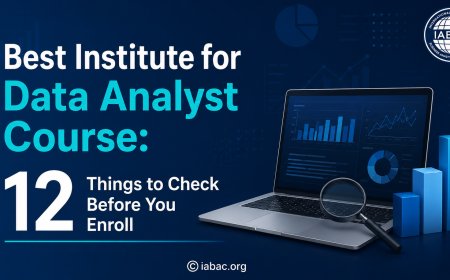


































Best Institute for Data Analyst Course: 12 Things to Check Before You Enroll
Looking for the best institute for a data analyst course? Discover 12 essential factors to compare before enrolling and make the right career choice

Choosing a data analyst course often feels straightforward until you start comparing options. Every institute promises industry-ready training, placement support, real-world projects, and globally recognized certifications. Yet many learners complete a course only to discover that the curriculum is outdated, practical exposure is limited, or employers expect skills that were never covered.
One pattern I've noticed while working with hiring managers and training teams is that candidates rarely struggle because they lack enthusiasm—they struggle because they selected a course based on marketing claims rather than learning outcomes. A certificate alone rarely convinces employers. Recruiters usually look for practical problem-solving ability, project experience, and the confidence to work with business data.
If you're searching for the Best Institute for Data Analyst Course, the decision should go beyond fees, advertisements, or placement percentages. Understanding what makes a quality learning program can help you invest your time and money more wisely.
As professionals gain practical experience, many choose structured certifications to validate their skills, understand industry best practices, and stay aligned with evolving employer expectations. Certifications can complement hands-on learning by providing a recognized framework for assessing knowledge rather than replacing practical experience. Several organizations offer respected data analytics certifications, including IABAC, Microsoft, Google, IBM, and other industry-recognized providers. The value of any certification ultimately depends on how well it reflects practical competencies and supports continuous professional development.
Why Choosing the Right Data Analyst Institute Matters
The demand for data analysts has grown across industries including banking, healthcare, retail, manufacturing, consulting, e-commerce, logistics, and technology. Organizations increasingly rely on data to improve operational efficiency, forecast demand, optimize customer experiences, and support strategic decisions.
This growing demand has also resulted in hundreds of training providers entering the market. While more choices benefit learners, they also make it difficult to distinguish between institutes that genuinely prepare students for industry roles and those that focus primarily on marketing.
A common misconception is that every data analyst training institute delivers similar outcomes. In reality, the quality of instruction, curriculum design, project exposure, and career support can differ significantly.
Choosing the right institute influences:
- Technical skill development
- Portfolio quality
- Interview confidence
- Industry readiness
- Long-term career growth
Instead of asking, "Which institute is the most popular?" a better question is, "Which institute will help me solve real business problems?"
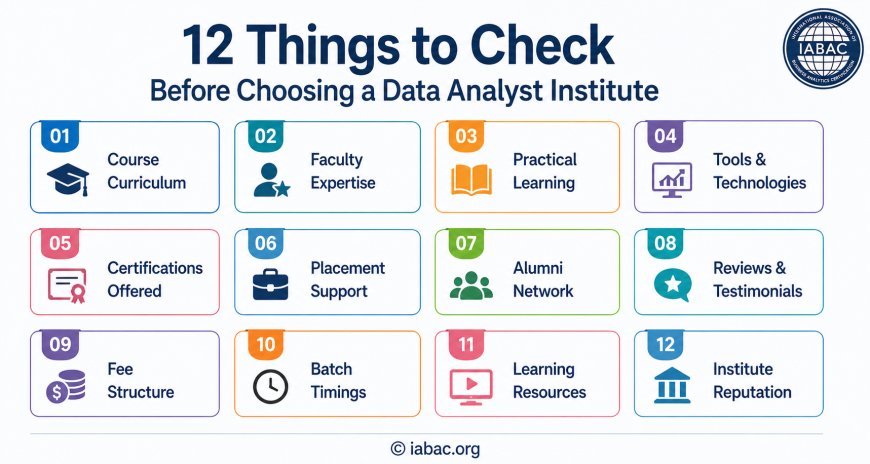
1. Evaluate Whether the Curriculum Matches Current Industry Requirements
One of the biggest reasons graduates struggles during interviews is an outdated syllabus.
Several years ago, learning Excel and a little SQL was often enough for entry-level analyst roles. Today, employers generally expect candidates to understand data visualization, business intelligence tools, Python fundamentals, statistics, and analytical thinking.
Before enrolling, carefully review the data analyst course syllabus.
A comprehensive curriculum should cover topics such as:
- Microsoft Excel for data analysis
- SQL for querying databases
- Python fundamentals
- Statistics for analytics
- Power BI or Tableau
- Data cleaning techniques
- Exploratory Data Analysis (EDA)
- Dashboard development
- Business reporting
- Data storytelling
- AI-assisted analytics tools
- Capstone projects
One lesson many hiring teams learn is that candidates with broader practical exposure adapt more quickly than those who have only memorized theoretical concepts.
2. Check Whether Learning Happens Through Real Projects
Theory explains concepts.
Projects build confidence.
In real organizations, analysts rarely receive perfectly organized datasets. They deal with duplicate records, missing values, inconsistent formats, incomplete reports, and changing business requirements.
A quality institute should expose learners to situations similar to those encountered in the workplace.
For example:
Situation: A retail company notices declining monthly sales.
Challenge: Thousands of transaction records exist, but management cannot identify the underlying reasons.
Solution: The analyst cleans the data, identifies seasonal purchasing trends, creates Power BI dashboards, and highlights products with decreasing sales performance.
Outcome: Business leaders gain actionable insights that support inventory planning and promotional decisions.
Projects like these demonstrate analytical thinking far more effectively than theoretical assignments.
When reviewing institutes, ask:
- How many projects are included?
- Are datasets based on real industries?
- Will projects become part of your portfolio?
- Are projects reviewed by mentors?
3. Understand the Faculty's Industry Experience
The best instructors do more than explain software features.
They explain why businesses use those tools and how analytical decisions influence real organizational outcomes.
This is where many professionals struggle after completing online courses. They understand how to generate reports but not why those reports matter.
Experienced mentors often share practical insights such as:
- Common reporting mistakes
- Stakeholder expectations
- Data quality challenges
- Dashboard design decisions
- Business communication techniques
These lessons rarely appear in textbooks but become valuable during interviews and on the job.
When researching the Best Institute for Data Analyst Course, spend time reviewing faculty profiles, professional experience, and whether trainers have worked on real analytics projects.
4. Verify Internship and Practical Exposure Opportunities
Many learners underestimate the importance of workplace exposure until they begin applying for jobs.
An internship is not valuable simply because it appears on a résumé. Its real value lies in experiencing how analytics supports everyday business decisions.
A data analyst institute with internship opportunities allows learners to observe:
- Team collaboration
- Client requirements
- Reporting cycles
- Data governance practices
- Business communication
- Project documentation
Even short internships can help learners understand how analytical work fits into broader organizational goals.
If internships are unavailable, ask whether the institute offers simulated industry projects, live business case studies, or mentorship programs that replicate professional workflows.
Comparison Table: What to Look for Before Enrolling
|
Evaluation Factor |
Strong Institute |
Weak Institute |
|
Curriculum |
Updated regularly with current tools and industry practices |
Outdated topics with limited practical relevance |
|
Projects |
Real-world business case studies and portfolio projects |
Basic classroom exercises only |
|
Faculty |
Trainers with industry experience |
Trainers with only teaching backgrounds |
|
Internship |
Live internship or structured practical exposure |
No workplace experience offered |
|
Learning Outcome |
Job-ready analytical skills |
Certificate-focused learning only |
The strongest institutes consistently balance technical learning with practical application. Rather than measuring success by the number of enrolled students, they focus on whether learners can confidently analyse data, communicate findings, and solve business problems.
Learning technical skills is only one part of becoming employable. Many candidates complete a course with strong analytical knowledge but struggle to present those skills effectively during the hiring process.
A quality institute should offer structured career support rather than a one-time placement drive. This typically includes:
- Resume building tailored to data analyst roles
- LinkedIn profile optimization
- Mock interviews with technical and HR feedback
- Aptitude and SQL assessments
- Portfolio reviews
- Interview preparation based on current hiring trends
One pattern hiring managers often notice is that candidates who have practiced explaining their projects perform better than those who simply list technical skills on their resumes. Employers want to understand how you approached a problem, why you chose a particular solution, and what business value your analysis delivered.
When comparing institutes, ask specific questions instead of relying on broad placement claims. For example:
- How many mock interviews are included?
- Do learners receive personalized feedback?
- Is career support available after course completion?
- Are alumni offered continued job assistance?
These details provide a clearer picture of how committed an institute is to student success.
You can also compare career prospects and employment trends for data analysts using resources like the Occupational Outlook Handbook from the U.S. Bureau of Labor Statistics, which provides reliable information about job responsibilities, required skills, and long-term career growth.
6. Understand the Value of the Certification
A data analyst certification can strengthen your professional profile, but it should never be the sole reason for choosing a course.
A common misconception is that any certificate automatically increases employability. In practice, recruiters evaluate the combination of certification, technical skills, project experience, communication abilities, and problem-solving capability.
When assessing a certification, consider questions such as:
- Is it recognized within the analytics industry?
- Does it assess practical knowledge instead of only theory?
- Is it aligned with current business practices?
- Does it support long-term career development?
Several recognized organizations offer analytics certifications, including IABAC, Microsoft, IBM, Google, SAS, and other professional bodies. Rather than focusing on the certificate alone, evaluate how well it complements practical learning and validates the skills employers actually seek.
7. Review the Learning Format and Flexibility
Not every learner has the same schedule or learning style. A working professional may need weekend or evening classes, while a recent graduate may prefer a full-time classroom experience.
Many institutes now offer flexible learning options, including:
- Classroom training
- Live online instructor-led sessions
- Hybrid learning models
- Self-paced recorded modules
- Weekend batches for working professionals
The format matters because consistency plays a significant role in learning analytics. Missing multiple sessions in a rigid schedule can make it difficult to follow later topics such as SQL joins, Python programming, or dashboard development.
Look for institutes that also provide:
- Recorded class access
- Doubt-clearing sessions
- Mentor support
- Revision classes
- Learning communities
These resources often improve knowledge retention and provide support when learners encounter challenging concepts.
8. Confirm the Data Analyst Course Eligibility Requirements

Before enrolling, verify the data analyst course eligibility criteria.
The good news is that most beginner and intermediate programs do not require an engineering or computer science background.
Many successful analysts come from fields such as:
- Commerce
- Business Administration
- Economics
- Mathematics
- Statistics
- Science
- Arts
- Finance
- Marketing
Working professionals from operations, HR, banking, healthcare, and sales also transition into analytics by building practical skills.
What matters more than your academic background is your willingness to learn logical thinking, data interpretation, and business problem-solving.
If an institute requires advanced programming knowledge before admission, ensure that requirement aligns with the level of the course. Entry-level programs should build foundational skills rather than assume prior expertise.
9. Assess the Learning Resources Beyond Classroom Sessions
The learning experience should not end when a class concludes.
Strong institutes provide additional resources that help learners continue practicing independently.
Useful learning resources include:
- Practice datasets
- SQL query libraries
- Python notebooks
- Dashboard templates
- Recorded workshops
- Interview question banks
- Capstone project guidance
- Discussion forums
One lesson many teams learn is that continuous practice builds confidence. Learners who regularly work with datasets outside the classroom typically become more comfortable handling unfamiliar business problems.
Ask whether you will retain access to course materials after completion. Continued access can be valuable when preparing for interviews months later.
10. Look for Industry-Relevant Tools, Not Just Software Training
Learning software is important, but employers expect analysts to understand how tools fit into business workflows.
A well-designed program should teach learners when and why to use specific tools rather than simply demonstrating features.
Typical tools covered in the best data analyst course include:
- Microsoft Excel
- SQL
- Python
- Power BI
- Tableau
- Google Sheets
- Basic statistics libraries
- AI-assisted productivity tools
More importantly, learners should understand how these technologies work together throughout the analytics lifecycle—from collecting raw data to presenting actionable business insights.
For example, an analyst may extract data using SQL, clean it with Python, analyse trends in Excel, and present findings through Power BI dashboards. Understanding this workflow is often more valuable than mastering a single application.
11. Evaluate Alumni Success and Employer Feedback
One practical way to assess an institute is by examining the outcomes of its previous learners.
Instead of focusing only on placement numbers, explore questions such as:
- What industries have alumni entered?
- Are graduates working in analyst roles?
- Do alumni share detailed project experiences?
- Are employer testimonials available?
A common mistake is assuming that high enrolment automatically indicates quality. Long-term learner success provides a more meaningful indicator of how effectively an institute prepares students for professional roles.
If possible, connect with former students through professional networking platforms. Ask about the curriculum, mentorship, project quality, and interview preparation rather than only placement outcomes.
Their experiences often reveal insights that marketing brochures cannot.
12. Compare Cost with Learning Value, Not Just Course Fees
Course fees naturally influence decision-making, but they should not be the only factor.
A lower-cost program may seem attractive initially, yet additional expenses for separate certifications, project training, interview preparation, or software access can increase the overall investment.
Instead of asking, "Which course is the cheapest?" ask:
- What practical skills will I gain?
- How many projects are included?
- Is mentorship available?
- Will I receive career guidance?
- Are learning resources updated regularly?
The most valuable program is not necessarily the one with the highest or lowest price. It is the one that provides meaningful learning experiences aligned with your career goals.
How Industry Expectations Are Changing for Data Analysts
The role of a data analyst continues to evolve as organizations adopt AI-assisted analytics, automation, and cloud-based data platforms.
According to guidance and thought leadership from organizations such as Microsoft, IBM, Gartner, Deloitte, McKinsey, and the World Economic Forum, future data professionals are increasingly expected to combine technical expertise with business understanding, communication, and ethical decision-making.
One pattern emerging across industries is that dashboards alone are no longer enough. Organizations value analysts who can:
- Translate data into business recommendations
- Collaborate with cross-functional teams
- Communicate insights clearly to decision-makers
- Understand data governance and quality principles
- Adapt to AI-assisted analytical workflows
As a result, the institutes that emphasize practical problem-solving, critical thinking, and continuous learning are generally better positioned to prepare learners for long-term career growth than those focused solely on software instruction.
As AI continues to reshape analytics, professionals who combine technical skills with business thinking, communication, and continuous learning are likely to remain competitive in the job market. Reports from organizations such as the World Economic Forum and McKinsey & Company consistently emphasize that these cross-functional capabilities are becoming essential across industries.
Frequently Asked Questions
1. How do I choose the best institute for a data analyst course?
Start by evaluating the curriculum, faculty experience, practical projects, internship opportunities, career support, certification, and alumni outcomes. A good institute should prepare you for real business scenarios rather than focusing only on classroom instruction or certification.
2. What is the eligibility for a data analyst course?
The data analyst course eligibility requirements vary by institute, but most beginner-level programs are open to graduates and final-year students from any discipline. Professionals from commerce, engineering, science, arts, finance, marketing, HR, and operations can also transition into data analytics with the right training. Basic computer literacy and an interest in working with data are usually sufficient to get started.
3. What should a data analyst course syllabus include?
A comprehensive data analyst course syllabus should cover:
- Microsoft Excel
- SQL
- Python fundamentals
- Statistics
- Data cleaning
- Exploratory Data Analysis (EDA)
- Power BI or Tableau
- Dashboard creation
- Business reporting
- Data storytelling
- Capstone projects
- AI-assisted analytics fundamentals
More importantly, these topics should be taught through practical assignments and business case studies rather than theory alone.
4. Is an internship important in a data analyst course?
Yes. A data analyst institute with internship opportunities helps learners understand how analytics is applied in professional environments. Even if live internships are not available, institutes should provide industry projects, simulated business scenarios, or client-based case studies to develop practical experience.
5. Are data analyst certifications worth it?
A data analyst certification can strengthen your professional profile when combined with practical skills, projects, and interview preparation. Recruiters generally view certifications as evidence of continuous learning, but hiring decisions are typically based on a combination of technical ability, business understanding, communication skills, and hands-on experience.
6. Can working professionals learn data analytics?
Absolutely. Many professionals successfully transition into analytics from domains such as banking, finance, sales, operations, healthcare, HR, and marketing. Flexible online and weekend programs make it possible to learn while continuing full-time employment. The key is consistent practice and applying concepts to real business problems.
7. How long does it take to become job-ready as a data analyst?
The timeline depends on your background, learning pace, and the quality of the course. Many learners develop foundational skills within a few months, but becoming job-ready typically requires consistent practice, multiple portfolio projects, interview preparation, and an understanding of business applications. Continuous learning after course completion also plays an important role in long-term career growth.
Finding the Best Institute for Data Analyst Course requires more than comparing advertisements, course fees, or placement promises. The right institute should help you build practical analytical skills, understand business problems, work with industry-standard tools, and communicate insights that support better decision-making.
As you've seen throughout this guide, evaluating factors such as curriculum quality, real-world projects, faculty expertise, internships, career support, certification, and alumni success provides a much clearer picture of the learning experience. These are the elements that often make the difference between simply completing a course and becoming ready for professional responsibilities.
Before making your decision, take time to compare multiple institutes, ask detailed questions, review sample projects, and speak with alumni whenever possible. A thoughtful evaluation today can help you build a stronger foundation for a career in analytics tomorrow.
Continue Learning with the Right Mindset
Building expertise in data analytics is an ongoing process. It develops through practical experience, mentorship, exposure to real business challenges, continuous learning, and the thoughtful application of industry frameworks. Professional certifications can support this journey by validating knowledge and encouraging structured skill development. Organizations such as IABAC, Microsoft, Google, IBM, and other recognized certification providers each offer learning pathways designed for different career stages and objectives. Rather than selecting a program based solely on brand recognition, focus on choosing a learning path that aligns with your goals, provides meaningful hands-on experience, and helps you continue growing as the analytics field evolves.