


















































Data Scientist Career Path, Skills & Salaries
Data scientist career guide covering roles, skills, salaries, tools, and future demand to help you decide if data science fits your long-term career goals.


If you’ve been exploring career options in tech, chances are the role of a Data Scientist has caught your attention. And for good reason. Data scientists sit at the intersection of data, technology, and business decision-making. They turn raw information into insights that influence products, policies, and profits.
But here’s the reality many people don’t talk about: data science isn’t just about coding or math. It’s a long-term career path that evolves with skills, experience, and industry demand. In this guide, we’ll walk through the data scientist career path, the skills you need, realistic salary expectations, and where the future demand is heading—so you can decide if this career truly fits you.
What Does a Data Scientist Do?
A data scientist’s core responsibility is simple to explain but complex to execute: use data to solve real-world problems.
On a typical day, a data scientist may:
-
Analyze large datasets to uncover patterns and trends
-
Build predictive models using machine learning
-
Work with business teams to define problems worth solving
-
Communicate insights through dashboards and reports
-
Improve decision-making with data-driven recommendations
Unlike purely technical roles, data scientists must understand both data and business context. Knowing how to build a model is important—but knowing why that model matters to the organization is what sets strong professionals apart.
Data Scientist Career Path: Step-by-Step Growth
The data scientist career path is not a single jump—it’s a progression.
Entry-Level Roles
Most professionals start in roles such as:
-
Junior Data Scientist
-
Data Analyst
-
Business Analyst
At this stage, the focus is on data cleaning, exploratory analysis, and basic modeling. Strong foundations in statistics and programming matter more than advanced algorithms.
Mid-Level Data Scientist
With 2–5 years of experience, responsibilities expand:
-
Designing machine learning models
-
Handling larger datasets
-
Working independently on projects
-
Collaborating closely with product and business teams
This is where professionals begin to specialize—finance, healthcare, marketing, or AI-driven products.
Senior & Leadership Roles
Senior data scientists and leads focus on:
-
Strategy and model architecture
-
Mentoring junior team members
-
Aligning data science with business goals
-
Driving organizational data maturity
Many also move into roles like Machine Learning Engineer, AI Architect, or Head of Data.
Essential Data Scientist Skills
Technical Skills
Programming
Programming is the primary interface between a data scientist and data. Python and R are widely used because they support data manipulation, analysis, and modeling in a single environment. Python is often preferred in production settings due to its integration with software systems, while R remains common in research and statistical analysis. SQL is not optional; most business data lives in relational databases, and efficient querying reduces analysis time and errors.
Key focus areas:
-
Writing clean, readable code
-
Using libraries for data handling and modeling
-
Understanding version control and reproducibility
Statistics and Mathematics
Statistics provide the foundation for interpreting results correctly. Without it, models can produce outputs that appear valid but are misleading. Probability helps assess uncertainty, hypothesis testing supports decision-making, and regression explains relationships between variables. Linear algebra and calculus appear less directly but underpin many machine learning methods.
What matters in practice:
-
Knowing when assumptions hold and when they fail
-
Interpreting confidence, variance, and bias
-
Explaining results in practical terms
Machine Learning
Machine learning extends statistical thinking to larger and more complex datasets. Supervised learning is used for prediction and classification, while unsupervised learning helps discover structure in data. Model evaluation, feature selection, and tuning are often more important than choosing complex algorithms.
Practical considerations:
-
Avoiding overfitting
-
Selecting appropriate metrics
-
Understanding trade-offs between accuracy and interpretability
Data Visualization
Visualization connects analysis with decision-making. Charts, dashboards, and reports help stakeholders understand patterns and trends without reading code. Poor visualization can distort insights, even when the analysis is correct.
Effective visualization involves:
-
Choosing suitable chart types
-
Reducing noise and clutter
-
Aligning visuals with the business question
Big Data and Cloud Platforms
As datasets grow, local tools become insufficient. Familiarity with distributed systems and cloud platforms allows data scientists to work with large-scale data. This does not require deep infrastructure expertise but does require understanding how data pipelines and scalable storage work.
Common expectations:
-
Working with cloud-based data warehouses
-
Understanding batch versus real-time processing
-
Managing costs and performance trade-offs
Non-Technical Skills
Business Understanding
Technical output only has value when it aligns with business objectives. Data scientists must understand how organizations measure success, what constraints exist, and how insights influence decisions.
This includes:
-
Translating business questions into analytical tasks
-
Prioritizing work based on impact
-
Recognizing practical limitations
Communication and Storytelling
Analysis is incomplete until it is understood. Clear explanations help stakeholders trust and use results. This often means avoiding technical language and focusing on implications rather than methods.
Strong communication involves:
-
Structuring insights logically
-
Using visuals and examples
-
Adjusting depth based on the audience
Problem Framing and Critical Thinking
Many data science challenges fail before analysis begins due to poorly defined problems. Framing the right question often matters more than advanced modeling. Critical thinking helps identify data gaps, flawed assumptions, and alternative explanations.
Core abilities:
-
Asking precise questions
-
Evaluating data quality
-
Challenging results before presenting them
Why Non-Technical Skills Matter
Technical skills can often be learned incrementally. The ability to explain insights, connect them to decisions, and guide action determines long-term effectiveness. A data scientist who communicates clearly will usually have greater influence than one who relies only on technical depth.
This balance between analysis and interpretation defines successful data science in real-world settings.
Tools & Technologies Used by Data Scientists
Data scientists use a broad range of tools across the data lifecycle, from analysis to deployment. While specific tools change over time, understanding the concepts behind them remains essential.
Programming Environments
Python and R are widely used for data analysis and modeling. Python is common in production settings, while R is often used for statistical work. More important than the language is the ability to write structured, reusable code and move analysis into real-world use.
Machine Learning Libraries
Machine learning libraries provide ready implementations of common algorithms. Effective use depends on choosing suitable models, understanding their assumptions, and interpreting results rather than relying on default settings.
Data Processing Frameworks
Large datasets require tools that support parallel and distributed processing. These frameworks help manage scale, performance, and data flow, especially when working with high-volume or continuous data.
Data Visualization Tools
Visualization tools convert analysis into insights that support decisions. Clear charts and dashboards matter more than the platform used, as poor visuals can weaken strong analysis.
Cloud-Based Analytics Platforms
Cloud platforms offer scalable storage, computing, and collaboration. Data scientists benefit from understanding data access, cost control, and basic governance rather than infrastructure details.
Focus on Adaptability
Tool preferences evolve, but core principles remain stable. Employers value data scientists who can learn new tools quickly and apply concepts across different environments.
Certifications for Data Scientists
Certifications play a growing role in data science careers, especially for:
-
Career switchers
-
Early professionals
-
Those seeking credibility in competitive markets
The right certification can:
-
Validate practical skills
-
Improve interview shortlisting
-
Boost confidence and salary negotiations
Beginner certifications focus on fundamentals, while advanced programs emphasize applied machine learning, AI, and business use cases. The value lies not in the certificate itself—but in the skills it proves.
Data Scientist Salary Trends (2025–2026)
Entry-Level Salaries
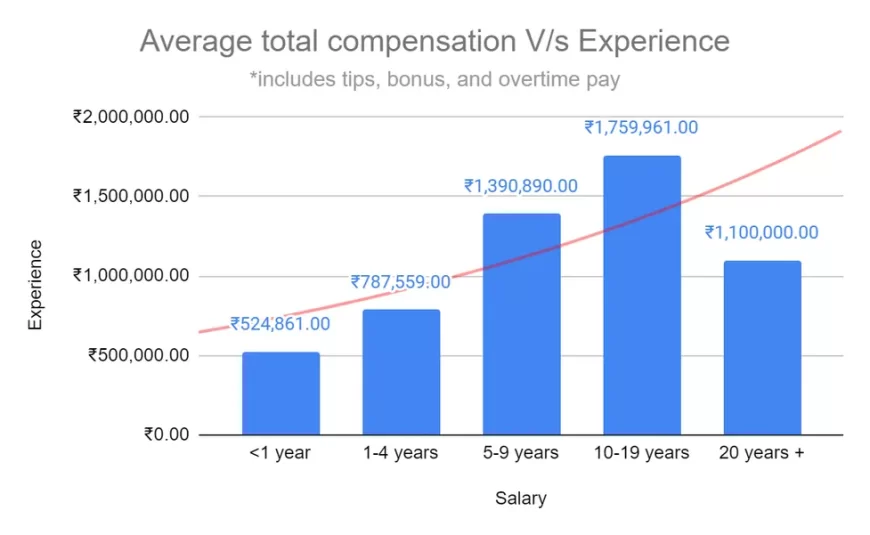
New data scientists typically earn competitive starting salaries, especially in tech-driven organizations. Even at the entry level, compensation often exceeds many traditional roles.
Mid-Level Salaries
With a few years of experience, salaries increase significantly—driven by:
-
Project ownership
-
Industry specialization
-
Advanced technical skills
Senior-Level Salaries
Senior data scientists command premium pay due to:
-
Strategic decision-making impact
-
Leadership responsibilities
-
Advanced AI and modeling expertise
Salaries also vary by region, industry, and company size. Professionals who combine technical skills with business understanding consistently earn more.
Job Market & Demand for Data Scientists
The demand for data scientists continues to grow because:
-
Organizations rely on data for competitive advantage
-
AI-driven decision-making is expanding
-
Digital transformation spans every industry
Industries hiring aggressively include:
-
Technology and SaaS
-
Finance and banking
-
Healthcare and life sciences
-
E-commerce and retail
-
Manufacturing and logistics
Despite automation, skilled data scientists remain essential because machines still need human judgment and interpretation.
Future of Data Scientist Careers
The future of data science is closely tied to AI evolution. While some tasks will become automated, new opportunities will emerge:
-
AI strategy roles
-
Responsible AI and ethics
-
Advanced analytics leadership
Data scientists who continuously upskill—especially in AI, cloud, and business strategy—will remain future-proof.
How to Start a Career as a Data Scientist
For beginners, the journey should be structured:
-
Learn data fundamentals and statistics
-
Build programming proficiency
-
Understand machine learning concepts
-
Practice with real-world projects
-
Gain certification or mentorship support
Avoid the mistake of trying to learn everything at once. Data science rewards depth, patience, and consistency.
Is Data Science Worth It?
A career as a data scientist offers:
-
Strong salary growth
-
Long-term demand
-
Intellectual challenge
-
Cross-industry opportunities
But it’s not a shortcut career. Success comes to those who enjoy learning, problem-solving, and continuous improvement. If that sounds like you, data science can be one of the most rewarding paths in today’s job market.