




















































Module 6: Natural Language Processing
Master Natural Language Processing in Module 6. Learn NLP fundamentals, regex, embeddings, RNNs, Transformers, BERT, and GPT to teach AI to understand language.


When Machines Learn the Language of People
Try to imagine a world where machines understand not just commands, but conversations.
Where they can read a document, summarize it, translate it, analyze it, and even respond with human-like clarity.
That world isn’t futuristic it’s now.
And the technology behind it is Natural Language Processing (NLP).
This module is one of the most crucial steps in your journey to becoming an Artificial Intelligence Expert, because language is the gateway to true intelligence.
Vision lets AI see, and sequences let it interpret time but NLP gives AI the ability to understand meaning.
From chatbots to search engines, from translation tools to digital assistants, NLP is everywhere.
And today, you’re going to learn how it all works.
What Is Natural Language Processing?
Natural Language Processing (NLP) is the field of Artificial Intelligence that focuses on enabling computers to understand, interpret, and generate human language.
Think of it as teaching a machine to:
-
Read
-
Listen
-
Analyze
-
Understand
-
Respond
NLP bridges the gap between human communication and machine understanding.
While computers naturally process numbers, NLP allows them to process words, sentences, tone, and even emotion.
Why NLP Matters for an Artificial Intelligence Expert
Language is the most natural way humans communicate.
So if machines are to become intelligent partners, they must understand our language.
NLP powers:
-
Chatbots
-
Voice assistants (Alexa, Siri, Google Assistant)
-
Translation tools
-
Search engines
-
Email spam filters
-
Recommendation systems
-
Social media sentiment analysis
-
Legal and medical text processing
Mastering NLP doesn’t just make you a better AI engineer it makes you someone who can build systems the world interacts with every day.
Working with Text & PDF Files The Foundation of NLP
Before AI can understand language, you must learn how to handle it.
Working with Text Files
You’ll learn to read data from simple .txt files:
with open("data.txt", "r") as f:
text = f.read()
From here, you clean and preprocess the text:
-
Remove punctuation
-
Convert to lowercase
-
Remove stopwords
-
Tokenize words
Working with PDF Files
Real-world NLP often means scanning documents, PDFs, and reports.
Using libraries like PyPDF2, you’ll extract raw text:
import PyPDF2
reader = PyPDF2.PdfReader("document.pdf")
text = ""
for page in reader.pages:
text += page.extract_text()
This prepares your data for deeper analysis.
Understanding Regex The Art of Text Cleaning
Text is messy.
NLP requires cleaning and shaping it into usable formats.
That’s where regular expressions (regex) come in.
Regex helps AI:
-
Remove special characters
-
Identify phone numbers
-
Extract email addresses
-
Detect patterns
-
Format sentences
Example:
import re
clean = re.sub(r'[^\w\s]', '', text)
You’ll learn regex in two parts:
-
Regex Part 1: Basics and pattern matching
-
Regex Part 2: Advanced rules and text filtering
Regex is the first tool in your NLP toolbox a must-have skill for every AI expert.
Word Encoding: Giving Meaning to Words
Machines don’t understand words, they understand numbers.
So how do we convert text into something neural networks can learn?
Through word embeddings.
Embeddings represent words as vectors points in space where distance reflects meaning.
For example:
-
“King” is close to “queen”
-
“Apple” (the fruit) is far from “Apple” (the company)
Techniques you’ll explore:
-
Word2Vec
-
GloVe
-
TF-IDF
-
Embedding layers in Keras
Word embeddings give AI a sense of context, allowing it to understand relationships between words.
RNNs for NLP Processing Sentences Step-by-Step
Just as you learned in Module 5, Recurrent Neural Networks (RNNs) and LSTMs are perfect for sequence data especially text.
A simple sentiment analysis model using LSTMs:
from tensorflow.keras.models import Sequential
from tensorflow.keras.layers import Embedding, LSTM, Dense
model = Sequential([
Embedding(5000, 128),
LSTM(128),
Dense(1, activation='sigmoid')
])
This model can:
-
Detect emotions
-
Classify reviews
-
Interpret sentences
It’s the foundation of modern NLP.
Transformers & BERT: The Revolution in NLP
RNNs were powerful, but they had limitations they processed text one word at a time, making long sequences difficult.
Then came the Transformer architecture.
Transformers changed everything by introducing attention mechanisms, allowing models to:
-
Understand entire sentences at once
-
Capture context efficiently
-
Learn faster
-
Perform better in translation, summarization, and Q&A
BERT (Bidirectional Encoder Representations from Transformers)
BERT reads text both forward and backward, giving it deep contextual understanding.
It excels at:
-
Question answering
-
Named entity recognition
-
Sentiment analysis
-
Text classification
BERT is one of the most important advancements every Artificial Intelligence Expert must understand.
Introduction to GPT Generative Pre-trained Transformer
This is where NLP becomes magical.
GPT models (like ChatGPT) are trained on massive datasets and can:
-
Write essays
-
Create stories
-
Answer questions
-
Generate code
-
Analyze information
-
Hold conversations
What makes GPT special?
-
It predicts the next word in a sequence
-
Learns patterns from billions of sentences
Understanding GPT helps you join the frontier of Generative AI.
State-of-the-Art NLP & Real Projects
By now, you have the tools to build powerful NLP systems.
In this module, you will work on practical projects like:
- Text Classification
Spam detection, sentiment analysis, and news topic classification.
- PDF Data Extraction
Cleaning and structuring long documents.
- Named Entity Recognition (NER)
Identifying names, dates, locations, companies.
- Q&A Systems
Using Transformer models to answer user queries.
- Chatbots
Building conversational agents using RNNs or Transformer-based APIs.
Each project moves you from “learning NLP” to creating NLP applications.
Challenges You Will Overcome
- Noisy Text Input
Solution → cleaning + regex + preprocessing
- Large Vocabulary
Solution → tokenization + embeddings
- Long Sentences
Solution → Transformers & BERT
- Overfitting
Solution → dropout, regularization, more data
- Computation Time
Solution → GPU training, transfer learning
Every challenge makes you a stronger AI expert.
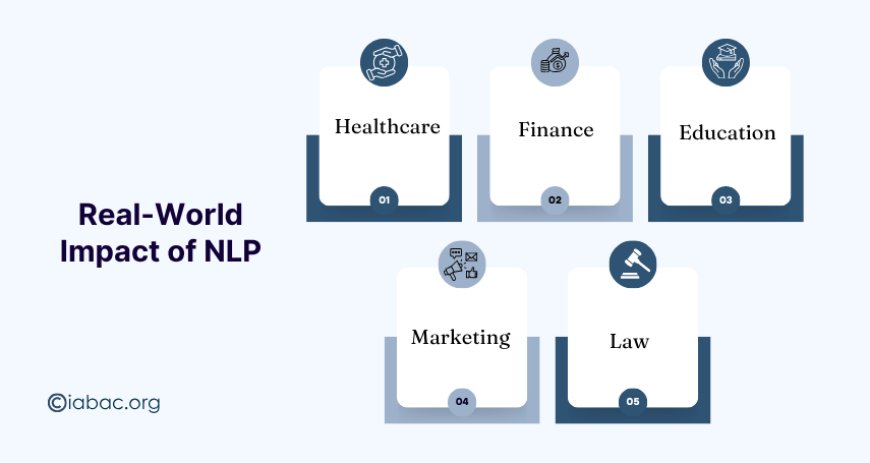
Real-World Impact of NLP
NLP powers everything we read, search, type, and communicate.
Its impact is visible across industries:
- Healthcare
Summarizing medical notes, analyzing reports, predicting patient risks.
- Finance
Detecting fraud, analyzing customer emails, predicting market sentiment.
- Education
AI tutors, question-answering systems, essay evaluators.
- Marketing
Understanding customer feedback and generating personalized copy.
- Law
Extracting insights from long legal documents.
Understanding NLP doesn’t just make you better at AI it makes you valuable in every industry.
What You Gained in Module 6
By finishing this module, you now understand:
What NLP is and why it matters
-
How to process text and PDF files
-
How to clean and prepare language data using regex
-
How word embeddings give meaning to text
-
How RNNs and LSTMs handle sequences
-
How Transformers, BERT, and GPT revolutionized language AI
-
Real-world NLP applications and project workflows
You’ve unlocked the secret of language intelligence the ability to help machines understand human communication.
This is one of the most essential skills for becoming an Artificial Intelligence Expert today.
What’s Next?
Now that your AI can understand language, it’s time to teach it how to communicate effectively.
Next up:
Module 7: Prompt Engineering Crafting Powerful Conversations with AI
Here, you’ll learn how prompts shape AI responses, how to design effective instructions, and how modern AI systems think behind the scenes.
This is a skill every future AI professional must master.