


















































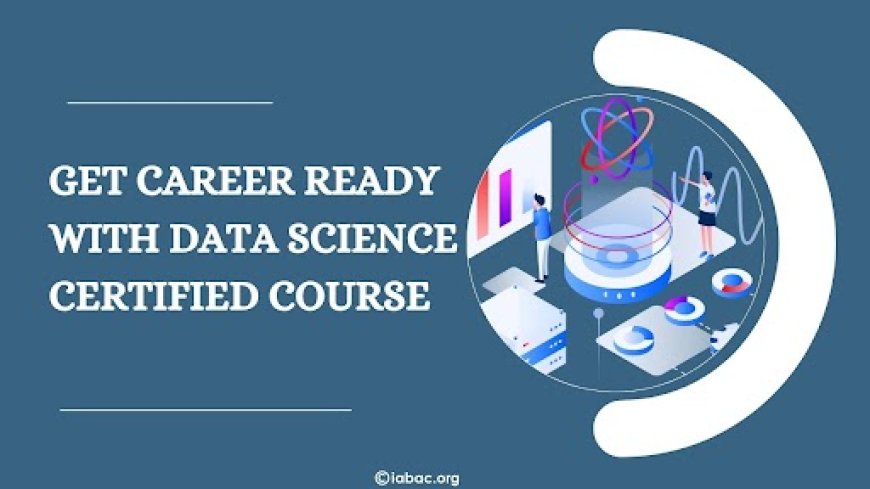
Get Career Ready with Data Science Certified Course
Become a certified data science professional. Build skills, gain recognition, and unlock top career opportunities in the growing world of data science.

Assume a business that wants to know the products that consumers will purchase in the upcoming month. They have a lot of data, including previous sales, customer reviews, website traffic, and even comments on social media, but none of it makes sense.
A data scientist steps in, gathers this information, and uses statistics and algorithms to find hidden patterns. They build a model that accurately predicts what customers are likely to buy, helping the company plan inventory and increase profits.
The ability to turn vast amounts of unprocessed data into insights that propel corporate success is the true power of data science. You will acquire the abilities necessary to transform data into significant solutions that have an impact if you become a certified data science expert.
What is Data Science?
Data science is more than just numbers and code; it’s about problems using data. It helps hospitals predict patient needs, banks detect fraud, and retailers understand what customers truly want.
At its core, data science combines technology, statistics, and business knowledge to find answers hidden within large sets of information. It allows companies to make quick, confident, and evidence-based decisions instead of relying on guesswork.
Core Components of Data Science

Here are the key areas that form the foundation of data science:
-
Data Collection and Cleaning
Gathering raw data from multiple sources and preparing it for analysis by removing errors and inconsistencies.
-
Exploratory Data Analysis (EDA)
Examining and visualizing data to identify patterns, trends, and relationships.
-
Statistical and Mathematical Modeling
Applying statistical techniques and algorithms to draw meaningful insights.
-
Machine Learning and Predictive Modeling
Using algorithms to create models that can predict future trends and behaviors.
-
Data Visualization and Storytelling
Presenting complex results through charts, dashboards, and reports that are easy to understand.
-
Deployment and Business Impact
Implementing models in real business environments and measuring their success
Which Certification Is Best for Data Science?
Choosing the right data science certification depends on your experience level, learning goals, and career ambitions. Consider these factors before enrolling:
-
Your skill level – beginner, intermediate, or advanced.
-
The tools and topics covered (Python, R, SQL, ML, AI, statistics).
-
Whether the programme includes hands-on projects and practical assessments.
-
The industry recognition and global value of the certification.
-
The cost, time commitment, and any prerequisites.
-
How well it aligns with your career goals, such as becoming a data analyst, data engineer, or data scientist.
Who Can Enroll in a Data Science Certification Course?
Data science certification programs are designed for a wide range of learners:
-
Students and Graduates Build – a strong foundation and stand out in competitive job markets.
-
Working Professionals – Transition into data-focused roles or enhance existing analytics skills.
-
Business Analysts and Managers – Use data to make better business decisions and strategic plans.
-
Career Switchers – Move from non-technical fields to a high-demand, future-oriented career path.
-
Entrepreneurs and Decision-Makers – Use data insights to understand customers, optimize operations, and grow businesses.
Skills Required to Become a Data Scientist
Becoming a data scientist requires a mix of technical skills, analytical thinking, and business understanding. It’s not only about knowing how to use tools but also about understanding how to solve real-world problems with data.
Here are the key skills every aspiring data scientist should focus on:
-
Statistical and Mathematical Knowledge
A strong foundation in statistics, probability, and mathematics helps you understand data behaviour, identify patterns, and draw meaningful conclusions.
-
Programming Skills
Knowing programming languages like Python, R, or SQL is essential for collecting, cleaning, and analysing data efficiently.
-
Data Analysis and Interpretation
The ability to analyse datasets and translate numbers into practical insights is at the heart of data science.
-
Machine Learning and Artificial Intelligence
Understanding algorithms and how machines learn from data allows you to build predictive models and automate decisions.
-
Data Visualization
Tools like Tableau, Power BI, and Python libraries such as Matplotlib and Seaborn help you present findings in clear and visual ways that everyone can understand.
-
Big Data Technologies
Familiarity with platforms like Hadoop, Spark, or Google BigQuery helps in handling and processing large volumes of data effectively.
-
Database Management
Knowledge of databases and query languages helps in accessing and organising and managing structured and unstructured data.
-
Problem-Solving and Critical Thinking
Data scientists must be able to define the right questions, interpret results accurately, and apply insights to business challenges.
-
Communication Skills
The ability to explain technical results in simple terms to non-technical teams is crucial for making data-driven decisions.
-
Domain Knowledge
Understanding the specific industry you work in, whether it’s healthcare, finance, or marketing, helps you connect data insights to real business goals.
Why Become a Certified Data Scientist?
Becoming a certified data scientist offers more than just technical skills; it builds credibility and opens doors to exciting opportunities. Here’s why earning a certification is worth it:
-
High Industry Demand
Skilled data scientists are needed in every major industry, including finance, healthcare, technology, and retail. The demand continues to grow as more companies adopt data-driven strategies.
-
Career Growth and High Salaries
Certified professionals often earn higher salaries and reach leadership roles faster. A certification demonstrates that you have verified, practical expertise.
-
Hands-On Knowledge of Tools
Certification programs train you in tools and languages like Python, R, SQL, Tableau, Power BI, and TensorFlow, essential for real-world data science projects.
-
Credibility and Trust
A recognised certification validates your skills and shows employers that you can turn data into business value. It also demonstrates your commitment to continuous learning.
Opportunities After Becoming a Certified Data Scientist
-
Data Scientist
Works with data to build models, discover patterns, and create predictive systems that help businesses make smarter decisions.
-
Machine Learning Engineer
Designs and develops intelligent algorithms and models that allow computers to learn from data and make accurate predictions.
-
Data Analyst
Examines datasets to identify trends, patterns, and insights that guide business decisions and improve performance.
-
Data Engineer
Builds and manages the systems and pipelines that store, process, and organise large amounts of data efficiently.
-
Business Intelligence Analyst
Converts complex data into easy-to-understand dashboards and reports that help leaders make informed strategic choices.
-
AI Engineer
Develops artificial intelligence systems and integrates them into real-world applications to solve complex problems.
-
Research Scientist
Works on advanced research projects involving machine learning, deep learning, or data modelling to push innovation forward.
-
Consultant or Data Strategy Advisor
Helps organisations design data strategies, adopt analytics tools, and use insights to achieve their goals.
Certified data scientists are in demand across sectors such as:
-
Technology and IT Services: Data scientists help develop smarter software, improve user experiences, and optimise digital systems.
-
Finance and Banking: They detect fraud, assess risks, and build models for smarter investment and lending decisions.
-
Healthcare and Pharmaceuticals: Data is used to predict diseases, personalise treatments, and improve patient care.
-
Retail and E-commerce: Data scientists analyse buying patterns to recommend products and improve customer satisfaction.
-
Telecommunications: They optimize network performance, predict service demand, and reduce customer churn
-
Manufacturing and Logistics: Data helps streamline production, manage supply chains, and reduce operational costs.
-
Government and Public Policy: Data-driven insights support better planning, policy-making, and efficient public services.
-
Media, Marketing, and Advertising: Data scientists measure audience behaviour and design targeted marketing campaigns for better engagement.
Data science certification helps you build technical expertise, gain professional recognition, and unlock high-paying career opportunities. Whether you’re just starting your journey or looking to advance your career, a structured certification programme can be your bridge to success.
Start your journey today, become a certified data science professional and turn your passion for data into a rewarding career.