























































The Future of Machine Learning Consulting: Trends to Watch in 2026
Explore key trends shaping machine learning consulting in 2026, from AI integration to ethical models and industry-specific innovations.


Machine learning (ML) consulting is no longer a niche service. As organizations across industries integrate artificial intelligence (AI) and machine learning into core operations, the demand for specialized consulting expertise continues to grow. The role of ML consultants is expanding beyond algorithm development into business strategy, risk management, regulatory compliance, and change management.
In 2026, the consulting environment around machine learning will reflect broader shifts happening across technology, policy, and enterprise priorities. Understanding these trends is important not just for consulting firms but for businesses planning to leverage machine learning as part of their long-term strategies.
1. Machine Learning as a Business Tool, Not a Science Project
For many early adopters, machine learning began as an experimental initiative. Organizations would sponsor pilot projects or proofs of concept to test ML's potential. In 2026, this experimental phase is mostly over for mainstream businesses.
Enterprises now demand that ML projects produce measurable business outcomes — increased revenue, reduced costs, improved customer experience, and operational efficiencies. As a result, machine learning consultants are expected to position themselves not just as technical experts but as strategic business partners.
Consultants will need a deep understanding of their clients’ industries, operational models, and business KPIs. Proposals and project pitches are likely to emphasize return on investment, speed to market, scalability, and risk mitigation over technical novelty.
Delivering business value will require consultants to:
-
Translate business problems into solvable machine learning problems.
-
Frame model success in terms of business impact, not just technical metrics.
-
Help clients operationalize models into existing workflows, rather than building stand-alone systems.
2. The Rise of Edge AI Consulting
Edge AI — deploying machine learning models directly on devices such as smartphones, sensors, and machines — is gaining momentum. As computing power at the edge improves and network infrastructure evolves, businesses are showing more interest in decentralized AI architectures.
Edge AI can improve responsiveness, reduce data transmission costs, and enhance privacy by processing sensitive information locally. For ML consultants, this trend opens new avenues.
Consulting around edge AI may involve:
-
Designing lightweight, low-latency ML models.
-
Architecting hybrid systems that balance cloud and edge processing.
-
Advising on hardware selection and deployment strategies.
-
Ensuring data security and governance at the edge.
Manufacturing, healthcare, automotive, and smart city sectors are likely to lead adoption, offering consulting firms opportunities to specialize by industry.
3. Model Governance, Compliance, and Ethical AI
Regulations targeting AI usage are steadily increasing. The European Union's AI Act, sector-specific regulations like HIPAA in healthcare, and emerging national guidelines in countries such as Canada, Australia, and Singapore are setting new compliance expectations.
In 2026, machine learning consulting projects will increasingly incorporate:
-
Bias detection and mitigation services.
-
Explainability frameworks to make models interpretable.
-
Audit trails documenting data sources, model training, and decision-making processes.
-
Risk assessments regarding model misuse or unintended consequences.
Clients will demand not just functional models but ones that meet legal, ethical, and social standards. Consultants who can offer regulatory foresight and best practices around responsible AI will likely stand out in the marketplace.
4. Modular and Pre-Trained Model Ecosystems
The traditional model development cycle — gathering data, training models from scratch, iterative optimization — is resource-intensive. Increasingly, businesses seek faster, lower-cost alternatives.
Consultants are expected to rely more heavily on:
-
Pre-trained models available from open-source communities or commercial vendors.
-
Transfer learning techniques to customize existing models for specific client needs.
-
Modular architectures where models can be swapped, combined, or iterated easily.
The ability to navigate, customize, and integrate existing model components into client solutions may matter more than building novel models. This shift will require consultants to maintain up-to-date knowledge of the fast-evolving ML tool ecosystem.
5. Explainability as a Standard Requirement
Clients are becoming more cautious about deploying "black box" models. As machine learning influences decisions with legal, financial, or ethical implications, the demand for explainable AI (XAI) grows.
Consultants in 2026 will often embed explainability tools like SHAP (SHapley Additive exPlanations), LIME (Local Interpretable Model-agnostic Explanations), and counterfactual reasoning frameworks by default.
Consultants will also be responsible for:
-
Training client teams to understand model outputs.
-
Documenting how models make predictions.
-
Communicating model behavior to non-technical stakeholders, including boards and regulators.
Explainability is no longer a differentiator; it is becoming a baseline expectation across industries.
6. Expanding Role of Generative AI
Generative AI is moving beyond media creation into more technical domains. By 2026, consultants may increasingly advise clients on how to use generative models for:
-
Product design simulations.
-
Predictive modeling in drug discovery.
-
Automated code generation.
-
Supply chain optimization.
In consulting projects, generative models could assist in developing synthetic datasets for training other ML systems, enabling projects in data-scarce environments without violating privacy or intellectual property constraints.
The consulting role will evaluate when and how generative models can realistically add value — and when traditional approaches might be more suitable.
7. Low-Code/No-Code Platforms: Opportunity and Risk
Low-code and no-code AI platforms offer business teams the ability to create simple models without extensive programming knowledge. While this democratizes machine learning, it also introduces risks around model quality, data leakage, and governance.
Consultants may find themselves performing hybrid roles, including:
-
Evaluating and recommending suitable low-code/no-code platforms.
-
Setting up governance frameworks around internal model development.
-
Training client teams in basic ML model validation and deployment practices.
Rather than replacing consultants, low-code tools are more likely to shift their responsibilities toward oversight, education, and integration.
8. Cybersecurity and ML Security Consulting
Machine learning systems are increasingly targets for cyberattacks. Threats such as adversarial inputs, model inversion attacks, and data poisoning are becoming better understood but remain challenging to defend against.
Consultants in 2026 will need to:
-
Advise clients on ML system hardening.
-
Implement monitoring systems to detect suspicious behavior.
-
Assist in creating response plans for ML-specific breaches.
ML consulting firms may collaborate more closely with cybersecurity teams, blurring traditional organizational boundaries.
9. Sector-Specific Specialization
General-purpose ML consulting is giving way to sector-specific expertise. Clients prefer consultants who understand their operational contexts, data constraints, and regulatory environments.
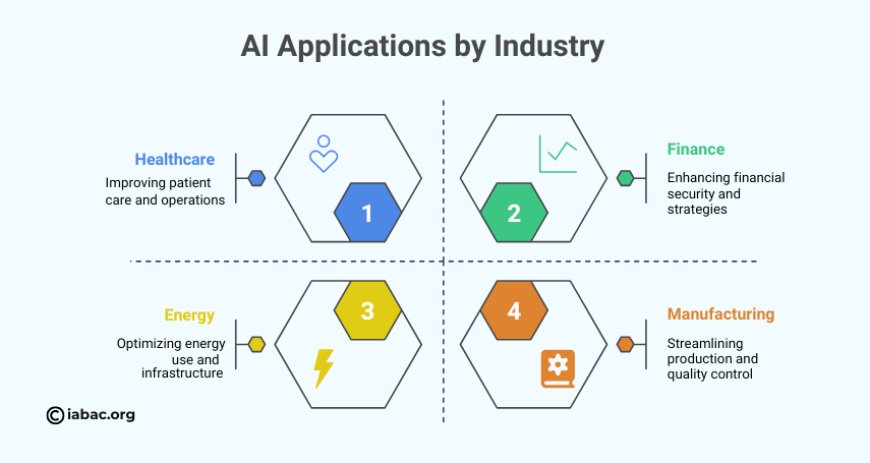
Sectors likely to see strong demand for specialized ML consulting include:
-
Healthcare: Patient outcome prediction, diagnostics, operational optimization.
-
Finance: Fraud detection, algorithmic trading, risk scoring.
-
Energy: Predictive maintenance, smart grid optimization, consumption forecasting.
-
Manufacturing: Process optimization, defect detection, supply chain modeling.
Building domain expertise will be important for consultants seeking to maintain credibility and competitiveness.
10. Synthetic Data for Model Development
Data scarcity and privacy concerns remain significant obstacles to machine learning projects. Synthetic data generation offers a way to create realistic, representative datasets without the legal or ethical complications associated with real-world data.
Consultants will likely leverage synthetic data for:
-
Model training and validation.
-
Testing models against rare or extreme-case scenarios.
-
Facilitating cross-border ML deployments without violating data sovereignty laws.
However, synthetic data is not a perfect substitute. Consultants must clearly communicate its limitations, particularly around how models trained on synthetic data may behave differently when exposed to real-world conditions.
Preparing for a More Mature ML Consulting Market
By 2026, machine learning consulting is expected to reflect a more mature, structured, and outcomes-driven market. Technical excellence remains important, but it is no longer sufficient on its own.
Consultants must blend machine learning expertise with:
-
Strategic business understanding.
-
Regulatory and ethical literacy.
-
Communication and change management skills.
-
Deep industry-specific knowledge.
The future of machine learning consulting is not about pushing the boundaries of what is technically possible. It is about responsibly and effectively integrating machine learning into business operations, ensuring that models are understandable, ethical, compliant, and, above all, useful.
Consulting firms that adapt to this reality will sustain relevance and create meaningful, lasting impact for their clients.