
























































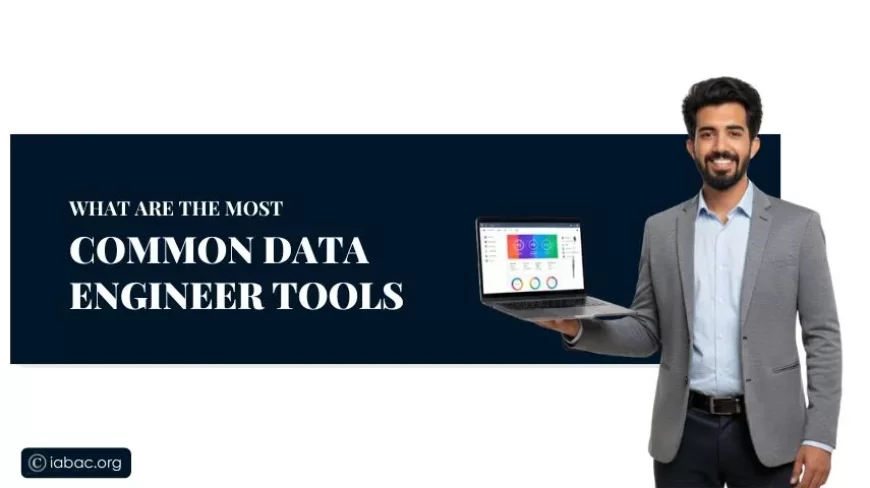
What Are the Most Common Data Engineer Tools
Learn the most common data engineer tools used for ingestion, storage, processing, orchestration, analytics, and cloud data pipelines at scale for teams.

Data is everywhere. Every app you use, every online purchase you make, every report your school or company checks—behind all of this, someone has to make sure the data is clean, organized, and ready to use. That person is a data engineer. They design systems that collect, store, and move data so that analysts, scientists, and businesses can make sense of it.
If you are a student or aspiring professional, understanding data engineer tools is essential. This guide will explain the main tools, the skills needed, who can become a data engineer, whether coding is required, and how Data Science Certifications like those from IABAC can help you get ahead in this field.
Who Is a Data Engineer?
A data engineer’s job is to make sure data is ready for others to use. They collect information from different sources, store it safely, clean it up, and organize it. While a data analyst or scientist interprets the data, the data engineer makes sure it is accurate and reliable.
A data engineer’s work includes:
- Building data pipelines
- Managing databases
- Cleaning and transforming data
- Monitoring data quality
- Supporting analytics and reporting
Without data engineers, analytics and reporting systems would not work smoothly.
Why the Right Data Engineer Tools Matter
Data engineers work with huge amounts of data. Doing everything manually would be impossible. Using the right data engineer tools helps them:
- Work more efficiently
- Reduce errors in data
- Process large datasets faster
- Make data easier to share with teams
- Keep everything organized and accessible
Choosing the right tools can make a big difference in how smoothly a data engineering project runs.
Categories of Data Engineer Tools
Data engineer tools fall into a few key categories. Let’s go through them.

1. Programming Tools
Programming is at the heart of data engineering. Engineers use it to build pipelines, automate tasks, and work with data.
Most common languages:
- Python – Easy to learn, used for data processing and automation
- SQL – Essential for working with databases
- Java – Often used in big systems for data management
- Scala – Popular for working with Apache Spark
Coding is a core part of the job, but you do not need to be a software developer. The code is mostly about moving, cleaning, and processing data.
2. Database Tools
Databases are where data is stored. Knowing how to work with them is a must.
Relational databases (structured data):
- MySQL
- PostgreSQL
- Oracle
NoSQL databases (flexible or unstructured data):
- MongoDB
- Cassandra
- HBase
Data engineers design and maintain these databases so that data is easy to access and reliable.
3. Big Data Tools
Sometimes, the amount of data is too big for normal databases. That’s when big data tools come in.
Popular big data tools:
- Apache Hadoop – Stores and processes data across many computers
- Apache Spark – Fast processing for large datasets
- Apache Hive – Lets you query big data easily
These tools help handle millions of rows of data without slowing down systems.
4. Cloud Platforms
Cloud services make storing and processing data easier because you don’t have to manage physical servers.
Common cloud platforms:
- AWS (Amazon Web Services)
- Microsoft Azure
- Google Cloud Platform
Many companies now run their data engineering systems on the cloud, so knowing at least one platform is very useful.
5. ETL Tools
ETL stands for Extract, Transform, Load. It’s a core process in data engineering.
- Extract – Pull data from different sources
- Transform – Clean and organize the data
- Load – Put the data into a database or warehouse
Popular ETL tools:
- Talend
- Informatica
- Apache Airflow
- AWS Glue
- Azure Data Factory
ETL tools make sure data moves smoothly from its source to a place where analysts and scientists can use it.
6. Workflow and Automation Tools
Data engineers often work with multiple processes that need to run in order. Workflow tools help schedule and monitor these tasks.
- Apache Airflow
- Luigi
- Prefect
These tools reduce mistakes and save time, ensuring that data tasks run as planned.
7. Monitoring and Data Quality Tools
It’s not enough to just move data—you need to make sure it is correct. Data quality tools help track errors and ensure reliability.
- Monitoring pipelines for failures
- Validating data accuracy
- Alerting engineers when something goes wrong
These tools keep data trustworthy for analysts and businesses.
Skills Required for a Data Engineer
Knowing tools alone is not enough. You also need certain skills.
Technical skills:
- Programming (Python, SQL, Java)
- Database management
- Building and maintaining ETL pipelines
- Big data processing
- Cloud platforms
Soft skills:
- Logical thinking
- Problem-solving
- Communication and teamwork
- Organization and attention to detail
Together, these skills prepare you to handle real-world data engineering tasks.
Who Can Become a Data Engineer?
Many students think they need a computer science degree, but anyone with the right interest and skills can become a data engineer.
Eligible candidates include:
- IT and engineering students
- Data analysts looking to move into engineering
- Software developers who want to specialize in data
- Anyone willing to learn tools and pipelines
With proper training and certification, background becomes less important than skills and practice.
Does a Data Engineer Do Coding?
Yes. Coding is a big part of the job. Data engineers write scripts to:
- Automate data collection
- Transform and clean data
- Build and maintain pipelines
- Integrate different systems
The coding is mostly focused on working with data, not creating apps or websites.
Why Certification Matters
Learning tools is great, but employers want proof of your skills. That’s where Data Science Certifications come in. Certification programs provide:
- A structured learning path
- Hands-on experience
- Recognition from employers
- Preparation for real job tasks
Being a Certified Data Engineer shows that you are ready for the workplace and can handle real data engineering challenges.
How IABAC Global Certifications Help
IABAC offers recognized certification programs that teach students and professionals practical data engineering skills. Their programs focus on:
- Hands-on learning with real datasets
- Industry-aligned tools and practices
- Career-focused training for students and professionals
You can find more details on iabac.org, including course details, certification levels, and career support.
Tips for Choosing Data Engineer Tools
For students and beginners:
- Start with Python and SQL – these are the most commonly used programming tools.
- Learn at least one ETL tool – Apache Airflow, Talend, or AWS Glue are good options.
- Explore cloud platforms – AWS or GCP provide real-world experience.
- Get familiar with big data tools – Spark and Hadoop help process large datasets.
- Focus on tools that work well together – integration saves time.
- Choose tools that are in demand in job listings to improve employability.
These steps help learners gain confidence and prepare for real-world roles.
Career Opportunities with the Right Tools
Knowing the right tools opens many opportunities:
- Data Engineer
- ETL Developer
- Big Data Engineer
- Data Platform Engineer
- Cloud Data Engineer
Industries hiring data engineers include finance, healthcare, e-commerce, IT services, and education. With certification, you can stand out among other candidates.
Choosing the right data engineer tools is important for efficiency, accuracy, and career success. By combining practical skills, coding knowledge, and Data Science Certifications, students and professionals can build a solid foundation in data engineering. Tools like Python, SQL, ETL platforms, cloud services, and big data frameworks allow engineers to handle data with confidence. Certifications from recognized organizations like IABAC Global Certifications provide guidance, credibility, and support to help learners succeed.
For students, learning the right tools is like collecting a toolbox: each item makes your work easier, your results better, and your career brighter. Start learning, practice regularly, and use certification programs to turn your skills into a professional advantage.