























































What Hiring Managers Actually Look for in Business Analysts
Hiring managers look for business analysts who blend strong analytics, business insight, clear communication, and problem-solving skills to deliver real value.


Hiring managers read many resumes every day. Most of them look neat and full of tools, certificates, and big words. But when interviews begin, only a few candidates truly stand out. The reason is simple. Companies are not hiring business analysts just to work with data. They want people who can understand problems, explain ideas clearly, and help teams make better decisions.
Business Analytics is not only about numbers or reports. It is about people, business goals, and clear thinking. This is why hiring managers often choose candidates who may know fewer tools but show better understanding and communication. If you are planning to grow your career through Business Analytics Courses, earn a business analyst professional certification, or move into analytics from another field, this article will help you understand what companies really expect.
Thinking Like the Business, Not Just Like an Analyst
The first thing hiring managers notice is how well you understand business needs.
A good business analyst does not jump straight into data. They start by asking:
- What problem is the business facing?
- How does this affect money, time, or risk?
- Who will use this information?
Programs such as Business Analytics Foundation help learners build this way of thinking. They teach how to connect analysis with real business results.
Hiring managers prefer analysts who can explain why something matters, not just what the numbers show.
Knowing the Industry You Work In
Every industry works differently. Banking, healthcare, retail, and IT all have unique rules and goals.
Hiring managers look for analysts who:
- Understand common terms used in the industry
- Know basic rules and policies
- Are aware of common business problems
You do not need many years of experience, but basic awareness helps a lot. Many Business Analytics Courses include simple case studies from different industries to build this understanding.
When analysts know the industry, they learn faster and make fewer mistakes.
Clear Communication That Builds Trust
One common problem in analytics is poor communication.
Hiring managers value analysts who can:
- Explain ideas in simple language
- Speak confidently with non-technical teams
- Write clear documents and emails
- Listen carefully to questions and feedback
Good business analyst training focuses on communication skills along with technical knowledge. The right business analyst professional certification also helps improve how you explain ideas and present findings.
Clear communication saves time and avoids confusion.
What are the top 3 skills of a business analyst?
Hiring managers consistently look for these three core skills in business analysts:
1. Clear thinking and analysis
This skill helps analysts understand business problems and break them into simple parts. A business analyst should be able to study information, identify patterns, and suggest meaningful insights. Clear thinking helps in making correct decisions and avoiding confusion.
2. Good communication
Business analysts work with business users, technical teams, and management. Good communication helps them explain ideas clearly, ask the right questions, and ensure everyone understands the requirements. Strong communication reduces mistakes and improves teamwork.
3. Practical problem-solving
A business analyst must find solutions that work in real situations. This means considering time, cost, resources, and business priorities. Practical problem-solving helps turn ideas into actions that actually help the organization.
These three skills are the foundation of effective business analyst training programs and are essential for long-term success in a business analyst career. These skills are central to strong business analyst training programs and are essential for long-term success in the role.
Requirement Gathering and Documentation Skills
Many projects fail because the requirements were not clear from the beginning.
Hiring managers look for analysts who can:
- Ask the right questions
- Write clear requirements
- Confirm details with stakeholders
Documents like BRDs, FRDs, and user stories are still very important. Strong business certifications and analytics certification programs teach these basics properly.
When requirements are clear, projects move smoothly.
Problem-Solving Matters More Than Tools
Software tools keep changing. Thinking skills do not.
Hiring managers prefer analysts who can:
- Break big problems into smaller parts
- Find the main cause of an issue
- Suggest practical solutions
This is why the best data analytics certification programs focus on logic, case studies, and real examples instead of only tools.
A calm and logical approach always leaves a good impression.
Working Well With People and Teams
Business analysts work with many teams at the same time.
Hiring managers like analysts who:
- Stay patient during disagreements
- Respect different opinions
- Handle pressure without panic
These skills grow through experience and guided practice. Advanced Business Analytics Certifications often include group discussions and real-life examples to prepare analysts for such situations.
Good people skills make work easier for everyone.
Real Practice, Even Small Projects
Hiring managers do not expect perfect experience from beginners.
They value candidates who can talk about:
- Course projects
- Practice case studies
- Internship work
- Small self-learning projects
What matters most is how you explain your learning. Many Business Analytics Courses and Business Analytics Foundation programs include guided projects that help build confidence.
Honest learning stories feel more real than perfect answers.
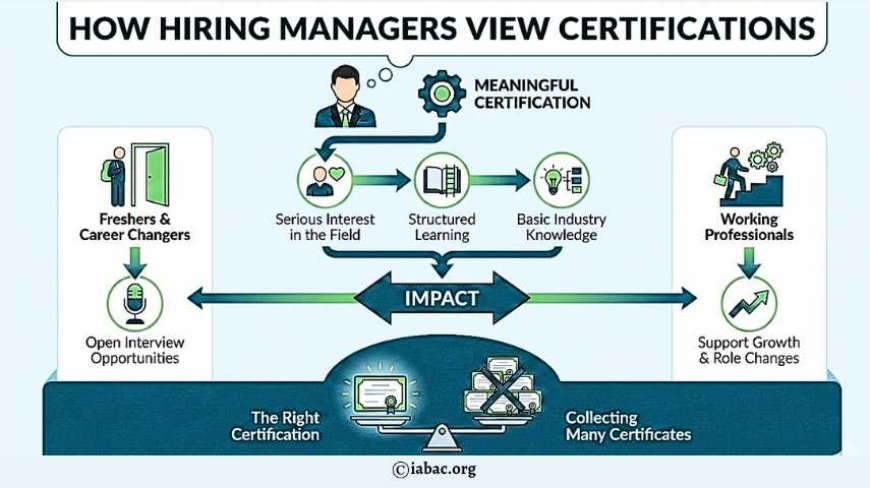
How Hiring Managers View Certifications
Certifications do matter, but only when they are meaningful.
A recognized business analyst professional certification shows:
- Serious interest in the field
- Structured learning
- Basic industry knowledge
For freshers and career changers, Business Analytics Certifications help open interview opportunities. For working professionals, they support growth and role changes.
Choosing the right certification is more important than collecting many certificates.
Why Business Analyst Professional Certification Matters to Hiring Managers
Hiring managers do not just look at certificates—they look at who issued them and what they represent. This is where the IABAC Business Analyst Professional Certification makes a clear difference.
Hiring managers value this certification because it is:
- Industry-focused – It is designed around real business problems, not just theory
- Skill-oriented – It tests analytical thinking, business understanding, and communication
- Structured – It follows a clear learning path from foundation to professional level
The IABAC Business Analyst Professional Certification tells hiring managers that a candidate:
- Understands how businesses work
- Can gather and document requirements clearly
- Knows how to support decision-making using Business Analytics
- Has learned through practical case-based training
For freshers, this certification builds trust. For career switchers, it shows commitment. For working professionals, it signals career readiness for higher responsibility.
Most importantly, hiring managers see IABAC-certified professionals as candidates who need less hand-holding and can start contributing faster.
This is why the IABAC Business Analyst Professional Certification is not just a certificate—it is a strong signal of job readiness.
Career Direction and Long-Term Thinking
Hiring managers prefer candidates who know where they are going.
They look for analysts who:
- Understand their current skill level
- Have a clear next career step
- Are willing to keep learning
Starting with Business Analytics Foundation and moving toward professional-level certification shows planning and focus.
Clear direction builds confidence during interviews.
Measuring Success in Business Terms
At the end of a project, one question always comes up: did this help the business?
Hiring managers expect analysts to think about:
- Saving time
- Reducing cost
- Improving processes
- Supporting better decisions
Practical Business Analytics Courses train learners to connect analysis with real results.
This thinking makes analysts valuable to any team.
Ethics and Responsible Use of Data
Data should be used carefully.
Hiring managers value analysts who understand:
- Data privacy
- Basic compliance rules
- Responsible data usage
Good analytics certification programs include these topics so analysts can work confidently and responsibly.
Trust is built through careful work.
Is it worth getting a business analyst certification?
Yes, getting a business analyst certification is worth it, especially in today’s competitive job market. A certification helps prove that you have learned the core concepts of business analysis in a structured way. Hiring managers often see certification as a sign of seriousness and commitment to the role.
For freshers, certification helps when work experience is limited. It shows that you understand business analysis basics, tools, and processes. For career changers, certification gives confidence and direction. It helps bridge the gap between your previous role and a business analyst role. For working professionals, certification supports career growth, role change, or promotion. A business analyst certification also improves interview performance. You feel more confident while answering questions because you understand concepts clearly. In short, certification does not replace experience, but it opens doors and strengthens your profile.
What is the passing score for the ECBA exam?
The ECBA exam usually requires a passing score of around 70%. The exam is designed to test your understanding of basic business analysis concepts rather than deep technical knowledge.
It focuses on:
- Business analysis fundamentals
- Requirement gathering concepts
- Stakeholder communication basics
- Analytical thinking
Candidates who prepare through structured Business Analytics Foundation programs often perform better because these programs follow the exam syllabus closely. They also provide examples and practice questions, which help reduce exam pressure and improve understanding.
With proper preparation and concept clarity, the ECBA exam is very achievable.
Hiring managers are not looking for perfect candidates. They want people who understand business needs, communicate clearly, and keep learning. By building strong basics, gaining real practice, and choosing the right business analyst professional certification, you can grow into a trusted business analyst that teams depend on.
That is what truly makes a difference.