
























































What Is Data Modeling? Definition, Types & Importance 2026
Data modeling turns raw data into structured, reliable systems. Learn its definition, types, techniques, tools, and why it matters for careers in 2026.

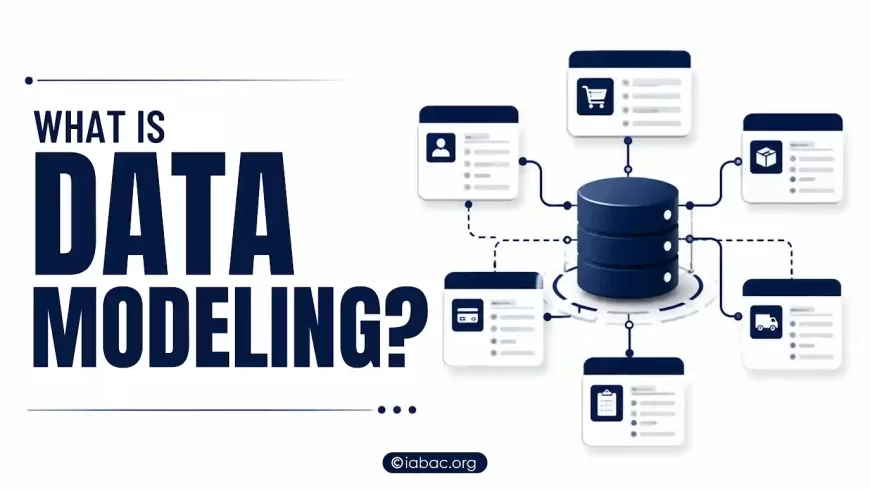
Data modeling is the process of defining how data is structured, connected, and stored so that it can be organized, retrieved, and used accurately across an organization. It creates a blueprint much like an architect's plan for a building that shows what data exists, how different pieces relate to each other, and what rules govern them before a single line of database code is written.
This guide breaks down what data modeling actually means, the types and techniques used to build a data model, the tools professionals rely on, common mistakes to avoid, and why the skill is becoming even more central to data careers in 2026.
Key Highlights
-
Data modeling is the process of structuring data into a clear, logical format before it's stored in a database or data warehouse.
-
There are three core types: conceptual, logical, and physical data models, each serving a different stage of design.
-
Common techniques include relational modeling, dimensional modeling (star and snowflake schemas), and NoSQL data modeling.
-
Poor data modeling is one of the leading causes of slow queries, inconsistent reporting, and costly data migrations later on.
-
Data modeling remains a foundational skill for data engineers, data architects, and analysts, and it's a core module in structured data engineering certification programs.
Why Does Data Modeling Matter?
Every organization generates data from multiple directions — customer transactions, application logs, sensors, marketing platforms, and internal tools. Without a defined structure, that data is just noise. Data modeling gives it shape.
According to IBM, data modeling is the process of creating a visual representation of an information system to communicate how data points and structures connect to one another. That representation isn't just documentation — it directly shapes how efficiently a database performs, how easily new features can be added, and how confidently teams can trust the numbers in front of them.
Here's why it matters in practical terms:
-
Consistency: A well-designed data model enforces consistent formats, naming conventions, and relationships, so the same customer or transaction isn't recorded differently in five different tables.
-
Performance: Databases and data warehouses that are modeled with query patterns in mind run faster and scale better as data volume grows.
-
Communication: A data model acts as a shared reference point between business stakeholders, data engineers, analysts, and developers, reducing the back-and-forth caused by misunderstood requirements.
-
Governance and compliance: Clear data models make it easier to track where sensitive data lives, who can access it, and how it flows — a growing requirement as data privacy regulations tighten.
-
AI and analytics readiness: Machine learning pipelines and BI tools depend on clean, well-structured input data. A weak data model upstream tends to surface as bad predictions or unreliable dashboards downstream.
As TechTarget notes, data modeling supports common data definitions and internal data standards, often as part of a broader data governance program, and it has grown from a database-team responsibility into a skill that data scientists and analysts increasingly need as well.
The Three Types of Data Models
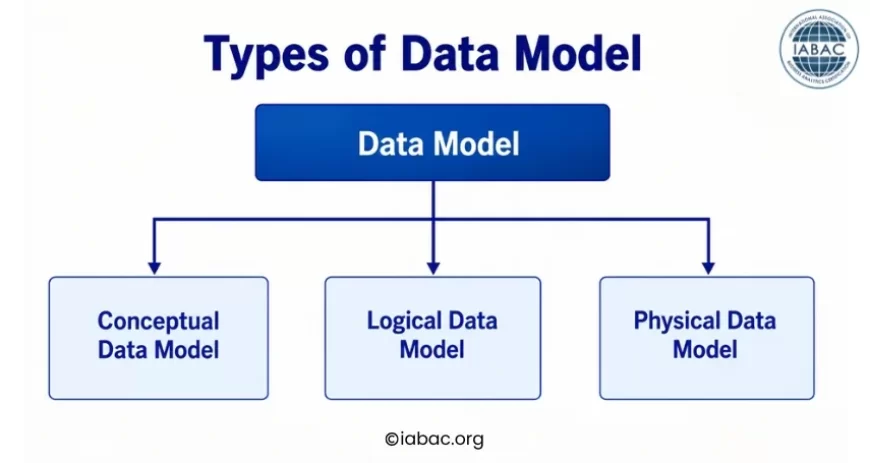
Data modeling typically happens in three progressive stages, each moving from a broad business view toward a technical database implementation.
1. Conceptual Data Model
The conceptual data model is the highest-level view. It identifies the key entities in a business, such as "Customer," "Order," or "Product," and the relationships between them, without worrying about technical details like data types or table structures. This is usually where business stakeholders and data teams align on what needs to be tracked before any technical design begins.
2. Logical Data Model
The logical data model adds detail to the conceptual layer. It defines attributes for each entity (for example, "Customer" might include name, email, and signup date), specifies relationships and cardinality (one-to-many, many-to-many), and often takes the shape of an entity relationship diagram (ERD). It's still independent of any specific database technology; the same logical model could be implemented in a relational database, a cloud data warehouse, or a NoSQL system.
3. Physical Data Model
The physical data model is the implementation layer. It translates the logical model into the actual structure a specific database system will use, including table names, column data types, indexes, primary and foreign keys, and partitioning strategy. This is the model that database administrators and data engineers work from when they build the real system.
Moving through these three layers in order rather than jumping straight to tables and columns is what keeps a data model aligned with actual business needs instead of becoming a rigid, hard-to-change technical artifact.
Common Data Modeling Techniques
Once the type of model is defined, teams choose a data modeling technique suited to how the data will be stored and queried.
Relational Data Modeling
The relational model organizes data into tables with rows and columns, connected through primary and foreign keys. It relies on normalization, splitting data into related tables to reduce redundancy, and is the foundation of most transactional systems (OLTP), such as order management or banking systems.
Dimensional Modeling: Star and Snowflake Schemas
For analytics and reporting workloads, dimensional modeling is more common than strict normalization. A star schema places a central fact table (holding measurable data like sales amounts) surrounded by dimension tables (like customer, product, or time), forming a star-like structure that's simple and fast to query. A snowflake schema takes this further by normalizing the dimension tables into additional related tables, reducing redundancy at the cost of more complex joins.
Oracle's data warehousing documentation describes the snowflake schema as a more complex variant of the star schema, normalized into additional dimension tables and named for the way its diagram resembles a snowflake. In practice, most teams default to star schemas for simplicity and reserve snowflake designs for cases with deep, well-defined hierarchies.
NoSQL and Denormalized Modeling
Not every system benefits from strict normalization. NoSQL databases (document, key-value, wide-column, or graph stores) are typically modeled around access patterns rather than entity relationships — meaning the data is structured based on how it will be queried, often duplicating data intentionally to avoid expensive joins. This approach favors read performance and horizontal scalability over storage efficiency.
Data Vault and Hybrid Approaches
For large, evolving data warehouses, some teams use hybrid techniques like Data Vault modeling, which separates business keys, relationships, and descriptive attributes into distinct table types to make the model more resilient to change over time. These approaches are more advanced but solve a real problem: business requirements shift, and a rigid model built only for today's needs can become expensive to rework later.
Data Modeling Tools
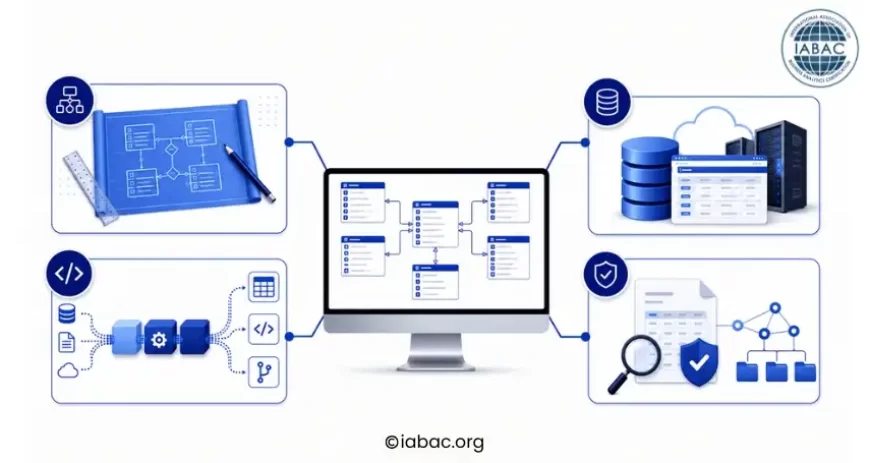
Modern data modeling rarely happens on a whiteboard alone. Common categories of tools include:
-
Diagramming and ERD tools are used to visually design conceptual and logical models and collaborate with stakeholders before implementation.
-
Database-native modeling features – most major relational databases and cloud data warehouses include schema design and visualization capabilities built into their platforms.
-
Data transformation and modeling frameworks – tools used within modern data pipelines to define, version, and test data models as code, particularly popular in cloud-based analytics environments.
-
Data catalog and governance platforms – used to document models, track data lineage, and maintain metadata once a model is in production.
The right tool depends on team size, whether the model supports transactional or analytical workloads, and how tightly the organization needs version control and collaboration built into the modeling process.
Common Data Modeling Mistakes
Even experienced teams run into avoidable problems when data modeling is rushed or treated as an afterthought.
-
Skipping the conceptual stage: Jumping straight into building tables without agreeing on business entities first often leads to models that don't reflect how the business actually operates.
-
Over-normalizing analytical systems: Applying strict transactional-style normalization to a reporting system can create unnecessarily complex queries and slow dashboards.
-
Ignoring query patterns: A model that looks clean on paper but doesn't account for how data will actually be queried often needs expensive rework later.
-
Poor naming conventions: Inconsistent naming across tables and columns makes a model harder to maintain and easier to misinterpret.
-
No documentation: A data model without clear documentation becomes tribal knowledge, creating risk when team members change.
-
Treating the model as static: Business needs evolve. A data model that can't adapt without a full rebuild becomes a long-term liability rather than an asset.
Data Modeling in 2026: What's Changing
Data modeling as a discipline hasn't disappeared with the rise of cloud data warehouses and AI — if anything, it has become more important. A few directional shifts are shaping how teams approach it:
-
Modeling for AI and analytics pipelines together, since machine learning features and BI reports increasingly draw from the same underlying data structures.
-
Schema flexibility in cloud data warehouses, which allows some denormalization for performance without abandoning modeling discipline entirely, is reflected in cloud vendor guidance on transform-oriented data modeling for lakehouse environments.
-
Modeling-as-code practices, where data models are version-controlled and tested like software, rather than maintained only as static diagrams.
-
Greater emphasis on governance-ready models, designed from the start to support data lineage tracking and compliance requirements.
These shifts don't replace the fundamentals covered above; conceptual, logical, and physical modeling, along with relational and dimensional techniques, remain the foundation. What's changing is the tooling and context around how that foundation gets applied.
Data Modeling as a Career Skill
Data modeling sits at the core of data engineering and data architecture roles. Professionals responsible for building reliable data pipelines and warehouses are expected to understand how to design models that are efficient, scalable, and aligned to business needs — not just how to write queries against an existing structure.
This is one reason structured data engineering learning paths dedicate significant coverage to data modeling and database design alongside topics like ETL processes, big data platforms, and cloud data engineering. The Certified Data Engineer program, for instance, includes a dedicated module on data modeling and database systems — covering relational database design, dimensional modeling, NoSQL data modeling, and performance optimization — as part of a broader data engineering curriculum.
For a wider view of how data modeling fits into the day-to-day work of the role, IABAC's complete guide to data engineering walks through how data engineers use modeling alongside pipeline design and ETL work, and the data engineer roadmap outlines how modeling skills typically build over the course of a career.
Frequently Asked Questions
What is data modeling in simple terms?
Data modeling is the process of designing how data will be organized, connected, and stored — creating a blueprint that shows what data exists and how different pieces relate to each other before it's built into an actual database or system.
What are the main types of data modeling?
The three core types are conceptual (high-level business entities), logical (detailed attributes and relationships, often shown as an entity relationship diagram), and physical (the actual database implementation with tables, keys, and data types).
What is the difference between a star schema and a snowflake schema?
A star schema connects a central fact table directly to denormalized dimension tables for simpler, faster queries. A snowflake schema normalizes those dimension tables into additional related tables, reducing redundancy but adding query complexity.
Is data modeling still relevant with cloud data warehouses and AI?
Yes. Cloud platforms and AI pipelines still depend on well-structured, consistent data underneath them. Modeling practices have adapted — with more flexibility and modeling-as-code approaches — but the underlying discipline is still essential for reliable, scalable systems.
Who is responsible for data modeling in an organization?
Data modeling is typically owned by data engineers, data architects, or database administrators, though data analysts and data scientists increasingly need to understand data models to work effectively with the systems they query.
Is learning data modeling worth it for a data career?
Data modeling is a foundational skill across data engineering, data architecture, and analytics roles, and it's commonly included in structured data engineering learning paths and certifications alongside ETL, database systems, and cloud data platforms.
Final Takeaway
Data modeling is the structural layer beneath every reliable database, dashboard, and analytics pipeline. Understanding the difference between conceptual, logical, and physical models — and knowing when to apply relational, dimensional, or NoSQL techniques — is what separates data systems that scale cleanly from ones that need constant rework.