


























































What is the Job of Data Science?
Learn what data science really involves, what data scientists do, and how their work transforms businesses and daily life in simple terms.


My experience working directly with AI and data-driven projects has shown me how organizations can evolve when data is used effectively. Finding patterns, predicting outcomes, and making well-informed judgments are all part of data science, which is more than just examining data.
I've worked with businesses and teams to transform unprocessed data into insights that can be used to produce real results. I'll give a brief overview of the duties performed by data scientists, the qualifications required, and the significant effects this position has on several businesses and daily life.
Understanding Data Science
Combining domain knowledge, computer science, and statistics is what data science is all about. Its main goal is to obtain valuable information from data through analysis. Consider it similar to completing a problem. The ultimate picture is the insight or solution that companies or organizations require, and the pieces of the puzzle are data.
Asking the proper questions, identifying patterns, and formulating predictions that can inform choices are all important aspects of a data scientist's work.
Key Responsibilities of a Data Scientist
The duties of a data scientist are many. Let's explore a few of the most important ones:

1. Collecting Data
Data is the first thing a data scientist needs. This information may originate from a variety of sources, including:
-
Company databases
-
Social media platforms
-
IoT devices (like smart home devices)
-
Online surveys
The quality of data impacts the accuracy of insights; thus, gathering the appropriate data is important.
2. Cleaning and Organizing Data
Raw data is frequently messy. It might contain mistakes, inconsistencies, or missing values. Cleaning this data takes a lot of work for data scientists. This procedure includes:
-
Removing duplicate or irrelevant data
-
Filling in missing information
-
Standardizing formats
Results from organized data are more accurate and easier to evaluate.
3. Analyzing Data
Analysis comes next after the data has been cleaned. To identify patterns in the data, data scientists employ statistical tools and programming languages such as R, Python, and SQL.
For example:
-
The things that sell the best during the holidays may be of interest to a retail business.
-
A medical facility could wish to identify people who are susceptible to specific diseases.
Data scientists can respond to these questions and offer useful insights by conducting analysis.
4. Building Models
Predictive modeling is another aspect of data science. This is the technique of predicting future events based on historical data.
For instance:
-
Using predictive methods, Netflix makes movie recommendations based on your viewing preferences.
-
Models are used by banks to predict the probability of loan defaults.
Machine learning, a subfield of data science that allows computers to learn from data without explicit programming, is used to create these models.
5. Visualizing Data
Analyzing data alone is insufficient; the findings must be effectively communicated. Data visualization can help with this.
To simplify complex data, data scientists produce dashboards, graphs, and charts. Decision-makers can quickly identify trends and patterns with the aid of visualization. For this, programs like Tableau, Power BI, and Matplotlib are frequently utilized.
6. Making Data-Driven Decisions
Data science's ultimate objective is to assist organizations in making better decisions. By offering data-supported insights, data scientists impact initiatives across a range of domains, including:
-
Marketing campaigns
-
Product development
-
Financial planning
-
Customer experience
To put it briefly, they transform unprocessed data into choices that can improve business results.
Skills Required to Become a Data Scientist
Becoming a data scientist requires a mix of technical and soft skills. Here’s a simplified list:
Technical Skills
-
Statistics and Mathematics: Understanding probability, regression, and hypothesis testing.
-
Programming: Usually R, SQL, or Python.
-
Machine learning: It is the process of creating prediction models and algorithms.
-
Data visualization: It is the process of displaying data in a form that is easy to understand.
-
Big Data Tools: Familiarity with cloud platforms, Hadoop, and Spark.
Soft Skills
-
Critical Thinking: The ability to ask appropriate questions and solve problems.
-
Problem Solving: Entails tackling complex problems and determining actionable solutions.
-
Communication: Giving non-technical individuals an explanation of technical concepts.
-
Curiosity: The drive to examine information and find hidden trends.
Industries That Use Data Science
Tech companies are not the only ones using data science. Today, almost all industries rely on data-driven decision-making. Among the most important examples are:
-
Healthcare: Predicting disease outbreaks, patient results, and the efficacy of treatments.
-
Finance: Identifying fraud, controlling risk, and making investments.
-
Retail: Inventory control, tailored recommendations, and customer segmentation.
-
Manufacturing: Supply chain optimization and predictive maintenance.
-
Education: Analyzing student performance and creating individualized learning experiences.
-
Transportation: Vehicle predictive maintenance and route optimization.
Data science is essentially required whenever there is data.
The Impact of Data Science on Society
Data science has changed how we work and live. Here are a few examples:
-
Personalized Experiences: Data science customizes experiences for people, from Spotify playlists to Amazon product recommendations.
-
Smart Cities: Data analysis is essential for waste management, energy optimization, and traffic prediction.
-
Healthcare Advancements: Data science drives effective drug development and early disease detection.
-
Business Growth: Organizations make quicker, more informed decisions that drive innovation and expansion.
Data science has an impact on nearly all aspects of modern society, not just enterprises.
How to Start a Career in Data Science
Although it may seem difficult to begin a career in data science, anyone can do it with the correct strategy. This is a basic road map:
-
Learn the Fundamentals: Begin by studying mathematics, statistics, and simple programming.
-
Select a Specialty: Pay attention to data engineering, data analysis, or machine learning.
-
Practice with Real Data: To obtain practical experience, work on projects or participate in Kaggle contests.
-
Create a Portfolio: Display your work on personal blogs or GitHub.
-
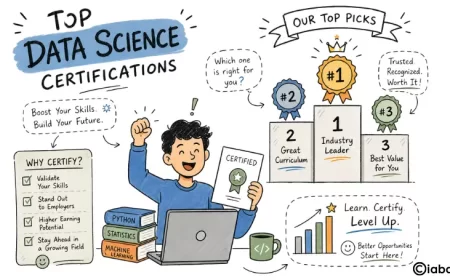
Become Certified: You can improve your employment prospects and certify your talents by earning certifications such as the Data Science Certification.
-
Continue Learning: Keep abreast of new methods, tools, and market trends.
A data scientist's work is dynamic and varied. It involves more than just numerical analysis; it involves resolving practical issues, predicting patterns, and reaching significant conclusions. There is a greater need than ever for qualified data scientists since data is becoming an important part of every sector.
Data science can be the ideal career choice for you if you are analytical, inquisitive, and like using data to solve puzzles. Additionally, the Data Science Certification provides a reliable route for anyone wishing to prove their skills in order to establish their knowledge and reputation in this interesting field.