



























































Entry Level Data Analyst Resume Tips That Get Interviews
Entry level data analyst resume tips for freshers to get interviews faster, covering format, skills, projects, ATS rules, examples, & certification guidance.


Receiving interview calls for beginner data roles can be challenging. You may have learnt new skills, completed projects, and applied for numerous positions without receiving a response. In most cases, the problem does not develop from your ability. It's how your resume describes that ability. A resume is more than just a collection of skills. It demonstrates your ability to work with data, understand problems, and communicate results clearly. For an entry level data analyst who is looking for the foundation of data analytics, the resume usually decides everything.
Let’s focus only on resume writing, what recruiters expect, how screening systems work, and how to present skills in a clear and honest way.
Why Resume Quality Matters for Beginner Data Roles
Recruiters receive a large number of applications for junior data positions, and most resumes appear almost identical at first look. Due to time limitations, recruiters typically scan each resume for only a few seconds. During this brief scan, they decide whether to continue reading or proceed to the next application. If your resume does not clearly demonstrate value right away, it is often overlooked.
A good resume makes your profile easier to understand. It allows recruiters to quickly check what you know, what you've practised, and how you can help the company. This is especially important for beginners, because recruiters cannot depend on previous job titles and must look for clear evidence of skill and effort.
A well-prepared resume helps you:
-
Demonstrate that you understand real-world data tasks like cleansing data, analysing information, and presenting results.
-
Prove that you can apply skills through projects and practical work, rather than just mentioning tool names.
-
Match job descriptions more closely by highlighting the relevant skills and keywords.
-
Pass the screening software and make a good impression during human review.
For an entry level data analyst, a clear and well-structured resume can matter more than your degree or college name. It shows capacity to work with data, willingness to learn, and the ability to explain work clearly, all of which recruiters value when shortlisting candidates for interviews.
How Recruiters Read an Entry Level Data Analyst Resume
Most recruiters follow a simple pattern:
-
Skills and tools that match the job role
-
Projects or practical work that show hands-on experience
-
Education or a data analytics certification that supports your learning
-
Overall clarity before deciding to shortlist or reject
Recruiters do not read every line in detail. They look for clear signals that show ability for data work, so your resume should highlight the most important information in a simple and easy-to-spot way.
What Builds Trust in Your Resume
-
A shortlisted resume clearly proves that you are prepared for real data work. Even if you have not yet held a full-time position, your efforts are still valuable. Projects, case studies, practice datasets, internships, and academic assignments all demonstrate that you have experience working with data and understand how tasks are handled in real-world situations.
-
Recruiters also look for practical skills. Listing tools is not sufficient; your resume should demonstrate how you used those tools and methods while working on projects. This allows them to understand your practical abilities rather than just theoretical knowledge.
-
Structured learning adds more confidence to your profile. Guided training, hands-on projects, and a data analytics course from an Authorized Training Provider show that your learning followed a clear path and that your skills were developed step by step.
-
Finally, simple formatting, honest skill levels, and clear explanations help your resume gain trust. When these elements come together, recruiters have more confidence that you are qualified for an entry level data analyst position and are more likely to shortlist your resume for interviews.
Resume Length, Format, and Layout
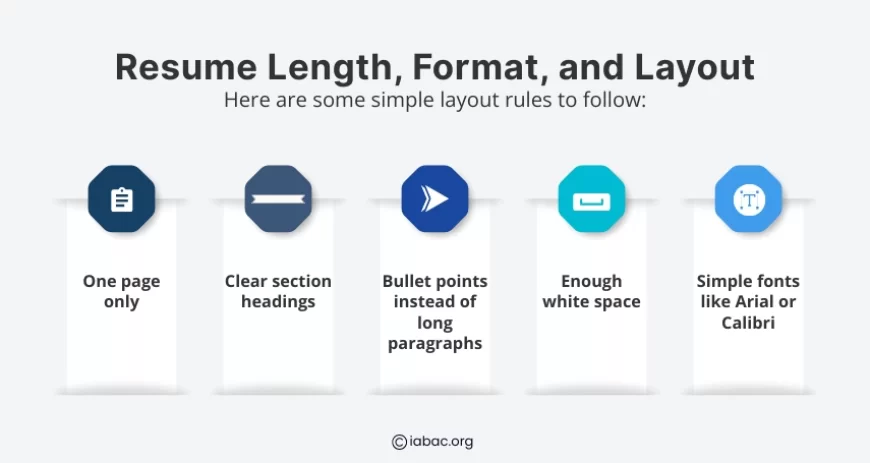
Here are some simple layout rules to follow:
-
One page only: This helps recruiters find the main details faster and keeps your resume focused on what matters most.
-
Clear section headings: Use simple headings like 'Skills', 'Projects', 'Education', and 'Certification' so information is easy to locate.
-
Bullet points instead of long paragraphs: Bullet points make content easier to read and highlight important points quickly.
-
Enough white space: Proper spacing between sections improves readability and avoids a crowded look.
-
Simple fonts like Arial or Calibri: These fonts are easy to read and work well with screening software.
Avoid designs with heavy colours, graphics, or complex layouts. Entry level data analyst roles value clarity and structure more than decoration, and a clean format helps your resume make a strong first impression.
Header Section of resume: Make a Clean First Impression
Your header should look professional and simple.
Include:
-
Full name
-
Job title (Junior or Entry level data analyst)
-
Professional email address
-
Phone number
-
City and country
-
LinkedIn or portfolio link (if available)
Avoid:
-
Photos (unless clearly required)
-
Personal details like age or marital status
-
Long summaries in the header
Resume Summary
The resume summary is one of the first sections recruiters read, and it often decides whether they continue reviewing the rest of your resume. For an Entry level data analyst, this section should give a quick and clear idea of who you are and what you can do.
Ideal length: 3–4 short lines that are easy to read
What to include:
-
Your role focus: Clearly mention that you are aiming for an Entry level data analyst role.
-
Key skills: Highlight your main skills related to data work.
-
Tools you use: Mention important tools you have practised.
-
Type of work you are seeking: Briefly state the kind of data role you want to start with.
Example:
A beginner data professional with hands-on experience in data cleaning, analysis, and reporting via spreadsheets, SQL, and visualisation tools. Trained through structured projects and case studies.
Avoid exaggeration or long descriptions. A simple and honest summary makes a better impression and encourages recruiters to keep reading.
Skills Section in resume: entry level data analyst
Avoid copying long skill lists from the internet.
Group skills properly:
Technical Skills
-
Data cleaning and preparation
-
Data analysis methods
-
Basic statistics
-
Data visualization
Tools
-
Spreadsheets
-
SQL
-
Python (for analysis)
-
BI tools
Business Skills
-
Problem understanding
-
Reporting
-
Clear communication
-
Attention to detail
Recruiters prefer fewer real skills over many weak ones.
Projects Section: The Most Important Part
For an Entry level data analyst, the projects section is more important than marks or grades. Recruiters use this section to understand how you work with data and how well you apply your skills in practical situations.
What counts as a project:
-
Course or training projects
-
Practice datasets used for learning
-
Case studies based on real or sample data
-
Internship or academic tasks
-
Personal data analysis work done independently
What each project should show:
-
Problem statement: What question or issue were you trying to solve
-
Data source: Where the data came from
-
Tools used: The tools and methods you applied
-
Result or insight: What you learned or found from the analysis
Example:
-
Studied sales data to find monthly trends
-
Cleaned raw data using spreadsheets and SQL
-
Created charts to explain growth patterns
-
Shared insights through a simple dashboard
A well-written projects section shows your thinking process and practical ability, not just the tools you have used.
Entry Level Data Analyst Resume With No Experience
Many beginners worry about having no job experience. This is common and acceptable.
If you have no job experience:
-
Focus on projects
-
Highlight structured learning
-
Show tool usage clearly
-
Explain outcomes simply
Replace “Experience” with:
-
Academic Projects
-
Practical Case Studies
-
Data Practice Work
Recruiters understand that beginners start somewhere. What matters is effort and learning.
How to Show Tools Properly on Your Resume
Listing tools isn't enough; your resume should also explain how you used those tools in projects or tasks, what you did with them, and how they helped you work with data or solve a problem.
SQL
-
Used SQL to filter, join, and summarize datasets
-
Wrote queries to answer business questions
Python
-
Used Python for data cleaning and analysis
-
Worked with basic libraries for handling data
Spreadsheets
-
Cleaned datasets
-
Used formulas and pivot tables
-
Created charts for reporting
Visualization Tools
-
Built simple dashboards
-
Explained trends using charts
This helps recruiters clearly understand that you do not just know the names of the tools, but that you can actually use them to work with data and handle real tasks.
Using Numbers to Show Impact
Using numbers in your resume helps recruiters understand the value of your work more clearly. Numbers make your efforts look real and measurable, even for beginner-level projects.
Instead of:
-
Worked on sales data analysis
Write:
-
Analyzed sales data from 10,000+ records to identify monthly trends
Examples of using numbers effectively:
-
Reduced data errors by cleaning duplicate entries
-
Analyzed customer data to find repeat purchase patterns
-
Compared performance across regions to spot growth differences
You do not need very large numbers to impress. Simple and logical explanations matter more than big figures.
Education Section: Keep It Simple
The education section should be clear and easy to read. Recruiters mainly want to know your highest qualification and where you studied.
Include:
-
Degree name
-
College or university
-
Year of completion
There is no need to explain subjects or grades unless asked. If your degree is not related to data, that is not a problem. Your skills and projects help balance it.
Certification Section: Adds Confidence
Certification helps recruiters feel more confident about your learning and preparation. Structured learning shows that you did not study randomly.
A data analytics certification from a recognised platform shows that:
-
You followed a clear and organized learning path
-
You practiced real data tasks through projects
-
Your skills were checked through assessments
How to list certification:
-
Certification name
-
Focus areas such as analysis, tools, and projects
Keep this section short and easy to understand.
ATS-Friendly Resume Tips
Many companies use screening software (ATS) before a recruiter sees your resume. A simple format helps your resume pass this step.
To improve ATS matching:
-
Use standard headings like 'Skills', 'Projects', and 'Education'.
-
Match skill names with the job description
-
Avoid tables and heavy graphics
-
Use simple, readable fonts
-
Save your resume as a clean PDF
Common ATS rejection reasons:
-
Missing important keywords
-
Unreadable or complex formatting
-
Skill mismatch with the job role
-
Overloaded design
A simple resume usually performs better.
Customizing Your Resume for Each Role
Sending the same resume for every job reduces your chances of getting shortlisted. Small changes can make a big difference.
Adjust these sections for each role:
-
Resume summary
-
Order of skills
-
Project descriptions
For reporting-focused roles, highlight dashboards and reports.
For analysis-focused roles, highlight SQL, logic, and problem-solving.
This small effort can increase interview chances.
Portfolio and GitHub: How to Use Them
If you have a portfolio or GitHub profile, use it wisely by including links that match your resume projects and clearly showcase your skills and practical work.
Best practices:
-
Add the link in the resume header
-
Make sure projects match what is written in your resume
-
Keep explanations clear and simple
Recruiters often check these links if your resume looks strong.
Common Resume Mistakes That Block Interviews
Small mistakes can stop a good resume from getting shortlisted.
Avoid these mistakes:
-
Spelling and grammar errors
-
Copy-paste project descriptions
-
Claiming skills you cannot explain
-
Using too many fonts or colors
-
Writing long career objectives
A clean and honest resume builds trust.
What Recruiters Expect From Beginners
Recruiters understand that beginners are still learning. They do not expect everything to be perfect.
They usually look for:
-
Strong basics in data concepts
-
Willingness to learn and improve
-
Honest understanding of skill level
-
Some form of practical exposure
A resume that shows these points clearly is more likely to get interviews.
Resume Review Checklist
Before applying, take a final look at your resume.
Check the following:
-
Is the resume limited to one page?
-
Are the skills relevant to the job?
-
Are projects explained clearly?
-
Is the formatting simple and clean?
-
Are all details correct and updated?
A quick review like this can improve your chances of getting shortlisted.
Writing a resume is an important step towards becoming a professional. An entry level data analyst resume should clearly demonstrate problem-solving ability, highlight practical work, demonstrate consistent learning effort, and establish trust with recruiters. Years of experience are not required to get interview calls; what matters most is clarity, proper structure, and honest proof of skills through projects and hands-on work. A structured path can help you build a resume that reflects real abilities, guided projects, and industry-aligned learning. Begin your journey today by researching certification programmes available through an ATP and creating a resume that recruiters can confidently shortlist.