



















































How to Become a Prompt Engineer in 2026: Skills, Salary & Roadmap
Learn how to become a Prompt Engineer in 2026 with key skills, salary insights, career roadmap, and tips to build a successful AI career.

If you’ve been hearing the term Prompt Engineer everywhere lately, you’re not imagining it. In just a few short years, this role has gone from a niche experiment to one of the most in-demand jobs in the tech world. And the demand for 2026 is just growing stronger.
If you are a student, software developer or someone looking to change careers this guide is written for you. We will show you exactly what a Prompt Engineer does, what are the skills and tools you need, how much you can earn, and the fastest and clearest path to getting your first role in this exciting field.
We will also tell you which GenAI certification programs are worth your time and money in 2026 including options from the International Association of Business Analytics Certifications (IABAC) that are globally recognized by employers.
Who is a Prompt Engineer?
A Prompt Engineer is a person who develops, tests and optimizes the instructions (called “prompts”) that are given to AI systems like ChatGPT, Claude, Gemini and other Generative AI tools. Think of it like this: the AI is the big engine in a car, and the prompt engineer is the driver who knows how to steer it just right to get the best results.
This is not just typing into a chatbot. It consists of:
- Comprehending the thought process and reaction of LLMs (Large Language Models)
- Writing precise, structured prompts that produce consistent, accurate outputs
- Testing and refining prompts for specific business use cases
- Embedding AI outputs in real products and workflows
- Collaborate with developers, product teams, data scientists
What does this mean in 2026? Why?
Generative AI is a business tool. All types of companies from healthcare to finance to marketing – are now developing products powered by AI. They need people who can link the raw capability of AI to practical results that are ready for the business. That guy is the Prompt Engineer.
Is Prompt Engineering Your Next Career ?
If you are a good fit, you may be:
- You want to know how AI writes text, makes images, and codes
- You enjoy problem-solving and experimentation
- You want to work at the cutting edge of AI technology
- You’re a developer looking to transition into AI-specific roles
- You’re a career switcher from content, marketing, research, etc.
If this role is not for you because:
- You want a very structured, repetitive job, with no ambiguity
- You’re not interested in technology or AI
- You like working with physical products more than digital systems
The good news is you don’t need a computer science degree to get started. What you do need is curiosity, persistence and the willingness to learn structured AI skills through quality Generative AI certification programs.
Skills Needed to Be a Prompt Engineer in 2026
Here's a practical breakdown of the skills you'll need, from most essential to good-to-have:
|
Skill |
What It Means |
Priority |
|
Prompt Engineering |
Crafting clear, effective instructions for AI models |
Essential |
|
Python Programming |
Writing scripts to automate AI workflows |
Important |
|
LLM Fundamentals |
Understanding how large language models work |
Essential |
|
API Integration |
Connecting AI tools via OpenAI API and others |
Important |
|
Critical Thinking |
Evaluating AI outputs for accuracy and bias |
Essential |
|
Data Literacy |
Reading and interpreting AI-generated data |
Helpful |
|
NLP Basics |
Natural language processing concepts |
Helpful |
|
Version Control (Git) |
Tracking changes in AI projects |
Important |
Technical Proficiencies Deserving of Development
You don't have to be a deep learning researcher, but knowing the fundamentals of how AI models operate will help you stand out. This entails understanding ideas such as:
- Tokens: The textual units (words, punctuation, and word segments) that AI models analyze. You can write more effective prompts if you are aware of token constraints.
- Temperature settings: Manages how "random" or "creative" an AI's answers are. Higher temperatures are more diverse; lower temperatures are more predictable.
- Context windows: The most text that an AI can process simultaneously, including prompts and conversation history.
- Fine-tuning vs. prompting: Recognizing the distinction between training an AI model and using prompts to guide it.
How to Become a Prompt Engineer in 2026: A Step-by-Step Guide?
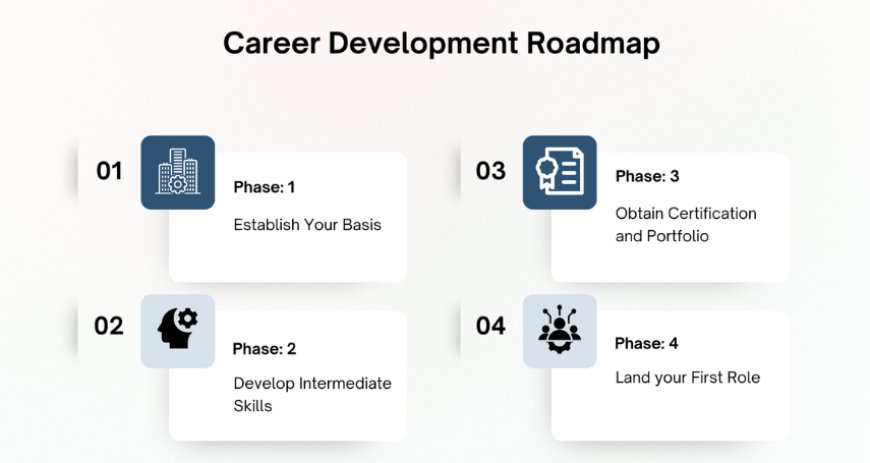
Whether you're building on your current IT skills or starting from scratch, this is a useful road map that you may follow. Every stage builds upon the previous one.
Phase 1: Establish Your Basis (Weeks 1-4)
- Begin utilizing ChatGPT, Claude, and Google Gemini on a daily basis. Feel free to experiment.
- Acquire knowledge of the three fundamental prompting strategies: chain-of-thought (step-by-step reasoning), few-shot (with instances), and zero-shot (no examples).
- Learn about generative AI by enrolling in a free introduction course on Coursera or YouTube.
- Start studying the fundamentals of Python. It is useful even to know how to call an API, which is a means of connecting to an AI service.
Phase 2: Develop Intermediate Skills (Weeks 5–10):
- Use prompt engineering methodically by recording what works, what doesn't, and why.
- Investigate the OpenAI API and create a basic text summarizer or chatbot.
- Study up on LangChain, a well-liked framework for creating LLM-powered applications.
- Learn how to assess AI outputs by looking for bias, accuracy, and hallucinations (made-up facts).
- To stay up to date, read the blogs of AI researchers like OpenAI, Anthropic, and Google DeepMind.
Phase 3: Obtain Certification and Develop Portfolio (Weeks 11–16):
- Enroll in a GenAI certification program that is recognized by the industry (see the certifications section below).
- Create three to five portfolio projects, such as a chatbot for customer service, an AI writing helper, a code explanation, or a content creator.
- Participate in open-source AI initiatives on Hugging Face or GitHub.
- Make a LinkedIn profile or personal website that highlights your quick technical work.
Phase 4: Land Your First Role (Weeks 17–24)
- Apply for entry-level AI roles: Junior Prompt Engineer, AI Content Specialist, LLM Applications Developer.
- Prepare for technical interviews: Practice explaining your prompt strategies and demonstrating your evaluation skills.
- Network actively in AI communities: LinkedIn groups, Discord servers, Reddit's r/Prompt Engineering.
- Keep learning AI evolves rapidly: Set aside time weekly to stay updated.
Important Tools and Technologies You Should Understand:
You will frequently use a particular collection of tools as a Prompt Engineer. The most significant ones for 2026 are as follows:
AI Platforms and Models:
- ChatGPT (OpenAI): The most popular LLM in the world. Perfect for developing text-based applications, evaluating outputs, and practicing prompting.
- OpenAI API: This developer interface allows you to include GPT models into your own programs.
- Google Gemini/Vertex AI: Google's collection of cloud-based AI development tools and models.
Development Frameworks:
- Lang Chain: A framework that simplifies building applications powered by LLMs. Essential for any developer working on AI-driven products.
- Hugging Face Transformers: An open-source library with thousands of pre-trained AI models. Great for experimenting with Generative AI techniques.
- TensorFlow: Google's deep learning framework. Useful if you want to go deeper into the technical side of AI model development.
2026's Top GenAI Certification Courses for Quick Engineers:
One of the best methods to prove your abilities, differentiate yourself in a crowded job market, and demonstrate to potential employers that you have received training on topics recognized by the industry is to earn a GenAI certification.
The top certifications offered in 2026 are contrasted here:
|
Certification |
Provider |
Level |
Focus Area |
Best For |
|
GenAI Certification (CPGAI) |
IABAC |
Beginner–Advanced |
Prompt Engineering, LLMs, GenAI Tools |
Career switchers, students, developers |
|
Professional ML Engineer |
Google Cloud |
Advanced |
Machine Learning Engineering |
Experienced ML engineers |
|
Azure AI Engineer Associate |
Microsoft |
Intermediate |
Azure AI services, NLP, Vision |
Azure cloud developers |
|
AI Engineering Professional |
IBM |
Beginner–Intermediate |
Deep Learning, ML Ops, AI Dev |
Data professionals pivoting to AI |
Expected Pay for Prompt Engineers in 2026:
Experience, location, and the particular industry you work in all affect pay in this area. Based on current market statistics, the following is a realistic picture:
|
Role Level |
Experience |
Approx. Salary (US) |
Typical Background |
|
Junior Prompt Engineer |
0–2 years |
$60,000–$90,000 |
Fresher / Career switcher |
|
Mid-Level Prompt Engineer |
2–4 years |
$90,000–$130,000 |
Certification + portfolio |
|
Senior Prompt Engineer |
4+ years |
$130,000–$180,000 |
LLM specialization |
|
AI Product / LLM Architect |
5+ years |
$180,000–$250,000+ |
Deep learning + leadership |
Remember that these are approximations based on market patterns. Your industry, the size of the business, your portfolio, and whether you have a recognized GenAI certification all have a big impact on your pay.
Opportunities for Careers: Where Can Prompt Engineers Find Employment?
Prompt engineers don't just work for computer corporations. By 2026, generative AI will be used in almost every business, therefore there will be plenty of chances.
Businesses Seeking Quick Engineers:
- Technology and SaaS firms: Developing internal tools, features, and products driven by AI.
- Healthcare and pharmaceuticals: automated clinical documentation, patient communication systems, and AI-assisted diagnostics.
- Finance and banking: AI-powered customer service, automated report creation, and fraud detection prompts.
- Education (EdTech): automated grading systems, content creation, and AI instructors.
- Media and marketing: brand voice training, social media automation, AI content production, and SEO tools.
- Legal & compliance: AI-assisted document creation, contract assessment, and regulatory oversight.
Typical Job Titles:
- Quick Engineer
- Content Strategist for AI
- Developer of LLM Applications
- Expert in Generative AI
- AI Product Manager (focusing on GenAI)
- Conversational AI Designer
Ethics and Compliance for Prompt Engineers in Responsible AI
As a Prompt Engineer, you are accountable not only for producing high-quality results but also for making sure those results are safe, moral, and consistent with the law.
Important frameworks and rules that all Prompt Engineers should be aware of:
- The General Data Protection Regulation (GDPR): The data privacy legislation in Europe. Even if your business is located abroad, GDPR is applicable if your AI system handles personal data about EU citizens.
- IEEE AI Ethics Standards: A set of guidelines for developing AI systems that are accountable, transparent, and consistent with human values.
- UNESCO AI Ethics Framework: An international framework to guarantee that the advancement of AI serves humanity and prevents damage.
- OpenAI Usage regulations: You must abide by OpenAI's usage regulations, which forbid damaging or misleading applications, whether you use their models or API.
Conclusion: Your GenAI Certification Journey Starts Now
The field of Generative AI Certification is growing at a remarkable rate. By 2026, prompt engineers will be an essential component of how companies function, innovate, and compete.
Compared to most technical occupations, being a Prompt Engineer is easier. A PhD is not required. Years of experience are not necessary. To certify your abilities, you need a methodical approach, sincere interest, practical experience, and the appropriate GenAI certification.
The tools, resources, and possibilities are accessible to you right now, regardless of whether you're a professional switching to this fascinating field, a student investigating AI for the first time, or a developer wishing to specialize.
Reference Links:
- ChatGPT: https://chat.openai.com
- UNESCO AI Ethics: https://en.unesco.org/artificial-intelligence/ethics
- IABAC GenAI Certifications: https://iabac.org