
























































Top Skills Required for Business Analytics in 2026
The top skills for business analytics in 2025 include data science, AI, visualization, and decision-making to stay competitive.


Businesses today are collecting more data than ever before. Every customer purchase, website visit, social media post, and supply chain activity creates useful information. But data by itself does not solve problems. Companies need people who can study this data and turn it into insights that support better decisions. This is the role of business analytics.
Business analytics is about using data, statistics, and technology to answer business questions. It helps companies understand what is happening, why it is happening, and what actions to take next. To do this well, professionals need a mix of skills. These include not only technical knowledge but also problem-solving, business awareness, communication, and teamwork.
We will look at the main skills required for business analytics in 2026. Whether you want to start a career in this field or build stronger analytics teams in your company, these skills are important to know.
Why Business Analytics Skills Matter
Before diving into specific skills, it helps to understand why they matter so much. Businesses today operate in highly competitive markets. Decisions that were once based on experience or intuition are now supported by data. For example:
-
A retailer may use analytics to predict which products will sell well in different seasons.
-
A bank may use analytics to detect unusual transactions and prevent fraud.
-
A manufacturer may use analytics to reduce costs by improving supply chain efficiency.
In all these cases, analytics only works if professionals have the skills to manage and interpret data. Without the right skills, data remains unused or is misinterpreted, leading to poor decisions.
Technical Skills for Business Analytics
At the core of business analytics is the ability to work with data. Technical skills provide the foundation that allows analysts to collect, clean, analyze, and present information. Some of the most important technical skills include:
1. Statistics and Mathematics
Analytics relies heavily on numbers. A solid understanding of statistics and mathematics allows analysts to interpret trends, test hypotheses, and build models. Common areas of focus include:
-
Averages and percentages
-
Correlation and regression analysis
-
Probability and forecasting methods
These concepts help analysts answer questions like: What factors are driving sales? or How likely is a customer to cancel a subscription?
2. Programming Languages
Coding is a valuable tool for business analysts. While not every role requires advanced programming, knowing languages like:
-
SQL for working with databases
-
Python for data cleaning, analysis, and machine learning
-
R for statistical modeling
These tools make it easier to handle large datasets, automate repetitive tasks, and build advanced analytical models.
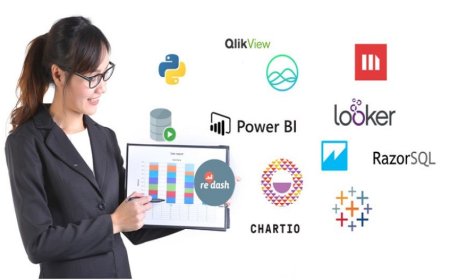
Raw numbers are not always easy to understand. Visualization skills help turn complex data into clear charts, dashboards, and reports. Tools like Tableau, Power BI, and Excel allow analysts to highlight patterns and make findings accessible to non-technical stakeholders.
4. Database Knowledge
Data often lives in different systems. Understanding relational databases and knowing how to extract information is essential. Analysts should know how to write queries, join tables, and manage datasets from multiple sources.
These technical skills make it possible to transform raw data into structured insights.
Analytical and Problem-Solving Skills
Technology alone does not create value. Analysts must also know how to interpret data and solve problems. Analytical and problem-solving skills include:
-
Recognizing patterns in large datasets.
-
Breaking down complex issues into smaller, manageable parts.
-
Testing ideas by building hypotheses and verifying them with data.
-
Connecting insights with business challenges and opportunities.
For example, if customer satisfaction scores are falling, an analyst can use survey data, sales data, and call center records to identify the real issue. It could be delivery delays, product quality, or customer service response times. Strong analytical skills ensure that the right problem is solved.
Business and Domain Knowledge
Analytics cannot be separated from business context. Without understanding how a business works, even the best analysis can fall flat. Domain knowledge ensures that data insights align with organizational goals.
Key areas include:
-
Industry knowledge: Each industry has unique measures of success. A healthcare analyst looks at patient outcomes, while a retail analyst focuses on customer lifetime value.
-
Functional knowledge: Understanding how data is used in marketing, finance, operations, and HR helps analysts tailor their approach.
-
Strategic alignment: Translating technical results into practical recommendations that support business strategies.
For example, a marketing analyst might use customer data to design more effective campaigns, while a supply chain analyst could use analytics to reduce inventory costs. Business knowledge connects insights to actions.
Communication and Storytelling Skills
Numbers alone do not convince decision-makers. Analysts must communicate their findings clearly and persuasively. Storytelling skills turn complex analysis into narratives that drive action.
Important abilities include:
-
Explaining data in simple language so that managers and executives understand the results.
-
Designing clear dashboards and reports that highlight key insights.
-
Using storytelling techniques to show not just what happened, but why it matters and what should be done next.
For example, instead of presenting a graph that shows declining sales, an analyst can explain that sales dropped in urban regions due to reduced marketing campaigns and suggest increasing advertising in those areas. This makes the data actionable.
Soft Skills That Support Business Analytics
Working with data also requires interpersonal and organizational skills. These “soft skills” help analysts collaborate effectively and manage daily challenges.
Some key soft skills include:
-
Teamwork: Collaborating with IT teams, marketing managers, or operations leaders.
-
Adaptability: Staying open to new tools, business changes, or unexpected data challenges.
-
Attention to detail: Ensuring that numbers are accurate and errors are minimized.
-
Time management: Handling multiple projects or reports at once without losing quality.
Soft skills are often what make the difference between a technically skilled analyst and an effective business partner.
Emerging Skills in Business Analytics
The field of business analytics is constantly changing. New technologies and practices are shaping the skills that analysts need.
1. Cloud Computing
With growing amounts of data, companies are moving to platforms like AWS, Azure, and Google Cloud. Knowing how to access, analyze, and manage cloud data is becoming essential.
2. Artificial Intelligence and Machine Learning
While not every analyst needs to be a data scientist, a basic understanding of machine learning and automation can add value. These tools help with predictive modeling, customer segmentation, and advanced forecasting.
3. Data Ethics and Governance
As organizations collect more personal information, the responsible use of data is becoming critical. Analysts should understand privacy laws, data protection practices, and ethical considerations.
Keeping up with these emerging skills ensures that professionals remain competitive in a fast-changing field.
Real-World Applications of Business Analytics Skills
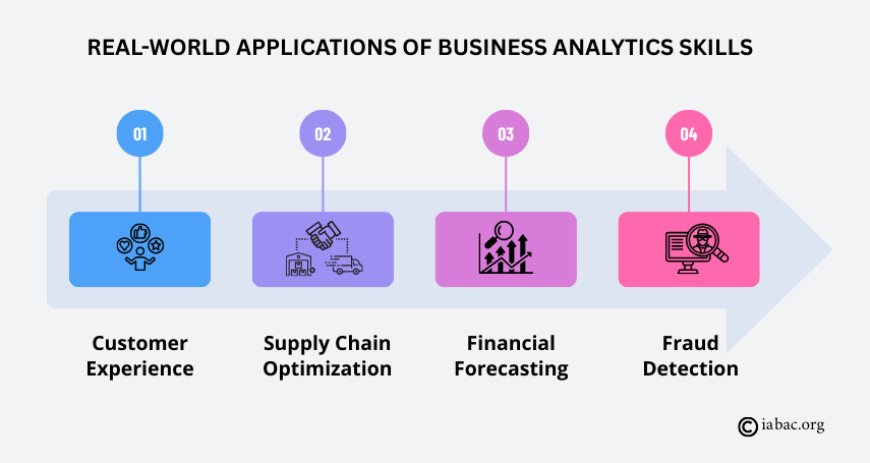
Understanding these skills is important, but how do they work in practice? Here are some real-world applications:
-
Customer Experience: Using customer feedback and purchase history to improve services and reduce churn.
-
Supply Chain Optimization: Analyzing supplier performance and logistics data to cut costs and avoid delays.
-
Financial Forecasting: Using historical sales data to predict future revenue and budget more effectively.
-
Fraud Detection: Monitoring transaction data in real-time to spot unusual activity.
These examples show how analytics skills directly support business performance.
The skills required for business analytics go far beyond crunching numbers. They include technical expertise, problem-solving ability, business understanding, communication, and adaptability. Together, these skills allow professionals to transform raw data into insights that guide smarter decisions.
For individuals, building these skills through business analytics certification opens doors to strong career opportunities in one of the most in-demand fields. For organizations, investing in analytics talent ensures that data is not only collected but actively used to improve performance, reduce costs, and create value.
In 2026 and beyond, the combination of these skills will continue to shape how businesses compete and grow in a data-driven world.