

















































What Is Google DeepMind? A Complete Beginner's Guide (2026)
What Google DeepMind is, how it works, and why it matters in 2026. From AlphaGo to AlphaFold to Gemini — the complete beginner's guide to the world's most ambitious AI lab.

What Is Google DeepMind, Really?
Let's cut through the buzzwords.
Google DeepMind is an AI research lab — but calling it just a "lab" is like calling the Apollo program a "rocket project." It's the place where some of the most consequential AI breakthroughs of the past decade were born. It's the organization that taught a computer to beat the world's best Go player, solved a 50-year-old biology problem, and is now racing toward building artificial general intelligence — AI that can think and reason across any domain, the way humans do.
Formally, Google DeepMind is a division of Alphabet Inc. (the parent company of Google). It was created in April 2023 when Google merged two of its most prestigious AI teams: Google Brain, the team behind foundational research that powered Google Search, Gmail, and YouTube, and DeepMind, the London-based AI startup that pioneered reinforcement learning and neural network research at a world-class level.
Together, they form one of the largest concentrations of AI talent anywhere on Earth — led by CEO Demis Hassabis, who in 2024 became a Nobel Prize laureate for his role in creating AlphaFold.
Why does this matter to you?
Because whether you're a student, a professional, a developer, or just someone who uses Google products, DeepMind's work is already shaping your digital life. The algorithms helping Google Search understand your questions, the AI improving YouTube recommendations, the models powering Gemini chatbot, the protein structures accelerating cancer drug research — all of these trace back to DeepMind's labs.
The Origin Story: How DeepMind Was Born
A Chess Prodigy With a Grand Vision
To understand DeepMind, you have to understand Demis Hassabis.
Born in London in 1976, Hassabis was a chess prodigy who reached master level at 13. But chess wasn't his real obsession — understanding intelligence was. He studied computer science at Cambridge, co-designed the award-winning strategy game Theme Park as a teenager, and then earned a PhD in cognitive neuroscience, studying how the human brain encodes memory.
His background wasn't typical for an AI researcher. He wasn't just a mathematician or an engineer — he was deeply interested in how the brain learns. That neuroscience lens would become DeepMind's secret weapon.
In 2010, Hassabis co-founded DeepMind Technologies in London with two collaborators: Shane Legg, a machine learning researcher who had written his PhD thesis on universal artificial intelligence, and Mustafa Suleyman, an entrepreneur focused on AI's real-world applications. Their founding mission was audacious: to solve intelligence, and then use that to solve everything else.
Not "build a better search engine." Not "increase ad revenue." Solve. Intelligence.
The Early Days: Teaching Machines to Play Atari
In the early years, DeepMind's team was small, focused on something that might seem frivolous from the outside: playing Atari video games.
But here's what made it revolutionary. DeepMind didn't program the AI with rules. They showed it raw pixels on a screen and let it figure out — through trial and error — how to win. This technique, called deep reinforcement learning, combined deep neural networks with reward-based learning. It worked like this: the AI made moves, got rewarded for doing well, and learned to repeat behaviors that earned rewards. Pure experience, no explicit instructions.
When DeepMind's system — called a Deep Q-Network (DQN) — taught itself to play 49 Atari games at superhuman level using the same algorithm, the AI world took notice. The paper was published in Nature in 2015, and it announced DeepMind as a serious force in AI research.
Google's Acquisition and the Road to Merger
The £400 Million Bet
By early 2014, DeepMind had about 50 employees and a reputation that far exceeded its size. Google and Facebook were both in pursuit. In January 2014, Google acquired DeepMind for approximately $500–650 million — depending on which valuation you use — making it one of the most expensive acquisitions of a company that had never launched a consumer product.
Why would Google pay that much for a research lab with no product?
Because Google's leaders understood what DeepMind had: a methodology, a talent pool, and a philosophical approach to building AI that could not be easily replicated. Eric Schmidt, then Google's executive chairman, reportedly said he was "blown away" by the team's capabilities.
One critical condition of the acquisition: DeepMind would remain largely independent, based in London, and would operate with research freedom that pure corporate teams rarely enjoy. An ethics board was established to oversee AI safety — before AI safety was a trending topic.
The 2023 Merger That Changed Everything
For nearly a decade, DeepMind and Google Brain operated in parallel — sometimes collaborating, sometimes competing internally. Google Brain was responsible for creating the Transformer architecture (the foundation of all modern large language models, including ChatGPT), TensorFlow, and much of the infrastructure behind Google's AI products.
In April 2023, amid intense pressure from OpenAI's explosive success with ChatGPT, Google announced the merger of Google Brain and DeepMind into a single entity: Google DeepMind. Demis Hassabis was named CEO of the combined organization.
The logic was sound: stop duplicating effort and combine the world's best fundamental research team with the world's best applied AI engineers — all under one roof.
How Google DeepMind Actually Works (The Technology Explained Simply)
What Is Deep Learning?
If you're new to AI, let's build the foundation up from scratch.
Imagine you want to teach a child to recognize cats. You don't write a list of rules ("four legs, pointy ears, meows"). You just show them thousands of pictures of cats and non-cats, and over time, their brain builds an internal model of what "cat" looks like.
Deep learning works the same way. A neural network — a mathematical structure loosely inspired by how brain neurons connect — is exposed to enormous amounts of data. Layer by layer, it learns to recognize patterns: edges in an image, grammar in a sentence, probability distributions in a protein sequence.
"Deep" refers to having many layers. More layers generally means more abstract, powerful pattern recognition.
What Is Reinforcement Learning?
Deep learning is great for pattern recognition. But DeepMind's real specialty — what made AlphaGo possible — is reinforcement learning (RL).
Think of it like training a dog. You give it a treat when it does the right thing, and it figures out, through trial and error, what behaviors lead to rewards. In RL, an AI agent takes actions in an environment, receives rewards or penalties, and gradually learns a strategy (called a "policy") that maximizes long-term reward.
DeepMind didn't just use RL — they advanced it dramatically. They combined it with deep neural networks, creating deep reinforcement learning: systems that can learn complex strategies in complex environments purely from experience, without being explicitly programmed with rules.
This is how AlphaGo learned to play Go. This is how AlphaStar learned to play StarCraft II. And this is the philosophical backbone of DeepMind's approach to AGI.
What Is Google DeepMind's Core Methodology?
DeepMind's approach is grounded in a conviction that intelligence — real, general intelligence — emerges from learning algorithms interacting with complex environments. Rather than hard-coding knowledge into systems, they build systems that can acquire knowledge.
This is inspired by neuroscience: the brain doesn't come pre-loaded with calculus or language. It learns through experience, feedback, and adaptation. DeepMind believes the right algorithms, given enough compute and data, can replicate and eventually exceed that process.
The Big Breakthroughs: AlphaGo, AlphaFold, and Beyond
AlphaGo: The Moment the World Stood Up
In March 2016, something happened in Seoul, South Korea that changed how the world thought about artificial intelligence.
DeepMind's AlphaGo sat across from Lee Sedol, arguably the greatest Go player of his generation, in a five-game match. Go is an ancient Chinese board game played on a 19×19 grid. It has more possible board positions than there are atoms in the observable universe — around 10^170 positions, compared to 10^43 for chess. For decades, AI researchers had considered mastering Go to be a decade-plus away. Many thought it would never happen without human-like intuition.
AlphaGo won 4–1.
Lee Sedol, who had predicted a "landslide" victory for himself, was visibly shaken. In game four — his only win — he found a move so creative that AlphaGo was unable to respond: a play later dubbed "the divine move" by the Go community. DeepMind's system didn't collapse. It adapted. But Lee Sedol's brilliance had found its one crack.
The match was watched by an estimated 60 million people. It wasn't just a game. It was a referendum on what AI could do.
How did AlphaGo work? It combined deep neural networks (trained on millions of human games) with Monte Carlo Tree Search (a planning algorithm), and crucially — reinforcement learning. AlphaGo played millions of games against itself, improving iteratively until it surpassed every human who had ever lived.
Its successor, AlphaZero (2017), went even further: it learned with zero human training data, starting only from the rules of Go, Chess, and Shogi. Within 24 hours, it had surpassed all previous AI programs in all three games. AlphaZero discovered strategies that human grandmasters called "alien" — not wrong, just utterly unlike how humans think.
AlphaFold: Solving a 50-Year-Old Biological Mystery
If AlphaGo was DeepMind's proof of concept, AlphaFold is its proof of purpose.
For 50 years, biochemists wrestled with one of biology's most frustrating puzzles: the protein folding problem. Every protein in your body — the enzymes in your stomach, the hemoglobin in your blood, the antibodies fighting off infection — is built from a chain of amino acids. But how that chain folds into a specific 3D shape determines everything about how it functions. And predicting that shape from the amino acid sequence alone was extraordinarily hard.
The problem mattered because proteins are the machinery of life. Understand their shapes, and you unlock drug development, disease treatment, and fundamental biology. But working out a single protein structure experimentally could take years and cost millions of dollars.
In 2020, DeepMind unveiled AlphaFold 2, which predicted protein structures with accuracy matching the best experimental lab methods — at a fraction of the time and cost. At the CASP14 competition (a global benchmark for protein structure prediction), AlphaFold 2's results were so far ahead of every other method that CASP scientists were initially skeptical the submission was real. Biologists were stunned. The program achieved accuracy levels with error margins sometimes just the width of a single atom.
Over 200 million protein structures — covering virtually every known protein — have since been deposited into the free, publicly accessible AlphaFold Protein Structure Database. More than 1.2 million researchers across 190 countries now use it.
The practical applications are already materializing: it has been used to help develop a malaria vaccine, identify new targets for cancer treatment, and accelerate drug discovery for diseases that have resisted treatment for decades.
In October 2024, this achievement was recognized with the highest honor in science. Demis Hassabis and senior researcher John Jumper were jointly awarded the Nobel Prize in Chemistry — the first Nobel Prize awarded primarily for an AI system. Hassabis also received a knighthood in the same year.
AlphaFold 3, released in May 2024, extended the capability further — predicting not just protein structures but the interactions between proteins, DNA, RNA, and virtually all other biomolecules with unprecedented accuracy.
AlphaStar, MuZero, and the Push Toward General AI
DeepMind didn't stop at Go. In 2019, AlphaStar became the first AI to defeat a top professional player at StarCraft II — a real-time strategy game far more complex than board games. StarCraft II requires managing resources, coordinating armies, anticipating opponents, and making split-second decisions across an information-incomplete battlefield. AlphaStar reached the top 0.2% of human players worldwide.
MuZero (2020) took a step further toward generality: it could master Atari games, Go, Chess, and Shogi without being given the rules. It figured out the rules of each game on its own through self-play and experimentation. DeepMind later used MuZero to compress YouTube videos more efficiently — a real-world application that saved enormous bandwidth globally.
AlphaCode (2022) wrote code at competitive-programming levels, ranking in the top 50% of human competitors on Codeforces. Its successor, AlphaCode 2 (2023), reached the top 15%.
These milestones tell a consistent story: DeepMind's systems are getting more general, more capable, and more useful — not just in simulated environments, but in the real world.
What Is Gemini? DeepMind's Crown Jewel in 2026
If you've used Google's AI assistant, you've already used Google DeepMind's most publicly visible product.
Gemini is the family of large language models developed by Google DeepMind — the AI powering the Gemini chatbot (available at gemini.google.com), Google Workspace integrations (AI features in Gmail, Docs, Sheets), and Google Search's AI Overviews.
Unlike OpenAI's approach of building text-first models and adding multimodal capabilities later, Gemini was designed from the ground up as a natively multimodal model — meaning it processes text, images, audio, video, and code within a unified architecture.
The Gemini Model Family in 2026
The Gemini lineup has evolved considerably. By mid-2026:
-
Gemini 3.5 Flash is Google's flagship speed model — delivering frontier intelligence at exceptional speed, now available across all Google products and APIs.
-
Gemini 3 Pro is the default reasoning model powering the Gemini app, leading benchmarks on abstract reasoning tasks (ARC-AGI-2) and holding the top position on LMArena Elo rankings.
-
Gemini 3.1 Flash-Lite is the budget-friendly, high-volume model for classification, summaries, and routine AI tasks.
-
Veo (Google's video model) can generate and edit videos through conversation, described by Demis Hassabis as combining "Gemini's intelligence with the best generative media models for a new level of world understanding."
The Gemini ecosystem has reached 750 million monthly active users as of early 2026, making it one of the fastest-growing consumer AI products ever.
Beyond Chatbots: Gemini Spark and the Agentic Era
At Google I/O 2026, CEO Sundar Pichai opened with a clear declaration: "We are firmly in our agentic Gemini era."
The headline consumer announcement was Gemini Spark — a general-purpose AI agent that runs continuously in the background, capable of completing complex multi-step tasks with minimal supervision. This represents the shift from AI as a tool you query to AI as a collaborator that acts.
DeepMind also unveiled Magic Pointer — a reimagined mouse cursor powered by Gemini that understands what you're looking at on screen, listens to your voice, and acts directly on the page without requiring you to copy text into a separate chat window. It is a small example of a large trend: AI becoming woven invisibly into the fabric of how we use computers.
Google DeepMind vs. OpenAI: The Real Differences
It's the question everyone asks. Let's give it an honest answer.
Origins and Philosophy
OpenAI was founded in 2015 as a nonprofit by Elon Musk, Sam Altman, and others, explicitly focused on ensuring AGI benefits all of humanity. It has since converted to a "capped-profit" model and partnered heavily with Microsoft.
Google DeepMind traces its roots to 2010, built on a neuroscience-inspired approach to intelligence. Where OpenAI moved fast and shipped products aggressively, DeepMind historically prioritized fundamental research — often publishing papers rather than products. The merger with Google Brain in 2023 changed that equation, pushing DeepMind toward faster commercial deployment.
Research Depth vs. Product Velocity
DeepMind has arguably the deepest fundamental research record in AI history. The Transformer architecture — the bedrock of every modern large language model, including ChatGPT — came from Google Brain, not OpenAI. DeepMind's contributions to reinforcement learning theory are foundational. AlphaFold won a Nobel Prize.
OpenAI, by contrast, has been faster at shipping consumer-facing products and building developer ecosystems. ChatGPT's launch in November 2022 caught Google off-guard and triggered the acceleration that led to the Google Brain/DeepMind merger.
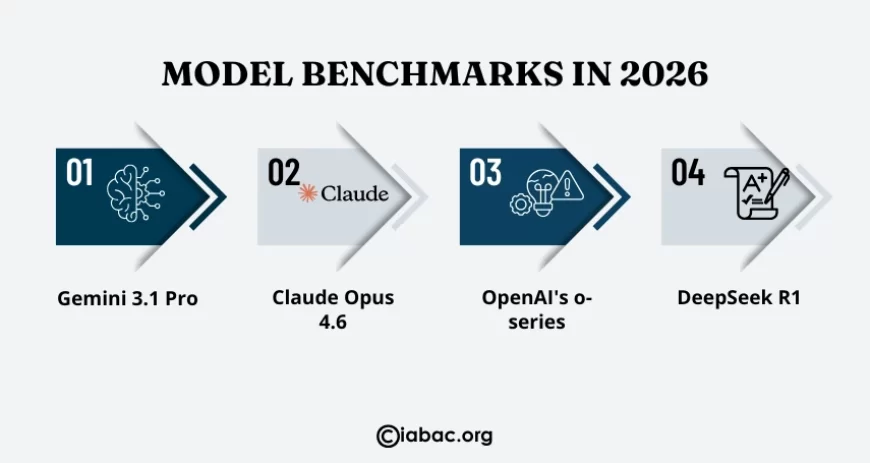
Model Benchmarks in 2026
According to independent benchmark data from early 2026:
-
Gemini 3.1 Pro leads on ARC-AGI-2 (abstract reasoning) and holds the top LMArena Elo.
-
Claude Opus 4.6 leads on SWE-bench (real-world software engineering).
-
OpenAI's o-series leads structured reasoning tasks.
-
DeepSeek R1 leads pure mathematics benchmarks.
There is no single winner. Each platform leads a different dimension — which tells you that we're in a period of genuine competition with no clear knockout ahead.
AI Safety
Both organizations talk about AI safety — but their approaches differ. The Future of Life Institute's 2026 AI Safety Index noted that OpenAI had recently overtaken Google DeepMind in safety rankings by improving transparency and posting a whistleblower policy. DeepMind, however, has a longer institutional history of safety research, having published foundational work on reward hacking, specification gaming, and interpretability in reinforcement learning.
Neither has solved AI safety. Both are investing heavily in it.
The Strategic Advantage: Google's Ecosystem
The clearest difference is distribution. Google integrates Gemini into Search (used by billions), Workspace (used by hundreds of millions of professionals), and Android (the world's most-used mobile OS). OpenAI's ChatGPT is a product people choose to use. Gemini is increasingly something people encounter whether they choose it or not — woven into existing tools they already rely on.
AI Safety and Ethics at DeepMind
One area where DeepMind has genuinely distinguished itself is in taking AI safety seriously as a scientific discipline, not just a PR talking point.
DeepMind has a dedicated Safety team that has published research on:
-
Reward hacking — when AI systems exploit loopholes to maximize reward in unintended ways
-
Specification gaming — when AI accomplishes the letter of its objective but not the spirit
-
Interpretability — understanding why an AI makes the decisions it does
-
Scalable oversight — how humans can remain meaningfully in control as AI becomes more capable
When DeepMind was acquired by Google in 2014, a condition of the deal was the establishment of an independent ethics board. That condition was unusual at the time and reflected Hassabis's genuine commitment to ensuring the technology developed responsibly.
DeepMind also publishes a regular Responsibility & Safety research stream. Their approach to ethics is framed around "long-term benefit of humanity" — which can sound abstract until you realize it shapes concrete decisions like when and how to release powerful capabilities publicly.
That said, critics have raised legitimate concerns: DeepMind's partnership with the UK's National Health Service led to controversy over patient data privacy. And the broader question of whether any private company should be leading the development of AGI — technology with civilizational stakes — remains genuinely unresolved.
What Is AGI, and Is DeepMind Close to It?
The Simple Explanation
Artificial General Intelligence (AGI) is AI that can perform any intellectual task that a human can — not just one specific task it was designed for, but any task. Current AI systems, however impressive, are fundamentally narrow. ChatGPT can write remarkably well but can't drive a car. AlphaGo was unbeatable at Go but couldn't have recognized a cat in a photo.
AGI would be different: a single system capable of learning and excelling at anything a human can do.
DeepMind's Position on AGI
Demis Hassabis is arguably the most credible person alive to speak on this topic. His view, expressed consistently, is that AGI will require not just bigger models but two or three more fundamental breakthroughs — of the magnitude of deep reinforcement learning and the Transformer architecture — before we get there.
In a 2024 interview after accepting the Nobel Prize, Hassabis said: "You actually want a system to not just give you information, but actually go and be able to complete tasks for you." He sees agentic AI — systems that can plan, act, and achieve goals — as the next major step.
He has also said that AI could be "as smart as humans in general tasks" within a few years, but that the path to true AGI requires careful, safety-first development. Unlike some in Silicon Valley who treat AGI as an inevitability to rush toward, Hassabis consistently emphasizes: we have to get it right.
DeepMind's work on agentic AI, multi-step reasoning, and systems like Gemini Spark are concrete steps along this path.
Real-World Impact: Where DeepMind's Work Actually Shows Up
This is the part that often gets lost in the hype. DeepMind's work isn't just academic — it's already embedded in things you use.
Google Search
DeepMind's neural network research helped transform Google Search from keyword matching to semantic understanding. When Google Search understands that "best pizza near me open late" is about location, quality, and time simultaneously, that's a product of years of deep learning research.
YouTube
MuZero (the same algorithm that mastered Atari and Go) is used to compress YouTube videos more efficiently, reducing bandwidth costs and improving streaming quality at scale for billions of users.
Google Data Centers
DeepMind's reinforcement learning systems manage cooling in Google's data centers, reducing cooling energy use by approximately 40% — an environmental impact at planetary scale.
Healthcare
AlphaFold's protein structure database is actively used in research to develop treatments for diseases including malaria, cancer, Parkinson's, and Alzheimer's. Isomorphic Labs — a sister company founded by Hassabis in 2021 — is using AlphaFold directly for drug discovery with major pharmaceutical partnerships.
Weather Forecasting
DeepMind's GraphCast model (2023) can forecast global weather up to 10 days in advance in under 60 seconds — more accurately than traditional physics-based models that require thousands of CPU-hours to run.
The Future of Google DeepMind in 2026 and Beyond
Where is all of this heading?
The Agentic Transition
The biggest shift underway in 2026 is the move from AI as a question-answering tool to AI as an action-taking agent. Gemini Spark, announced at Google I/O 2026, represents DeepMind's most public bet on this future: an AI that runs continuously, completes tasks without constant supervision, and operates across your digital environment.
Science as the North Star
Demis Hassabis has consistently returned to a single animating vision: use AI to accelerate scientific discovery. AlphaFold was the opening act. DeepMind is now working on AI systems for materials science (discovering new materials for batteries, semiconductors, and solar cells), mathematics (AlphaProof and AlphaGeometry have already made progress on olympiad-level math problems), and climate modeling.
The long-term vision is AI as a collaborative scientific partner — not replacing scientists, but amplifying their capabilities by orders of magnitude.
AGI: The Honest Timeline
The honest answer is that no one knows exactly when AGI will arrive — including Hassabis. What he believes, and what DeepMind's research agenda reflects, is that the path goes through:
-
Increasingly capable agentic systems
-
Better integration of reasoning and memory
-
Fundamental new algorithmic breakthroughs
-
Rigorous safety and interpretability research in parallel
DeepMind's position is one of urgency and caution — rare in an industry that often prioritizes one at the expense of the other.
Google DeepMind has become one of the world’s most influential AI research organizations, driving breakthroughs like AlphaGo, AlphaFold, and the Gemini AI models. What started as a mission to understand intelligence has now transformed industries ranging from healthcare to scientific research and advanced automation.
As AI continues shaping the future, understanding technologies developed by organizations like Google DeepMind is becoming increasingly important for professionals across every industry. Building practical AI skills through programs such as the IABAC AI Certification can help individuals stay competitive and prepared for the rapidly evolving AI-driven world.
The future of AI is already unfolding, and learning how to work with AI will become one of the most valuable skills of the coming decade.