
















































What skills are taught in data science courses in Malaysia
Learn essential skills taught in data science courses in Malaysia, including programming, statistics, machine learning, and data analysis techniques.


When I started looking into data science courses in Malaysia, I wanted to know what skills they teach. From what I’ve seen, these courses usually include important tools like Python and R, along with machine learning, data visualization, and basic statistics. A lot of them also focus on hands-on projects, which help you practice and apply what you’ve learned.
As I went further into these programs, I noticed that data science certifications in Malaysia really help people get ready for real jobs—especially in areas like healthcare analytics, where working with data is becoming more important every day.
The Rising Need for Data Experts in Malaysia
Today, many companies in Malaysia are using data to make better decisions. From banks to retail to healthcare, businesses are looking for people who know how to work with data. This rising need for skilled workers has led many schools and training centers to offer special data science programs. These programs are made to help students learn what they need to succeed in the field.
Choosing the Right Data Science Course Isn’t Always Easy
With so many data science courses in Malaysia, it can be hard to choose the one that fits you best. Every course is different. Some focus more on coding, while others teach more about statistics or business use. That’s why it’s important to know what you’ll learn in each program and how those skills match your career goals.
What Skills Do You Learn in a Data Science Course in Malaysia?
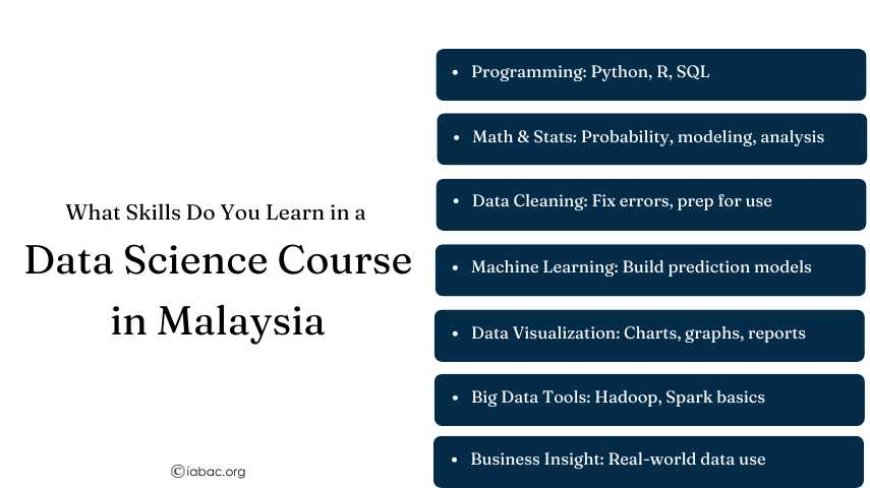
To understand better, I explored several data science programs in Malaysia. Here's what most of them teach:
-
Learning Programming Languages
You will learn how to use Python, R, and SQL. These languages help you work with data, write code to clean it, and perform analysis. These are must-have tools for any data science job.
-
Understanding Math and Statistics
A good knowledge of statistics and math is important. You will learn things like probability, algebra, and how to build models using these concepts.
-
Cleaning and Preparing Data
In real life, data often has missing values or mistakes. Courses teach you how to fix and prepare data so that it’s ready to be used for analysis.
-
Machine Learning and AI Basics
You will also learn how to use machine learning to build models that make predictions. For example, predicting customer behavior or future sales. It’s a big part of data science today.
-
Creating Visual Reports
Being able to show your findings in simple charts or graphs is very useful. These courses teach you how to use tools to build visual reports that others can understand easily.
-
Working with Big Data Tools
Some courses also introduce you to tools like Hadoop or Spark. These help you manage and use very large sets of data that don’t fit in normal tools.
-
Understanding Business Needs
Courses also teach how to use data in real-world business situations. This includes areas like sales, customer service, and healthcare analytics, where data is used to improve patient care and hospital services.
My Experience with a Data Science Course in Malaysia
When I joined a data science course in Malaysia, I looked for programs that gave both theory and hands-on practice. The projects we worked on helped me apply what I was learning to real problems. That was one of the best parts of the course. I found Python and R a little tough at first, but the lessons were clear and the trainers were helpful. With time, I got better and felt more confident writing code.
I also enjoyed working with real data. Cleaning it and getting it ready for analysis helped me become more careful and detail-oriented. It made me see how important clean data is. Learning machine learning was one of the most exciting parts. Building a model and seeing it give results gave me a strong sense of progress. I saw how useful it can be in areas like business and healthcare analytics.
Another part I liked was making visual reports. We learned to tell stories using data charts and graphs. This helped me thoroughly explain complex ideas, especially when sharing with people who don’t have a technical background.
How Data Science Certifications Help Your Career
Getting a data science certification helped me show my skills to employers. It gave me something to add to my resume and made it easier to apply for jobs. Many companies want proof that you know what you’re doing, and a certificate helps with that. It shows that you’ve learned the important tools and techniques and are serious about working in this field.
Why a Data Science Course in Malaysia Is Worth It
Looking back, taking a data science course in Malaysia was a great choice. I learned useful skills like coding, data cleaning, and machine learning. I also worked on real projects and gained confidence in my ability to use data to solve problems.
If you're thinking about joining this field, I recommend starting with a course that offers hands-on work. Whether you want to work in finance, retail, or healthcare analytics, data science can open many doors and help you build a strong and lasting career.
Why Choose Data Science Courses in Malaysia?
Malaysia is becoming a popular place for technology and data-related jobs. Here’s why it’s a good place to learn data science:
-
Jobs Are Growing: More companies in Malaysia and across Southeast Asia are looking for people who understand data and can help them make better decisions.
-
Good Quality Courses: Universities and training centers in Malaysia offer programs that teach useful skills for the job market.
-
Lower Cost: Studying in Malaysia is usually more affordable than in many other countries.
-
Good Location: Malaysia is in the centre of Southeast Asia, so it’s easier to connect with job markets in nearby countries too.
Types of Data Science Courses in Malaysia
If you're thinking of studying data science in Malaysia, here are the main types of courses you can choose from:
-
Bachelor’s Degree in Data Science
This course usually takes 3 to 4 years and is great for students just starting out. You’ll learn subjects like statistics, math, coding, and how to understand data. It’s a full program that prepares you for many types of data jobs.
-
Master’s Degree in Data Science
If you already have a degree in something like computer science or engineering, a Master’s course can help you learn more advanced topics like machine learning, artificial intelligence, and healthcare analytics.
-
Short-Term Certifications
These are for people who want to learn a specific skill in a short time. You can study topics like Python, data analysis, or how to make charts and dashboards. These courses are good if you don’t want to study full-time.
-
Bootcamps and Workshops
These are short but intense training programs. You’ll focus on real-world tasks and projects. They usually last a few weeks or months and are good if you want quick, practical training for a job.
How to Choose the Right Data Science Course
Before you sign up, think about these points:
-
What You Want to Learn: Do you like working with numbers, solving problems, or building tools? Choose a course that matches what you enjoy.
-
How You Want to Learn: Some people like classroom learning. Others prefer online or mixed learning. Pick what works best for you.
-
Is the Course Approved?: Make sure the course is from a recognised place that follows quality standards.
-
Who Teaches the Course?: Check if the teachers have real experience in data science. It helps when they can explain things with real examples.
-
Support After You Finish: Some courses offer help with internships or job placement. This can be very useful when starting out.
-
What It Costs: Compare the fees of different programs. Also, check if there are scholarships or payment plans to help with costs.
Data science courses in Malaysia are a smart choice for students who want to enter this growing field. Whether you're looking at a Bachelor’s degree, a Master’s program, or a short course, there are many options to help you learn. As the demand for data skills grows in areas like business, technology, and healthcare analytics, this is a great time to get started. With the right course, you can build a strong career and help businesses make better decisions with data.