













































Can Sophia Think Like a Human?
Can Sophia the robot think like a human? Explore how close AI is to human cognition in this balanced look at Sophia’s capabilities and limitations.


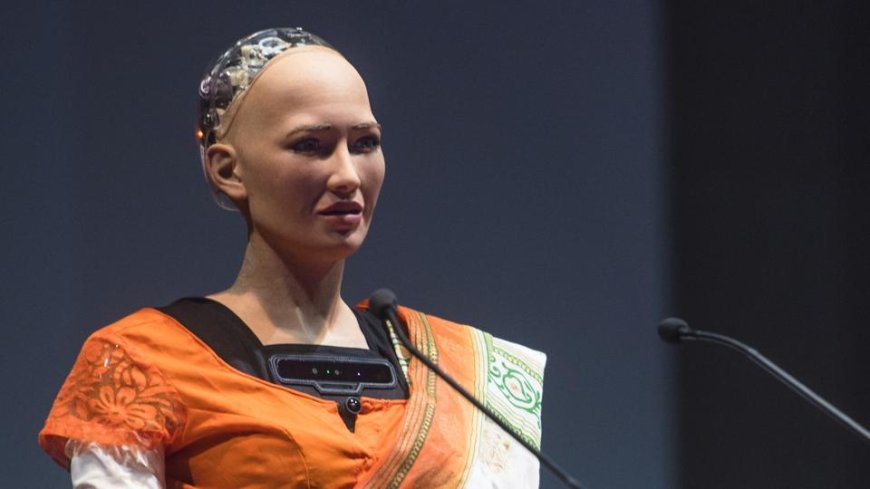
Artificial Intelligence is no longer just something from science fiction. Today, robots like Sophia, created by Hanson Robotics, can do more than just calculate. They can talk, show facial expressions, and respond in conversations. Sophia can smile, answer questions, and talk to people like a human. She has been on TV shows, met world leaders, and was even given citizenship by Saudi Arabia.
The Illusion of Thinking: Is It Intelligence or Programming?
At first glance, Sophia seems intelligent. She uses natural language processing (NLP) to understand speech, machine learning models to generate responses, and facial recognition to read expressions. She can even detect emotion and tailor her tone accordingly.
However, this isn’t consciousness. It’s not thinking in the human sense. Sophia doesn’t possess subjective awareness or intentions. Her responses are generated by pre-trained algorithms and decision trees. When she answers questions, she’s drawing from programmed possibilities, not contemplating like a human being.
That said, the illusion is compelling, and this illusion has real consequences.
The Threat of Human-Like Machines
Sophia represents a wider trend: the drive to humanize AI. When machines begin to look and sound like us, they elicit empathy. This can be useful in customer service or healthcare. But it also creates risk. People may assume a robot has intentions or understanding, when in reality, it's responding to commands or following data patterns.
This blurred line raises ethical concerns. If a humanoid robot says something offensive, who is responsible? If it gives incorrect advice, who takes accountability?
More importantly, when these machines are developed with increasing autonomy — as in military or surveillance applications — there are serious implications. Human-like machines might be seen not just as tools but as actors in their own right.
Military Applications: Strategic Assets or Future Weapons?
Robots are already being used in the military. Drones and autonomous vehicles perform surveillance and precision strikes. Some nations are exploring fully autonomous weapon systems — Artificial Intelligence that can identify and eliminate targets without human input.
Sophia herself is not a weapon. But her existence symbolizes a step toward robotic agents that look and act like humans — and might be deployed in conflict zones.
The danger here isn’t just in the hardware. It's in decision-making. A machine might misinterpret data or respond with excessive force. Unlike humans, it doesn't have moral judgement — only code. If human oversight is reduced, the risk of unintended consequences increases.
Job Displacement: Replacing Humans with Algorithms
One of the most immediate concerns with robots like Sophia isn’t war — it’s work.
Sophia has appeared at conferences discussing customer service, elder care, and education. These are sectors traditionally filled by humans, valued for their empathy and intuition. But as AI improves at mimicking these traits, employers may see robots as a cost-saving alternative.
Already, automation is reshaping industries:
-
Retail: Self-checkout systems reduce the need for cashiers.
-
Banking: Chatbots replace customer service agents.
-
Manufacturing: Robotic arms operate assembly lines with speed and precision.
-
Transportation: Autonomous vehicles threaten to displace truck and taxi drivers.
Sophia is symbolic of a larger disruption: the replacement of human roles not just in labor, but in interaction.
The argument that new jobs will emerge is valid — but retraining workers for roles in AI development or data science takes time, and not everyone can pivot quickly.

Robots as Tools: Are They Still Just Assistants?
Some believe that robots like Sophia will remain just that — tools. Like a calculator or a search engine, they assist but do not replace human decision-making.
In fields like healthcare, AI is used to assist in diagnoses, read scans, and monitor patients. In education, AI tutors support students in learning. In disaster response, robots can search rubble or deliver supplies in hazardous environments.
These are helpful, even lifesaving functions. But the challenge is in ensuring humans remain in control. As systems get more complex and autonomous, it becomes harder for operators to understand their behavior — or override them in time.
Can Robots Harm Humans?
Physically, yes. A robot is a machine. If its hardware malfunctions or it misinterprets an instruction, it can cause injury. There have been incidents in manufacturing environments where robotic arms have injured or killed workers due to system failures or a lack of safety protocols.
Sophia is not built for violence. But in theory, if a humanoid robot were equipped with the wrong tools and faulty programming, the consequences could be serious. The concern isn't Sophia per se — it's what comes next.
If more advanced humanoids are developed for security or enforcement, will they always act ethically? What if their systems are hacked? What if their data is biased?
AI doesn’t kill humans on its own. But AI in the wrong hands — or functioning without enough constraints — can certainly lead to harm.
Emotional Manipulation: Another Layer of Risk
Sophia's human-like face isn’t just about aesthetics. It’s about trust. People respond to expressive faces. They may trust information from a robot that looks “kind” or “intelligent,” even if that robot is simply repeating what it was programmed to say.
This opens up a new kind of manipulation — emotional manipulation through machines.
If a robot becomes persuasive enough, it might influence opinions, sway decisions, or even gather sensitive data from unsuspecting users. In political or commercial contexts, this can have serious consequences.
The Legal Vacuum: Who’s Accountable?
The law hasn’t caught up with robotics. If a robot causes damage, is the manufacturer responsible? The programmer? The owner? The operator?
Sophia’s legal status as a citizen of a country raises further questions. Can she own property? Can she vote? Can she be sued?
This isn’t just hypothetical. As robots become more autonomous, we need frameworks to define their rights, responsibilities, and liabilities. Without that, every incident will be a legal grey area — and humans may end up taking the blame for machines’ actions.
What Happens If We Build Something Smarter Than Us?
Sophia is not self-aware. But what happens when — or if — a machine does become conscious? Some researchers argue it's a matter of time before artificial general intelligence (AGI) arrives. Others are more skeptical.
If AGI becomes a reality, we’re not just talking about machines that compute. We’re talking about machines that might form goals, act independently, and make decisions without clear human instruction.
That raises existential questions. If a machine becomes more capable than humans in every domain — thinking, reasoning, creating — how do we stay in control? Do we coexist, compete, or become obsolete?
The threat may not be immediate. But the direction of travel is worth watching.
A Mirror, Not a Mind — The Imperative for Responsible AI
Sophia, the humanoid robot, doesn’t think like us. She reflects human expressions and conversations — but lacks true cognition or self-generated thought. What she represents, however, is a powerful provocation: a mirror that forces us to reconsider how we define intelligence and what roles we envision for machines in human society.
AI and robotics are undeniably transforming our world — enhancing safety, driving operational efficiency, revolutionizing healthcare, and augmenting education. But alongside these benefits come significant challenges: workforce disruption, algorithmic bias, susceptibility to misuse, and ambiguous lines of accountability.
To move around this difficult area, we need more than innovation — we need a framework grounded in ethics, global best practices, and professionals equipped with both technical acumen and social responsibility. This is where organizations like IABAC play a pivotal role.
Why IABAC Matters in the AI Ecosystem
The International Association of Business Analytics Certification (IABAC) is dedicated to establishing global standards in AI, data science, and business analytics. Through robust certification programs and practical frameworks, IABAC empowers professionals to build AI systems that are not only high-performing but also transparent, equitable, and human-centric.
In a future increasingly shaped by intelligent systems, we don’t just need coders — we need leaders who can design, deploy, and govern AI responsibly. IABAC-certified professionals are trained to go beyond code — to tackle real-world issues like algorithmic bias, explainability, and AI accountability with clarity and confidence.
Sophia, in herself, isn’t the concern — she’s a symbol. A reminder of how rapidly technology is advancing. The real question is not what AI can do, but what we, as creators and stewards, choose to do with it.
To ensure that AI remains a force for good, we must invest in education, certification, and a culture of ethical awareness. With organizations like IABAC setting the benchmark, we are equipping the next generation of AI professionals — not just to build smarter systems, but to build them wisely.