

























































Is Financial Data Scientist the Next Big Career in Finance?
Financial data scientists use data analysis machine learning and finance knowledge to improve risk modeling forecasting and strategic decisions in modern finance.


A few years ago, a career in finance usually meant working with balance sheets, reports, and long Excel files. Decisions were often based on experience, gut feeling, and historical trends. Today, things are very different. Financial decisions are faster, smarter, and more data-driven than ever before. Behind many of these decisions is a professional who understands both numbers and technology — the financial data scientist.
For students who are interested in finance but also curious about data, coding, and problem-solving, this role is becoming very attractive. It combines the stability of finance with the innovation of Data Science. This naturally leads to an important question many students are asking today: Is Financial Data Scientist the next big career in finance?
To answer that, we need to understand what this role is, how it differs from general data science, what skills are required, and what kind of career opportunities it offers.
What Is a Financial Data Scientist?
A financial data scientist is someone who uses data science methods to analyze financial data and support financial decision-making. Instead of only looking at past numbers, they study patterns, trends, and behavior hidden inside large datasets.
They work with data related to:
- Banking transactions
- Stock markets
- Loans and credit scores
- Insurance claims
- Customer spending patterns
Using tools from Data Science, they help organizations predict risks, detect fraud, improve investments, and plan better financial strategies. In simple words, a financial data scientist helps companies understand money using data.
Why Finance Is Changing So Fast
Finance generates huge amounts of data every day. Every online payment, card swipe, loan application, or trading activity adds more information. Traditional finance methods cannot handle this amount of data efficiently anymore.
This is where Data Scientist skills become important. Financial organizations now depend on data-driven systems to:
- Identify fraud quickly
- Predict customer behavior
- Measure financial risk
- Improve investment decisions
- Automate financial processes
Because of this shift, professionals who understand both finance and data are becoming essential. This is why the role of a financial data scientist is growing so fast.
How Is Financial Data Science Different From General Data Science?
Many students already know about data science but wonder how financial data science is different. The difference lies in application and focus.
General Data Science
General data science applies to many fields such as healthcare, marketing, retail, and technology. It focuses on collecting data, cleaning it, analyzing patterns, and building models to solve problems.
Financial Data Science
Financial data science applies these same skills specifically to financial problems. It requires additional understanding of financial concepts and rules.
Some key differences are:
- Use of financial terms like risk, return, interest rates, and volatility
- Working with time-based data such as stock prices
- Strong focus on accuracy and compliance
- Decisions often involve money and high responsibility
A financial data scientist doesn’t just analyze data — they understand what the numbers mean in a financial context.
Will I Learn Python for Financial Data Analysis?
Yes. Python is one of the most important skills you will learn.
Python is widely used in financial data science because it is simple to learn and powerful enough to handle complex tasks. Students use Python to:
- Analyze financial datasets
- Clean and organize data
- Perform statistical calculations
- Build prediction models
- Automate financial reports
Common Python libraries include Pandas, NumPy, and Scikit-learn. Even students without a technical background can learn Python with the right guidance and practice.
What Tools Are Used in Financial Data Science?
Financial data science uses a combination of programming tools, analysis platforms, and visualization software.
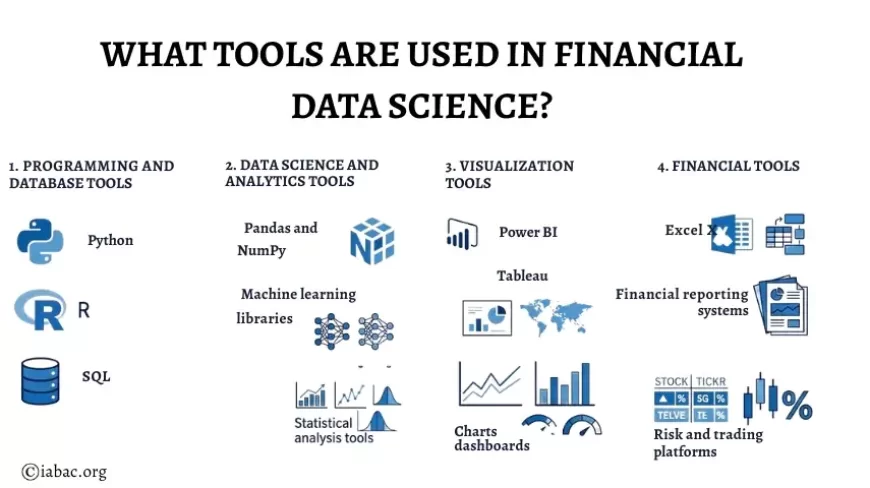
Programming and Database Tools
- Python
- R
- SQL
Data Science and Analytics Tools
- Pandas and NumPy
- Machine learning libraries
- Statistical analysis tools
Visualization Tools
- Power BI
- Tableau
- Charts and dashboards
Financial Tools
- Excel
- Financial reporting systems
- Risk and trading platforms
Learning these tools helps students become job-ready and confident in real-world environments.
What Jobs Can I Get After Completing a Financial Data Scientist Course?
After completing a Financial Data Scientist course, students can apply for several roles depending on their skill level.
Common Job Roles
- Financial Data Scientist
- Data Analyst (Finance)
- Risk Analyst
- Fraud Analyst
- Investment Data Analyst
Industries That Hire
- Banks
- Fintech companies
- Investment firms
- Insurance companies
- Consulting organizations
With experience, professionals can move into senior analytics roles or leadership positions.
How Will My Financial Data Science Skills Be Evaluated?
Students often worry about how their skills will be tested. In most professional programs, evaluation is practical and skill-based.
Skills are usually checked through:
- Real-world projects
- Financial case studies
- Assignments
- Practical assessments
- Certification exams
A recognized certification, such as Certified Data Scientist helps employers trust that a student has the required knowledge and practical ability.
Why Students Are Choosing Financial Data Science
Students today are more careful about career choices. They want roles that are stable, meaningful, and future-ready.
Financial data science attracts students because:
- It combines finance and technology
- Skills remain useful for many years
- Job roles are well-paying
- Work involves problem-solving, not repetition
- Career growth is strong
For students who enjoy learning and applying concepts, this career offers long-term value.
Role of Certification in Building a Career
Certification plays an important role, especially for freshers.
A Certified Data Scientist program helps students by:
- Providing structured learning
- Offering practical experience
- Improving job credibility
- Building interview confidence
Certification shows employers that a student has been trained according to industry needs.
Is Financial Data Scientist a Good Career for Freshers?
Yes, it is suitable for freshers who are willing to learn.
Companies look for:
- Analytical thinking
- Problem-solving ability
- Willingness to learn
- Practical knowledge
With proper training in Data Science certification, finance basics, and tools like Python, even beginners can start a career in financial data science.
A Simple Example to Understand the Role
Suppose a bank wants to reduce loan defaults.
A financial data scientist:
- Collects customer data
- Cleans and organizes it
- Builds a model to predict risk
- Identifies high-risk customers
- Helps the bank make better decisions
This process helps reduce losses and improve financial stability.
How IABAC Supports Students
IABAC focuses on preparing students for real industry roles.
Students benefit from:
- Practical learning approach
- Industry-relevant curriculum
- Case studies and projects
- Globally recognized certification
This support helps students move confidently toward roles like financial data scientist and Data Scientist.
Challenges Students May Face
Learning financial data science takes effort. Students may find programming or financial concepts challenging at first. This is normal.
With practice and guidance, these challenges turn into strengths. The skills gained are valuable and long-lasting.
Future Scope of Financial Data Science
Finance will continue to generate more data. Digital payments, online trading, and fintech growth ensure that data-based decisions remain important.
This means the need for financial data scientists will continue to grow.
So, is a Financial Data Scientist the next big career in finance?
For students who want a career that blends Data Science, finance, and technology, the answer is yes. This role offers learning, growth, and relevance in a changing world. With the right training, tools, and certification like Certified Data Scientist, students can build a strong and future-ready career as a financial data scientist.