





















































What is a Data Science Certification? Complete 2026 Guide
What a Data Science certification is, its benefits, career opportunities, and how to choose the right program in this complete 2026 guide.

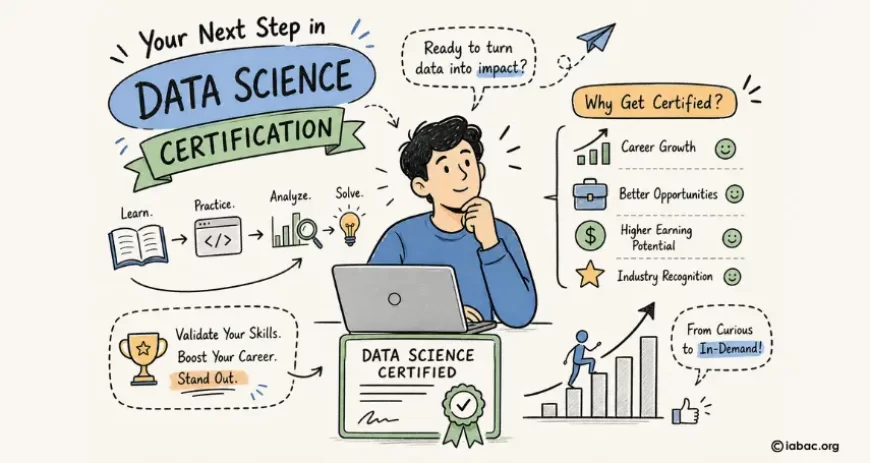
Data science certification is showing up more often in job listings, scroll through LinkedIn or Indeed right now and you'll notice that "preferred certifications" sections are appearing in roles that didn't list them two or three years ago. Yet most professionals searching for their first credential end up stuck, unsure whether a Coursera badge carries the same weight as an exam-based professional credential from a recognized body.
A data science certification is a formal credential that validates your knowledge and practical skills through a defined assessment process. That definition sounds simple, but the gap between a course completion badge and a rigorous, employer-facing credential is significant. This guide breaks down what these programs actually cover, how employers interpret different credential types, and which options align with your specific career stage. By the end, you'll have a clear framework to choose your next data science certification, and a checklist to make the decision final.
What does a data science certification actually mean?
The credential market mixes two very different things under the same label, and confusing them wastes time and money. A data science certification, in its most meaningful form, is a formal credential earned by demonstrating competency against a defined standard, typically through a structured assessment or proctored exam. It's not the same as a certificate of completion.
The difference between a course certificate and a professional credential
A course certificate from Coursera, edX, or DataCamp confirms you finished a program. That's genuinely useful for building skills, but it tells an employer very little about your ability to perform independently. A professional credential, by contrast, is earned by passing an assessment measured against a published competency standard. The assessment rigor is what hiring managers and HR systems are actually evaluating when they filter candidate pools.
This distinction matters because employers in enterprise environments, consulting firms, and regulated industries have learned to distinguish between the two. Entry-level postings frequently list IBM or Google certificates as "preferred" qualifications, a pattern observable across major job boards including LinkedIn and Indeed. Senior roles and vendor-neutral positions tend to specify exam-based credentials from professional bodies. Knowing which category you're targeting shapes your prep strategy from day one.
Exam-based vs. program-completion structures
Credential formats vary considerably across the market. Proctored exams are the most common format for vendor certifications: Microsoft's DP-100 runs 100 minutes; AWS certifications (for example, AWS Specialty exams) run 170 minutes at $300 per attempt. Multi-part assessments, used by professional credentialing bodies, test competency across domains rather than a single timed sitting. Hybrid formats combine a project submission with an exam component, giving a more complete picture of applied ability.
Renewal requirements are another signal worth considering. AWS certifications are valid for three years, after which you retake the exam. Microsoft associate certifications can be renewed through a free online assessment before expiration. Renewal cycles can help signal credential currency to employers, which carries weight in a field where tooling and methodologies evolve quickly.
Core skills a data science certification tests
Before committing to a program, it helps to know what you're actually being tested on. Most recognized data science credentials share a core technical foundation, even when the brand names and delivery formats differ. A machine learning certification, for instance, may go deeper on model deployment and MLOps than a general analytics credential, knowing those distinctions helps you choose the right track.
Technical foundations every credential tests
Across virtually every recognized program, the common ground includes Python or R programming, statistical reasoning, data wrangling and visualization, machine learning fundamentals, and SQL-based querying. More advanced credentials extend this into model deployment, MLOps, AI lifecycle management, and data engineering pipelines. If you can honestly assess yourself against these areas, you'll know within minutes which credential level is appropriate.
- Python or R programming and data manipulation libraries
- Statistical methods and probability fundamentals
- Machine learning model development and evaluation
- SQL and relational database querying
- Data visualization and analytical storytelling
- For advanced tracks: MLOps, model governance, AI lifecycle management
Role-specific and industry-aligned tracks
One of the most significant shifts in the data science certification market over the past few years is the move toward role-specific and industry-aligned credentials. A generalist credential tells a healthcare analytics hiring manager significantly less than one designed specifically for clinical data professionals. The same logic applies in financial services, marketing analytics, and manufacturing.
IABAC (International Association of Business Analytics Certification) has built its credential portfolio around this principle. Its role-based tracks cover data scientists, data engineers, machine learning engineers, AI business leaders, and business analytics professionals, with industry-specific variants for healthcare, finance, HR, and marketing. Role and industry specificity is what turns a credential into a direct signal for sector-specific roles, something generic online courses are not structured to provide.
Why do employers pay attention to certified candidates?
The practical question is whether certifications actually produce career results. Program outcome reports from major platforms and independent surveys suggest they do, though most data is self-reported and should be read accordingly. Certified professionals consistently report improved access to interviews and stronger positioning during salary negotiations.
What hiring managers look for in a data science credential?
Certifications function as hiring signals, particularly for candidates without traditional computer science or statistics degrees. Cloud-heavy environments specify vendor credentials: Azure ML teams want DP-100; AWS-native organizations list the Data Analytics Specialty. Enterprise and consulting firms lean toward vendor-neutral professional credentials because those aren't tied to a single platform. Entry-level postings from companies without a fixed tech stack frequently list IBM or Google certificates as preferred qualifications rather than hard requirements.
Understanding this pattern helps you target the right credential for the jobs you actually want, rather than the most popular one on a ranking list. A credential aligned to your target employer's environment is worth considerably more than a prestigious badge built for a different stack.
Salary and hiring outcomes linked to data science certification
Outcome data is directionally consistent even when exact figures vary by source. According to self-reported aggregates from program providers, entry-level candidates who earn a recognized credential report salary gains around $12,000 as they move from non-data roles into junior data positions. Career changers report average increases of $25,000 or more after completing structured programs.Coursera's learner outcomes data indicates that roughly 13% of certificate completers reported a salary increase or promotion, and another 13% reported starting an entirely new career in data.
The important caveat is that credentials amplify skills and portfolio work already in place. A certification with no applied projects behind it rarely moves the needle on its own. The combination of a recognized data science certification and demonstrated project experience is what actually converts to interviews and offers.
The main certification options broken down by type
Rather than ranking programs alphabetically, it's more useful to organize them by type. Your target role, experience level, and whether you need global portability will point you toward one category over another.
1) Vendor-backed credentials: IBM, Google, and Microsoft
IBM's Data Science Professional Certificate is one of the most recognized entry-level pathways, covering Python, SQL, visualization, machine learning, and a capstone project, and its 2026 sequence now includes generative AI content. Google's Data Analytics Professional Certificate targets analytics-adjacent roles and works well for career switchers who need a recognizable brand to open doors. Microsoft's Azure Data Scientist Associate (DP-100) is among the most frequently cited credentials for cloud and enterprise ML roles built on Azure, though the exam is scheduled to retire in June 2026; a successor exam is expected before that date. For an overview of vendor and platform course options, see this roundup of the best data science courses.
2) Academic programs from Harvard, MIT, and Johns Hopkins
University-branded programs carry prestige, especially in research-adjacent roles or enterprise consulting environments. Harvard's data science programs, MIT xPRO, and Johns Hopkins' Applied Data Science Specialization on Coursera are widely recognized and academically rigorous. These programs tend to be project-heavy rather than exam-based, which suits professionals who want theoretical depth alongside portfolio development. The tradeoff is time and cost: these programs are more intensive than a vendor exam prep cycle.
3) Professional credentialing bodies: DASCA, CertNexus, and IABAC
Vendor-neutral professional bodies issue credentials that remain valid across job changes, platform migrations, and company ecosystems. DASCA offers Certified Data Scientist credentials for experienced practitioners, along with senior-level tracks. CertNexus issues the Certified Data Science Practitioner (CDSP), aimed at applied practitioners. IABAC is globally recognized and formally aligned with the European Commission's Edison® competency framework, an internationally established standard for data science professional roles. Its credential portfolio spans data science, AI, machine learning, and industry verticals, with role-specific tracks designed to map directly to hiring manager expectations rather than generic job categories.
For professionals who need a credential with international portability and role-specific employer recognition, professional body credentials are often regarded as more vendor-neutral and may carry advantages for cross-border or cross-industry mobility. IABAC's Edison® alignment positions its credentials as a structured, framework-backed alternative to platform-based course certificates.
How to choose the right credential for your career stage?
The best credential is the one that closes the specific gap between where you are and where you want to be. Experience level and target role are the two filters that narrow the field most efficiently.
Matching your data science certification to your experience level
Each career stage calls for a different credential type:
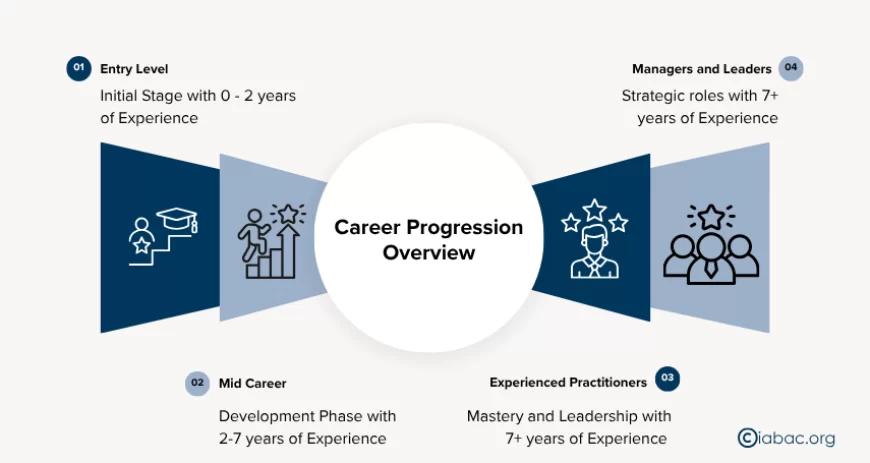
- Entry-level (0, 2 years): IBM, Google, or CompTIA credentials are recognizable to recruiters scanning junior pipelines and are typically achievable within 2 to 4 months of structured study.
- Mid-career (2, 7 years): Role-specific or cloud-platform credentials deliver more value, Microsoft DP-100 successor exams, the AWS Data Analytics Specialty, or a professional body credential from IABAC that validates a specific role function.
- Experienced practitioners (7+ years): DASCA's advanced tracks or IABAC's senior-level credentials provide the recognition that matches deeper experience.
- Managers and non-technical leaders: Credentials designed for AI business leaders or data analytics managers build strategic credibility without requiring deep programming skills.
A one-page decision checklist to commit to your pick
Four questions narrow the field to one or two options. Answer them honestly and the decision becomes straightforward.
1) What role am I targeting?
Cloud platform roles point to Microsoft or AWS credentials. Analyst roles point to a data analytics certification from Google or IBM. Role-neutral or internationally portable positions point to professional body credentials.
2) What is my current experience level?
Zero to two years: foundational vendor cert. Two to seven years: role-specific or cloud platform credential. Seven or more years: senior professional body credential
3) What is my budget and timeline?
Course-style programs typically run $150 to $400 over two to four months (based on current Coursera and platform pricing). Exam-based professional credentials generally run $200 to $750 including structured preparation, though costs vary by region and provider.
4) Do I need this credential to work internationally or move across industries?
If yes, prioritize a vendor-neutral professional body credential aligned to a global framework like Edison.
FAQ: Is a data science certification worth it?
1) Does a data science certification help you get hired faster?
It depends on the credential type and the role. For entry-level candidates, a recognized data science certification from IBM or Google can serve as a qualifying signal in markets where a degree alone isn't enough. For mid-career professionals, a role-specific or cloud-platform credential tends to carry more weight than a general course certificate. The strongest outcomes consistently come from pairing a credential with demonstrated project work rather than relying on the badge alone.
2) How long does it take to earn a data science certification?
Course-based programs like IBM's Professional Certificate or Google's Data Analytics Certificate typically take two to four months with consistent part-time study. Exam-based credentials from professional bodies require structured preparation that can range from six weeks to several months depending on your existing background. Senior-level credentials from organizations like IABAC or DASCA are designed for practitioners with existing experience and reflect that in their assessment structure.
3) Which data science certification is best for international roles?
For professionals targeting cross-border roles or multinational employers, vendor-neutral credentials aligned to recognized global frameworks tend to offer the broadest portability. IABAC's alignment with the EU Edison® framework makes its credentials a relevant option for professionals seeking recognition across different markets and industries. For guidance on selecting an appropriate path, review Choosing the Right Data Analytics Certification, IABAC and assess how each option maps to your target roles.
Making your certification decision final
A data science certification chosen at the right level and type for your goals is a concrete career lever. The credential format and the framework it's assessed against determine how employers interpret it, not just the brand name on the badge. Use the checklist above, identify your target role and experience tier, and pick one credential to pursue next.
If you're evaluating globally recognized options with role-specific tracks and international portability, IABAC's credential portfolio is worth a closer look. Its alignment with the EU Edison® framework and industry-specific certifications in healthcare, finance, and beyond make it a practical option for professionals who want credentials that hold their value across borders and job transitions. Explore the full range of IABAC data science certifications at the Career & Certification, IABAC to find the credential that matches your role.