





















































Honest IABAC Certification Review for US Professionals
Honest IABAC certification review for US professionals. Explore benefits, course value, career impact, and insights for 2026.

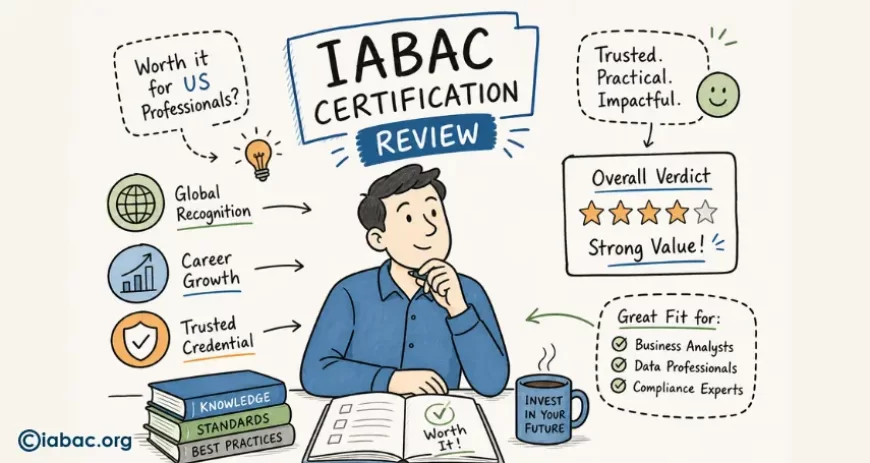
This IABAC review is written for US professionals who've already encountered the certification in a job search and want a straight answer about whether it's worth pursuing. When you search for data science certifications, names like Google, IBM, and Coursera come up first. They feel safe and familiar, and many recruiters recognize them on sight. So when IABAC appears in results, the instinct is skepticism: who are they, and why should their credentials matter to your career? That's a fair question, and it deserves a direct answer rather than promotional gloss.
IABAC, the International Association of Business Analytics Certification, describes itself as the world's first global certification body for Data Science, Business Analytics, and AI. What sets it apart structurally is its alignment with the European Commission's Edison® Data Science Framework, a government-backed competency standard developed by a public institution with no commercial interest in selling you a course. That's a meaningful architectural difference worth understanding before you decide. Every competency IABAC tests aligns to that framework, rather than to a proprietary checklist built around a tech company's product ecosystem.
This article covers the curriculum in detail, how the exam actually works, what real candidates report, what you'll pay, and where IABAC wins or loses against US-centric alternatives. By the end, you'll have enough to decide whether this credential earns a place in your career plan.
IABAC Review: What the Curriculum Actually Covers
The core Certified Data Scientist (CDS) syllabus
The CDS program, designated DS2050, is not a surface-level badge. It moves through data science foundations, Python, R, SQL, statistics, data visualization with Tableau and Power BI, exploratory data analysis, predictive analytics, and machine learning model building. The tools are current and practical, NumPy, Pandas, SciPy, TensorFlow, PyTorch, Spark, and Hadoop are all listed across the program curriculum. The structure progresses from data fundamentals through applied ML to real-world business case delivery.
What distinguishes this curriculum is its competency-tier architecture. Each module maps to a defined level within the Edison® framework rather than a proprietary checklist a tech company built around its own products. The program also covers the full analytics spectrum, from descriptive and diagnostic through predictive and prescriptive, plus exposure to AI subfields including NLP, Computer Vision, and Reinforcement Learning. That breadth gives candidates a working vocabulary across the field, not just a narrow toolkit.
Domain-specific tracks and why they matter for US professionals
Beyond the core CDS, IABAC offers separate credentialed pathways for Finance, Healthcare, HR, Marketing, and Manufacturing. These are not elective add-ons or supplementary modules. They are distinct certifications with their own syllabi built around domain-specific workflows. The Finance track, for example, covers credit risk assessment, logistic regression and classification models, ensemble methods for credit risk scoring, ARIMA and GARCH time-series forecasting, and multivariate financial models. That's the content a quant analyst or risk manager in Chicago actually needs, not a generic intro to machine learning repackaged with finance labels.
For a healthcare administrator in Boston or an HR analyst in Dallas, this domain specificity closes a real gap. Generic data science credentials signal technical capability but don't demonstrate that you understand the workflows, compliance constraints, or business logic of a specific industry. IABAC's domain tracks give professionals a credential that speaks the same language as their job description, which matters in interviews. See the full list of IABAC Certifications, Data Science & AI Credentials for details on each vertical.
How the Edison® framework shapes the syllabus differently
The European Commission's Edison® Data Science Framework is the structural backbone behind every IABAC certification. Every skill tested maps to a defined, verified competency standard built by a public institution with no commercial stake in the outcome. US certifications from Google or IBM follow internal credentialing logic designed by organizations that also sell cloud products and training subscriptions. The Edison® framework was built to define professional competency, its purpose is independent of any vendor's commercial interests. For the original competency definitions, see the Edison® Data Science Framework and its companion Edison data competences report.
For US professionals in multinational organizations, or anyone who wants credentials with genuine global portability, this architecture carries real weight. It's also what gives IABAC's competency tiers their specificity: the Foundation, Certified Data Scientist, and advanced levels (Data Science Manager, Machine Learning Expert) each correspond to distinct competency profiles rather than vague beginner-to-advanced labels.
The Exam Process from Registration to Credential
How the online assessment and project submission work
The CDS exam is delivered online with web-based proctoring and identity verification. What separates it from most online certification exams is the project-based assessment component. Candidates submit a machine learning project graded across three specific areas: Exploratory Data Analysis, ML model performance, and a project summary with business recommendations. You're not memorizing definitions and clicking through multiple-choice questions, you're building something functional and explaining why it matters to a business.
A strong submission demonstrates clean EDA with meaningful insights, a model that performs at a defensible accuracy level, and recommendations framed in business terms rather than pure technical metrics. The graders are evaluating whether you can do the job, not just whether you studied the right material. That distinction is what makes the credential credible to employers who recognize it.
Pass rates and what realistic preparation looks like
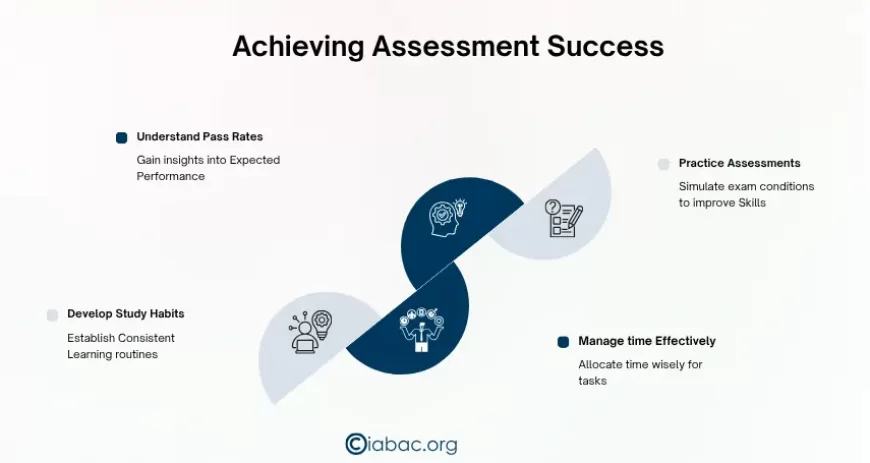
IABAC reports a pass rate above 95% for candidates who train through their Authorized Training Partners (ATPs), a figure the organization attributes to the alignment between structured ATP preparation and what the exam tests. That high number is not evidence the exam is trivially easy. Candidates who attempt the certification without structured preparation face a steeper climb, particularly if their statistics or Python foundations are thin.
Preparation timelines range from a few weeks to several months depending on your background. Someone coming from a quantitative finance or engineering role may move quickly. Someone switching from a non-technical field should plan for a longer runway. Realistic prep covers foundational review in Python and statistics, hands-on project practice that mirrors the submission format, and focused work on EDA and model evaluation techniques. Training through an ATP partner aligns that preparation directly with what the exam tests.
IABAC Review: Cost Breakdown and What You Actually Pay
Exam fees, training partner pricing, and what is included
IABAC requires the full exam fee at the time of booking, with no installment option for the exam itself. Standalone exam fees vary by certification and region. Bundled training-plus-exam programs through ATP partners run significantly higher because they include live instruction, mentorship, and study materials. Based on publicly listed ATP pricing, training bundles typically run between $400 and $650 USD depending on the program and region; standalone exam fees sit lower. If you take the self-study route, budget for training materials separately from the exam fee.
For retakes, candidates pay a reduced fee rather than the full amount. That policy removes some financial risk from a first attempt, though the project-based format means a failed submission usually requires meaningful rework rather than a quick re-sit. Factor that into your timeline.
Renewal requirements and long-term credential cost
The CDS certification requires renewal every three years. Renewal itself is free, but it requires 30 CPD (Continuing Professional Development) credits annually, one hour of eligible activity equals one credit. Qualifying activities include webinars (see IABAC, Trusted Global Certification in Data Science), workshops, conferences, formal training courses, and teaching or mentoring others in the field. For most working data professionals, these opportunities arise through normal professional activity, though the actual ease of accumulation will vary by role and employer.
Compare this to competing certifications that charge recurring renewal fees on top of the credential cost. Over a five to ten year career, IABAC's free renewal structure with a CPD requirement is meaningfully more cost-efficient than subscription-based credential maintenance models. The CPD requirement also reinforces ongoing skill development rather than allowing a credential to stagnate on your resume without active development behind it.
What Certified Professionals Actually Say
Career entry and transition outcomes
The most consistent positive pattern across candidate testimonials on platforms like Shiksha and LinkedIn involves professionals using the CDS credential to transition from non-technical roles into data analytics. Career-switchers report that the structured curriculum gave them a defensible knowledge framework to discuss in interviews: they could explain their methodology, walk through their project, and speak to business recommendations rather than just listing tools they'd learned. One testimonial from a candidate who made the switch into a data analyst role captured it directly, the certification didn't just add a line to the CV, it gave them a structured way to demonstrate competence built through the program. See the IABAC listing on the Shiksha provider page for representative candidate feedback.
For professionals already in analytics roles, the domain-specific certifications appear most frequently in positive feedback. Finance and healthcare professionals specifically mention that the vertical credentials gave them something concrete to show employers beyond a generic data science background, which matters for senior or specialized hiring decisions.
Honest complaints worth knowing before you commit
Negative reviews cluster around two consistent themes. First, employer recognition in the US is uneven. Some hiring managers and recruiters recognize the IABAC credential and understand its framework alignment; others don't. This is a real limitation, particularly compared with Google or IBM credentials that benefit from immediate brand familiarity in US recruiting pipelines. Second, candidates who treated the certification as a standalone job ticket, without pairing it with real project work, reported weaker outcomes. The exam prepares you to build a project, but one project isn't a portfolio.
These criticisms don't invalidate the credential; they contextualize it. IABAC is most valuable when it validates skills you're actively developing and when you pair it with real work to show in interviews. Treat it as a rigorous competency credential, not a shortcut.
How IABAC Stacks Up Against US-Centric Certifications
Side-by-side with Google, IBM, and Coursera credentials
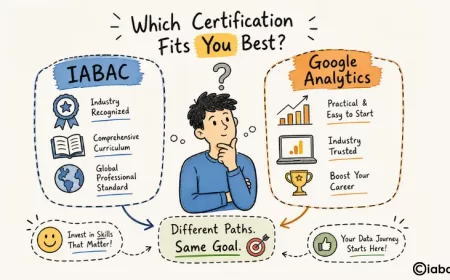
Four dimensions define the comparison. On curriculum depth, IABAC's CDS covers more technical ground than the Google Data Analytics Certificate and includes a project-based assessment component. IBM's Data Science Professional Certificate is course-heavy and completion-based, with no equivalent project submission required. On credentialing standards, IABAC's Edison® alignment offers candidates a government-backed competency framework, an advantage for those who prioritize independently verified standards over proprietary rubrics. On domain specificity, IABAC's Finance, Healthcare, HR, and Manufacturing vertical tracks are uncommon among major US vendor credentials and represent a genuine differentiator for industry specialists. On immediate US name recognition, Google and IBM hold a clear advantage.
Coursera credentials are stackable and accessible. However, they follow course-completion models tied to partner institutions rather than an independent competency verification framework. The tradeoff is tangible: broader brand awareness versus structural rigor (see Dataquest's guide to data science certificates). The right choice depends on what you're optimizing for.
Who should choose IABAC and when alternatives make more sense
IABAC is the stronger choice for professionals targeting multinational organizations where an Edison® framework credential carries recognized weight. Domain specialists in finance, healthcare, or HR who need a vertical credential rather than a generic tech badge will also find IABAC's offering more relevant than what the major US vendors provide. If you're a finance analyst looking to formalize ML skills or a healthcare administrator who needs AI analytics validation, IABAC has a specific certification designed for your role rather than a general-purpose one you'd need to contextualize yourself.
An alternative like Google's certificate or IBM's program makes more sense for candidates who need fast, recognizable brand signaling for entry-level US tech roles where recruiters use brand familiarity as a primary screening filter. The decision turns on what roles you're targeting and which organizations you want to work for.
Final Verdict and Your Next Step
This IABAC review covers curriculum, exam structure, candidate feedback, pricing, and competitive comparison, and the honest summary is this: IABAC offers a rigorous, project-based certification built on a government-backed competency framework with genuine domain-specific depth that is uncommon among US-centric alternatives. Employer recognition in the US is growing but not yet universal, and the credential rewards candidates who pair it with a live project portfolio. It is not a passive credential you earn and shelve.
For US professionals who are serious about the preparation process and want a structured, competency-grounded certification with global portability, the IABAC data science certification earns its investment. The Edison® framework alignment, the domain-specific tracks, and the project-based assessment combine to create something more substantive than most alternatives at a comparable price point.
Your best first step is to explore the CDS certification pathway directly on the IABAC, Trusted Global Certification in Data Science, identify whether a domain-specific track aligns with your career target, and connect with an Authorized Training Partner to map out a realistic preparation timeline. The ATP network exists specifically to align your preparation with what the exam tests, which is the structural reason the reported pass rate holds for candidates who prepare through that path. Don't go in without a plan when a structured one is available.