


















































Common Mistakes Students Make When Picking a Masters in Data Science
Students often choose wrong Masters in Data Science programs due to unclear goals, poor research, and missed certification value insights. smart choices

Choosing a Masters in Data Science can feel like standing in front of a buffet with 200 dishes and one tiny plate. Every university says it has the “best” program. Every brochure shows smiling graduates beside futuristic graphs. Every course page promises a bright career, strong salary, and exciting projects. Then reality arrives: one program focuses mostly on theory, another is heavy on research, another has outdated tools, and another somehow teaches “modern AI” using slides that look older than the internet itself.
This is why many learners rush into a Masters in Data Science and later realize they picked the wrong fit. Some discover the syllabus does not match industry needs. Some struggle because the course assumes stronger math or coding skills than expected. Others spend a large amount of money only to find that practical learning is limited. The result is frustration, wasted time, and the classic thought: “I should have checked this before applying.”
The good news is that most of these mistakes can be avoided.
This guide explains the most common mistakes learners make when choosing a Masters in Data Science, how to avoid them, and how to build a smarter data science roadmap for long-term career growth. Whether you are a beginner looking for an introduction to data science, a professional planning a career shift, or someone comparing university programs with certifications for data science, this guide will help you make a better decision.
Why Choosing the Right Masters in Data Science Matters
The global demand for data science professionals continues to grow as businesses use data for decisions, automation, customer insights, and predictive analytics. Companies in finance, healthcare, retail, manufacturing, and technology all need professionals who understand how to turn raw data to data insights that support business growth.
However, not every Masters in Data Science prepares graduates equally.
A strong program can help you:
- Build practical machine learning and analytics skills
- Develop a real-world data science project portfolio
- Learn industry tools such as Python, SQL, Tableau, and cloud platforms
- Improve your chances of landing global data roles
- Build a strong foundation for advanced data science certification programs
A weak program can leave you with:
- Outdated theory and little practical experience
- High debt and poor career outcomes
- Skills gaps employers notice immediately
- A diploma that looks good on paper but does not help in interviews
That is why careful selection matters.
Mistake 1: Picking a Masters in Data Science Only Because It Sounds Popular
One of the biggest mistakes is choosing Masters in Data Science simply because everyone else seems to be doing it.
Many people hear:
- “Data scientists earn high salaries.”
- “AI is the future.”
- “Everyone is moving into data science.”
All of that may be true, but popularity alone is not a career strategy.
A Masters in Data Science includes statistics, programming, machine learning, data engineering basics, business analysis, and problem-solving. If someone dislikes coding, avoids mathematics, or has no interest in analytical work, the program may feel painful very quickly.
Ask Yourself First:
- Do I enjoy solving analytical problems?
- Am I comfortable learning statistics and math?
- Can I spend hours debugging code without crying internally?
- Do I enjoy finding patterns in information?
If the answer is “absolutely not,” then another field may be a better fit.
Mistake 2: Ignoring the Data Science Syllabus
Many applicants choose a university based on brand name or rankings without properly checking the data science syllabus.
This is risky because program quality varies widely.
Some Masters in Data Science focus heavily on theory and research but offer little practical training. Others include modern machine learning, cloud computing, MLOps, and applied analytics.
A Good Data Science Syllabus Should Include:
- Python / R programming
- Statistics and probability
- Machine learning fundamentals
- Deep learning basics
- SQL and databases
- Data visualization
- Big data concepts
- Cloud platforms
- Capstone or data science project work
- Ethics and responsible AI
Warning Signs of a Weak Data Science Syllabus:
- Too much theory, no practical labs
- No capstone projects
- No cloud or deployment topics
- Outdated programming tools
- Missing machine learning modules
A program with a modern data science syllabus gives better career value than a famous name with outdated content.
Mistake 3: Underestimating the Math Requirement in Masters in Data Science
Some applicants treat Masters in Data Science like a simple extension of Excel.
- Then linear algebra arrives.
- Then probability.
- Then calculus.
Then regression equations begin appearing in dreams.
While not every program is heavily mathematical, many require strong understanding of:
- Statistics
- Probability
- Linear algebra
- Calculus
- Optimization
Example: Why Math Matters in Data Science
A simple linear regression model:
[y = mx + b]
Looks harmless.
But in data science, that grows into:
- Gradient descent
- Cost functions
- Feature scaling
- Matrix operations
- Optimization algorithms
If math skills are weak, applicants should strengthen them before starting.
Mistake 4: Not Comparing Masters in Data Science With Certifications for Data Science
Not everyone needs a full Masters in Data Science.
For many professionals, certifications for data science can offer faster and more flexible career growth.
When a Masters in Data Science Makes Sense:
- You need an academic degree for immigration or employer requirements
- You want research-focused roles
- You plan to pursue a PhD later
- You are early in your academic journey
When Certifications for Data Science May Be Better:
- You already have a degree
- You want faster skill-building
- You need practical job-ready training
- You are changing careers while working
Professional credentials from platforms and providers such as IABAC.org can complement or sometimes substitute for formal education depending on employer expectations.
Many professionals combine both:
Masters in Data Science + Data Science Certification
That combination often improves practical readiness.
Mistake 5: Ignoring Practical Data Science Project Opportunities
Reading slides does not create a data scientist.
Real learning happens through projects.
A Masters in Data Science without strong project work is like learning to swim by watching documentaries about oceans.
Why Data Science Project Work Matters
Employers care deeply about:
- Real datasets
- Business problem solving
- Portfolio projects
- End-to-end workflow understanding
Good Programs Include:
- Industry case studies
- Team projects
- Real business datasets
- Portfolio-ready capstone assignments
- Internship opportunities
Without practical data science project experience, graduates may struggle in interviews.
Mistake 6: Forgetting About Career Goals
Many applicants do not know what role they want after graduation.
But data science is broad.
Different roles require different focus areas.
Career Path vs Skill Focus
|
Career Goal |
Best Focus Area |
|
Data Analyst |
Visualization, SQL, BI Tools |
|
Data Scientist |
Statistics, ML, Modeling |
|
ML Engineer |
Deployment, MLOps, Systems |
|
Data Engineer |
Pipelines, Databases, Cloud |
|
AI Researcher |
Advanced Math, Research |
Not every Masters in Data Science prepares equally for all paths.
Choose based on career direction.
Mistake 7: Overlooking Industry Recognition
Some learners join programs without checking whether employers recognize the qualification.
Ask:
- Is the institution respected globally?
- Do employers value its curriculum?
- Are graduates working in strong companies?
- Is the credential aligned with market needs?
Industry-recognized learning providers like IABAC.org often design programs based on practical business demand rather than academic tradition alone.
That matters because employers hire for skills, not brochure design.
Mistake 8: Ignoring Global Industry Trends in Data Science
A modern Masters in Data Science should prepare learners for current market demands.
2026 Global Hiring Trends in Data Science Include:
- Generative AI integration
- MLOps and model deployment
- Responsible AI / AI ethics
- Cloud-native machine learning
- Real-time analytics
- Business storytelling with data
Programs that ignore these trends risk becoming outdated.
Chart: What Employers Commonly Value Most in Data Science Hiring
Practical Projects ████████████████████ 35%
Technical Skills █████████████████ 30%
Problem Solving Ability ████████████ 20%
Degree/Academic Background ███████ 10%
Other Factors ███ 5%
Key Insight: A degree helps, but practical skill matters more in many hiring situations.
Mistake 9: Choosing Based Only on Tuition Cost
Price matters, but cheapest is not always smartest.
A low-cost Masters in Data Science with poor outcomes may become more expensive long-term if it delays employment.
Better Question to Ask:
“What is the return on investment?”
Measure:
- Tuition fees
- Program duration
- Placement rates
- Graduate salaries
- Skill depth
- Employer recognition
A higher-quality program may deliver stronger career outcomes.
Mistake 10: Skipping the Data Science Roadmap Before Applying
Many people apply without understanding the full data science roadmap.
That leads to unrealistic expectations.
Standard Data Science Roadmap
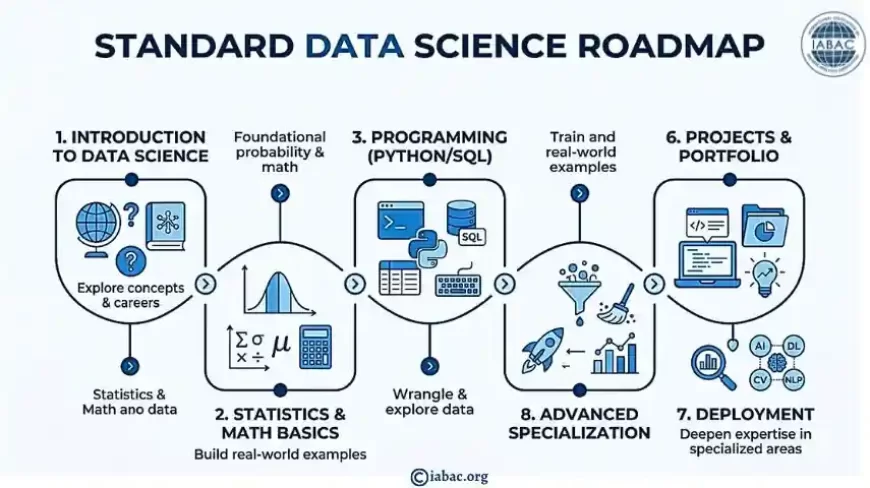
Understanding the data science roadmap helps you know whether you are ready for a master’s program or should begin with foundational data science courses first.
Should Beginners Start With Introduction to Data Science First?
Yes—often.
Many learners benefit from starting with an introduction to data science program before committing to a full master’s degree.
Benefits include:
- Understanding core concepts
- Testing genuine interest
- Building foundational confidence
- Learning terminology
- Identifying skill gaps early
This can save time, money, and regret.
How Certifications Support a Masters in Data Science
Even with a degree, certifications help strengthen your profile.
Benefits of Data Science Certification
- Show practical skill validation
- Fill gaps in academic curriculum
- Improve LinkedIn and resume credibility
- Demonstrate continuous learning
- Support specialization
Popular learners often pair:
- Degree → Foundation
- Certification → Specialization
- Projects → Portfolio
- Internships → Experience
How to Evaluate a Masters in Data Science Properly
Before selecting any program, review this checklist.
Masters in Data Science Evaluation Checklist
|
Curriculum
|
Projects
|
|
Faculty
|
Career Support
|
|
Flexibility
|
Industry Alignment
|
Example: Two Students, Two Different Outcomes
Learner A
- Picked a Masters in Data Science because it sounded trendy.
- Ignored syllabus.
- Did no projects.
- Focused only on grades.
Outcome: Struggled in interviews.
Learner B
- Reviewed curriculum carefully.
- Built portfolio projects.
- Added data science certification from IABAC.org.
- Practiced case studies.
Outcome: Landed job faster with stronger practical confidence.
Same field. Very different strategy.
Choose Smart, Not Fast
A Masters in Data Science can be a powerful investment when chosen wisely.
But many learners rush the decision and later realize they picked based on hype, rankings, or assumptions rather than actual fit.
The smartest path is to:
- Understand your career goal
- Review the full data science syllabus
- Compare degree vs certifications for data science
- Check project opportunities
- Follow a realistic data science roadmap
- Build practical experience alongside academics
For learners who want practical, globally relevant skill development in data science, structured certification pathways and career-focused learning through IABAC.org can help strengthen both foundational and advanced capabilities.
In the end, the right program is not the one with the flashiest brochure.
It is the one that helps you grow from “I like data” to “I can solve business problems with data.”
And ideally, without learning that halfway through semester one while staring at matrix algebra at 2:13 a.m.