



















































The Great AI Shift of 2026: 10 Critical Trends Every Tech Professional Must Understand
AI trends 2026, Agentic AI, AI agents, RAG, AI infrastructure, AI security, AI-native products, software engineering, AI careers, generative AI

Why the AI Conversation Is Changing in 2026
For years, the tech industry obsessed over one question: "Which AI model is the smartest?"
Developers debated benchmarks. Engineers analyzed context windows. Teams compared performance rankings on leaderboards. Every quarter, a new model landed, claiming victory over its predecessor.
But something fundamental shifted in 2026.
The smartest model stopped being the most important story.
Today, the real competitive edge isn't about owning the best chatbot. It's about taking AI from the lab into production—integrating intelligence into products, workflows, decisions, and operations at scale.
For tech professionals, this shift changes everything. The skills that defined success in 2023-2025 remain relevant, but their importance is being reordered. New specialties are emerging. Traditional workflows are being reimagined. Entire software categories are being rebuilt.
The professionals who recognize this shift will thrive. Those who ignore it risk irrelevance.
Here are the 10 trends shaping the AI landscape in 2026—and why they matter for your career.
1. AI Agents Are Replacing Traditional Automation
From Rigid Workflows to Intelligent Decision-Making
For decades, automation meant rule-based systems:
-
If X happens → do Y
-
If condition A → trigger process B
-
Execute step 1, then step 2, then step 3
These workflows are predictable, but they're also brittle. They break when reality deviates from the script.
AI agents work differently.
Instead of following rigid instructions, modern agents can:
✅ Understand goals and desired outcomes
✅ Break complex tasks into subtasks
✅ Access tools and systems
✅ Retrieve necessary information
✅ Make contextual decisions
✅ Adapt when circumstances change
What This Means in Practice
Consider customer support. A traditional automation script retrieves customer history, generates a template response, and escalates if it detects specific keywords.
An AI agent does all that—but it can also understand the emotional tone of the customer, recognize when a standard response won't work, recommend a better solution, update multiple systems simultaneously, and know when to get a human involved.
The difference? Outcome automation vs. process automation.
Organizations are moving from automating individual steps to automating entire business processes. This creates immediate demand for engineers who understand how to build, monitor, and manage agentic systems.
Career Impact: Agent design and orchestration are rapidly becoming core development disciplines. Learning frameworks like LangChain, AutoGen, or similar tools is increasingly valuable.
2. Software Engineering Is Being Redefined
Code Generation Is Here—And That's Not a Threat
For decades, writing code was the job. Type fast, type accurately, accumulate lines of code.
Today, AI can:
-
Generate functions from specifications
-
Build APIs from data schemas
-
Write unit tests automatically
-
Create documentation
-
Detect bugs and suggest optimizations
-
Explain legacy systems
This doesn't make software engineers obsolete. It makes bad software engineers obsolete.
Where Engineers Add Real Value Now
The best engineers aren't spending 8 hours typing. They're spending time on:
-
System Design — Architecture decisions that accommodate future growth
-
Trade-off Analysis — Evaluating security, performance, and maintainability
-
Security & Compliance — Understanding vulnerabilities and safeguards
-
Business Requirements — Translating what customers actually need into systems
-
Complexity Management — Breaking hard problems into solvable pieces
The job title is changing. The future engineer is part architect, part systems thinker, part business strategist, and part coder.
Career Impact: Problem-solving ability will matter more than raw typing speed. Engineers who can design intelligent systems will command premium salaries.
3. Data Has Become More Important Than Models
The Surprising Lesson from Enterprise AI
Here's what's surprising organizations in 2026:
The model is rarely the bottleneck. Data is.
Companies invest in the latest model, integrate it into production, and discover: nothing happens. The AI system generates generic, unhelpful responses because it has no access to company context.
Many organizations sit on:
-
Fragmented databases scattered across legacy systems
-
Outdated documentation nobody remembers updating
-
Inconsistent records with duplicate and conflicting information
-
Knowledge silos where critical info exists in one person's head
-
Unstructured data (emails, documents, recordings) with no way to search it
Even the most advanced models struggle when surrounded by low-quality information.
The Emerging Skill Set
This realization is elevating entire disciplines:
-
Data Engineering — Building pipelines that actually work
-
Knowledge Management — Organizing information so AI can find it
-
Data Governance — Setting standards for data quality
-
Metadata Systems — Making data discoverable
-
Information Architecture — Designing how information flows
The phrase "garbage in, garbage out" has never been more relevant.
Career Impact: Companies realize competitive advantage increasingly comes from proprietary data, not proprietary models. Data engineers who can organize information at scale will be highly valued.
4. Retrieval-Augmented Generation (RAG) Is the Enterprise Standard
Why Every Large Organization Is Building RAG Systems
Most companies aren't training foundation models. They can't—the compute requirements are astronomical, and they don't need to.
Instead, they're doing something smarter: connecting existing models to proprietary information.
This approach is called Retrieval-Augmented Generation (RAG).
How RAG Works in Practice
A RAG system allows organizations to:
✓ Search internal knowledge bases instantly
✓ Access company documentation in context
✓ Retrieve customer information accurately
✓ Reference proprietary databases and records
✓ Generate responses grounded in fact, not hallucination
Example: Instead of a customer support AI generating generic advice, it searches your help center, customer history, and internal guidelines—then generates a response that's specific to that customer's situation.
This solves one of AI's biggest problems: hallucination. When the system can cite actual company data, its answers become reliable.
The Skills That Matter
Understanding RAG means mastering:
-
Vector databases (Pinecone, Weaviate, Qdrant)
-
Embeddings and semantic search
-
Retrieval pipelines and ranking algorithms
-
Prompt chaining and context management
Refer to this: Learn more about RAG architecture →
Career Impact: RAG expertise is the most portable AI skill right now. Most enterprise AI systems are essentially sophisticated RAG applications.
5. AI Infrastructure Is the New Cloud Computing
A Decade Ago: Cloud Computing Changed Everything
In 2015, cloud computing was transformative. Organizations could stop building data centers and rent compute on-demand.
Today, that story is repeating with AI infrastructure.
The Compute Demands Are Staggering
Building, training, and running advanced AI systems requires computational resources at a scale most organizations have never needed:
-
GPUs & AI Accelerators — Specialized hardware for AI workloads
-
High-Speed Networking — Moving massive datasets between systems
-
Data Centers — Custom-built facilities with specific power and cooling
-
Power Systems — Consistent, massive electrical supply
-
Distributed Computing — Orchestrating work across thousands of machines
Companies are making enormous infrastructure investments. And the limiting factor for many is no longer software—it's access to sufficient compute.
Why This Matters for Your Career
Infrastructure engineers are becoming some of the highest-paid professionals in tech. The bottleneck for AI innovation may shift from better algorithms to more efficient compute delivery.
Career Impact: If you can design systems that deliver compute efficiently at scale, you're solving one of the industry's most critical problems.
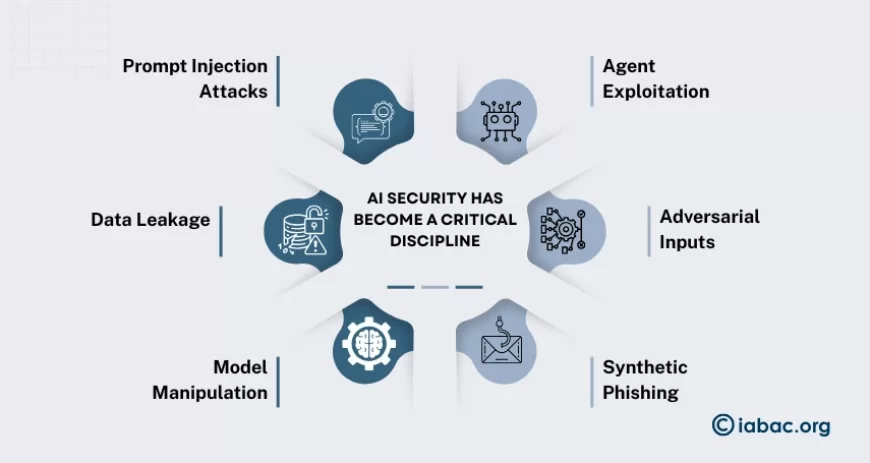
6. AI Security Has Become a Critical Discipline
New Threats, Old Defenses Aren't Enough
Every major technology shift creates new security vulnerabilities. AI is no exception.
Organizations now face attack vectors that barely existed three years ago:
-
Prompt Injection Attacks — Injecting malicious instructions into AI prompts
-
Data Leakage — AI models leaking sensitive training data
-
Model Manipulation — Poisoning training data to corrupt models
-
Agent Exploitation — Tricking autonomous systems into wrong actions
-
Adversarial Inputs — Crafted inputs that cause unexpected behavior
-
Synthetic Phishing — AI-generated phishing at scale
Traditional cybersecurity remains essential. But it's no longer sufficient.
The Emerging Role
Security teams must now understand:
-
How AI systems make decisions
-
Where they can be manipulated
-
What safeguards actually work
-
How to audit AI behavior
-
When to override AI decisions
AI security is rapidly becoming one of tech's most important specialties. If you develop expertise here, you'll find significant demand.
Career Impact: As organizations worry more about AI risks, security professionals with AI expertise will be among the most valued.
7. Small Models Are Challenging Large Models
Bigger Isn't Always Better Anymore
The early AI race obsessed over size. Bigger models got better results. Larger parameters meant superior performance.
That narrative is changing.
Smaller models are proving surprisingly capable. A 7-billion-parameter model can now outperform a 70-billion-parameter model on specific tasks.
Why This Matters
Smaller models offer concrete advantages:
-
Lower Cost — Cheaper to train and run
-
Faster Inference — Quicker responses, better user experience
-
Better Privacy — Can run locally, without sending data to servers
-
Fewer Resources — Less GPU memory, less power consumption
-
Edge Deployment — Can run on phones, devices, edge servers
The Practical Question
Organizations are asking: Do we really need the biggest model available?
In many cases, the answer is no. A smaller, specialized model trained on domain-specific data can outperform a massive general-purpose model.
This shift fundamentally changes the economics of AI. It could enable adoption across industries that can't afford massive infrastructure investments.
Career Impact: Small model fine-tuning and specialization are becoming valuable skills. Efficiency will matter as much as capability.
8. AI Literacy Is Becoming a Core Professional Skill
Ten Years Ago: Cloud Computing Knowledge Was Specialized
In 2015, understanding cloud architecture was a niche specialty. Today? It's mandatory. Almost every developer, engineer, and architect needs cloud literacy.
AI is on the same trajectory.
What Tech Professionals Now Need to Know
Regardless of your role, familiarity with these concepts is becoming baseline:
-
Large Language Models — How they work, their limitations
-
Prompt Engineering — Getting AI systems to do what you want
-
AI Workflows — Building systems that incorporate AI
-
Agent Systems — How autonomous agents operate
-
Evaluation Methods — How to measure AI system quality
-
AI Ethics — Fairness, bias, and responsible deployment
-
AI Limitations — Hallucinations, context windows, training data biases
You don't need to become a machine learning engineer. But you do need foundational understanding.
Why? Because AI is becoming embedded in every software system. If you don't understand how AI works, you won't understand how modern systems work.
Career Impact: AI literacy is evolving into baseline professional knowledge, like internet literacy or cloud literacy before it. Building these skills early provides competitive advantage.
9. The Competitive Advantage Is Shifting Toward Integration
A Missed Lesson from Technology History
Many organizations believe AI success depends on selecting the best model.
In reality, implementation often matters more.
Why Integration Beats Capability
Look at technology history: The winners rarely won because they had superior technology. They won because they integrated technology effectively.
Microsoft didn't have the best operating system. Apple didn't have the best computer. Google didn't have the best search algorithm (at first).
They won because they:
-
Integrated technology into workflows that actually worked
-
Designed experiences that people wanted to use
-
Optimized operations around the technology
-
Aligned technology with business goals
-
Executed implementation at scale
The same principle applies to AI.
The Real Competition
The companies winning with AI today aren't necessarily those with the most impressive models. They're the organizations with:
-
Better AI infrastructure
-
Cleaner data pipelines
-
Smarter integration patterns
-
More effective workflows
-
Faster implementation cycles
Career Impact: Engineers and architects who can integrate AI effectively into existing systems will be more valuable than model specialists.
10. AI-Native Products Are Creating Entirely New Markets
Products Designed Around AI from the Start
This is the most exciting trend.
These aren't traditional products with AI features bolted on. These are products designed around AI from inception.
Examples launching or scaling in 2026:
-
Autonomous Research Tools — AI systems that run experiments and analyze results
-
AI Software Engineers — AI systems that write production code
-
Intelligent Sales Assistants — Autonomous systems that manage customer conversations
-
Personalized Education — Systems that adapt to each student's learning
-
Healthcare Copilots — AI that assists in diagnosis and treatment planning
-
Autonomous Service Systems — Systems that handle entire customer interactions
The Fundamental Shift
Traditional products ask: "How can we build software that users learn to operate?"
AI-native products flip this: "How can we build systems that learn to serve users?"
Users don't learn the product. The product learns the user.
Market Implications
This shift creates opportunities for:
-
New startups solving problems that were previously unsolvable
-
Existing companies reimagining entire product categories
-
Entirely new categories of software that didn't exist before
The next generation of technology giants could emerge from this transformation.
Career Impact: Building AI-native products is different from traditional software development. Understanding this new paradigm will be valuable.
What This Means for Your Career in 2026
You're probably asking: "What should I actually learn?"
The answer depends on your path, but several capabilities stand out:
Immediate Priorities
Learn AI-Assisted Development
Understand how modern AI tools (code generation, debugging, documentation) can accelerate your work. Not to replace you—to amplify you.
Study System Design & Architecture
Architectural thinking is becoming more valuable than raw coding speed. Can you design systems that incorporate AI effectively?
Improve Data Skills
Data quality, governance, and retrieval systems are strategic assets. Understanding data architecture is increasingly valuable.
Understand AI Security
Security expertise will remain in demand. Add AI-specific security knowledge to stay ahead.
Medium-Term Focus
Build Product Thinking
Technology increasingly succeeds through business impact, not technical novelty. Understand how your work creates user value.
Learn Agent Frameworks
Agent orchestration is likely to become a major development discipline. Start with frameworks like LangChain, AutoGen, or similar tools.
Develop Adaptability
The ability to learn continuously may become the most valuable skill of all. The industry is changing rapidly—embrace that.
Ongoing Growth
-
Follow industry trends and research
-
Experiment with new tools and frameworks
-
Build small projects to gain hands-on experience
-
Join communities discussing emerging patterns
-
Share what you learn with others
The AI Infrastructure Era Has Begun
The AI story of 2026 isn't about chatbots or benchmarks. It's not even about models.
It's about deployment.
Artificial intelligence is becoming part of the underlying infrastructure of modern business and technology. Just as the internet transformed communication and cloud computing transformed software delivery, AI is transforming how work gets done.
The professionals who recognize this shift early will have an extraordinary opportunity to shape the future.
The question is no longer whether AI will change technology. That debate is over.
The real question is: How quickly can you and your organization adapt to a world where intelligence itself has become programmable?
For the technology industry, that future has already arrived.